Tuesday, 17 November 2020

- Both teams will fight for PSL crown
- Fans are excited to witness the live actions tonight
- We saw mixed reactions from the fans; People supporting to both teams KHI & LHR; Fans are saying whoever team wins it will be the victory of Pakistan at the end of the day; Kings and Qalandars to clash for the title tonight
KARACHI: When the Pakistan Super League V came to a shuddering halt midway through last March, nobody would have predicted then that the conclusion of the franchise-based Tweny20 competition could throw up a dream final here on Tuesday between two teams — Karachi Kings and Lahore Qalandars — with very high reputations and expectations but much less achievements.
Prayers of countless ones have been answered at last and Karachi Kings captain Imad Wasim aptly said on Monday: “Dream final has been talk of the town even before the playoffs began, and here we are about to realise that dream of not our two teams but the huge following from every nook and corner.
The most alluring aspect of PSL is that each edition had provided different matchups in the title-decider, meaning no two same sides have confronted each other for the trophy in any of the five seasons. Two-time champions Islamabad United upstaged Quetta Gladiators and Peshawar Zalmi, respectively in the finals of 2016 and 2018; Peshawar prevailed over a depleted Quetta to be crowned winners in 2017 before Quetta extracted sweet revenge by defeating Peshawar in the 2019 finale.
But this will be the biggest final in terms of rivalry because both Karachi and Lahore have a rich history on sporting fronts over the years at the domestic level, particularly in the period from 1960s onward until the late 1990s. So when the PSL was finally launched after a spate of hiccups, the cricket diehards were expecting both Karachi and Lahore to reignite the enthusiasm of yesteryear. And yet somehow, they only flattered to deceive the millions of fans of the country’s largest two cities.
“For sure, there is a lot for Karachi Kings to do in order to make their supporters smile after all those near misses. The expectations are very high and adrenaline is already flowing in both camps.
“Our ardent fans have all waited patiently for four years to see us in the final and same has happened to Lahore as well. They have a massive fan-base which is always behind Lahore Qalandars.”
Sohail Akhtar, the unheralded Lahore Qalandars skipper, paid tribute to the franchise owners for keeping faith with Aaqib Javed as the head coach from day one despite the team ending up at the base of the standings in every season.
“They have to be appreciated for sticking with Aaqib Bhai all through the tough times we had to endure. All these years, the management kept backing us and the backroom staff. The environment, understandably, was tense on occasions but the self-belief within the ranks kept us going.
“Honestly speaking, we are not to let fans down this time and the way we have come through the playoffs is a clear sign of the wonderful camaraderie among all [team] members. Our confidence is high and we’ll compete and compete well tomorrow [Tuesday]. The players just cannot wait for the final to begin and are raring to go.”
Ideally, Lahore Qalandars would have felt more at home if the playoffs had not been moved out of the smog-filled Lahore to Karachi but there is no major difference for either them or Karachi Kings, barring of course the franchise owners who always have a lot at stake, more so in this derby clash.
But whoever wins the title this time will have a drastically shunted span of about three months or so to rejoice — and keep hold of the coveted trophy — before the sixth edition kicks off in February, chiefly because of the PSL V being split up by the long eight-month break due to the Covid-19 pandemic.
Sohail conceded the usual enthusiastic support of their vocal fans will be conspicuously missing because of the coronavirus (Covid-19) pandemic, forcing the organisers to hold the four-match playoffs behind closed doors.
“Obviously, we’ll miss our wonderful supporters whose presence always serves as an inspiration. But the situation the entire country is facing now is not in our hands. Playing in a bio-secure bubble setup is quite tough. However, we all know that the fans will be all backing us through the social media and on TV when they watch the final,” Sohail said.
Lahore’s talisman David Wiese — who has been instrumental in making the generally smiling team owner Fawad Rana’s dream come true — made a valid observation during Sunday’s post-match conference after receiving man-of-the-match award for his priceless all-round efforts — a 21-ball 48 not out and bowling return of 3-27 — when the former South Africa international said it would benefit the team more if they concentrated on enjoying the moment of reaching the goal.
“Expecting both these teams to make the final was something on the cards when the tournament got to this stage and everyone talked of a dream final. It would have been perfect if we had a packed house to enjoy the game but unfortunately, as we all know, that can’t happen for reasons everyone understands.”
Imad, in the meantime, admitted Karachi Kings were fortunate to be in the final after they won the Qualifier through the one-over eliminator.
“We were very lucky to win that game in the Super-Over. Credit to [Mohammad] Amir for delivering a great over to get us over the line. Everyone, including the media, are calling Karachi Kings as the underdogs in the final,” Imad pointed out. “We don’t mind being called as the underdogs because as captain I also agree to an extent that we are the underdogs.
“But when you are playing a final it changes the scenario completely. Everything then depends on how you play on the given day. Getting to this stage is a bit surreal since we have not been here before. Come Tuesday, Karachi Kings will be ready for Lahore Qalandars, who have played excellent cricket to make it to the final.”
One key factor that could eventually make the difference between winning and losing will be the all-important toss. Batting in second half under lights has been relatively easier because of the onset of dew from 9:30pm onwards. Both captains will surely prefer bowling first upon winning the toss. But Karachi Kings do have a decisive advantage because their playing XI includes the Pakistan all-format skipper Babar Azam, widely regarded as one of the world’s finest batsmen in all forms.
Teams (from):
KARACHI KINGS: Imad Wasim (captain), Babar Azam, Sharjeel Khan, Alex Hales, Iftikhar Ahmed, Chadwick Walton, Sherfane Rutherford, Wayne Parnell, Mohammad Amir, Waqas Maqsood, Arshad Iqbal, Cameron Delport, Mohammad Rizwan, Umaid Asif, Usama Mir, Awais Zia, Aamir Yamin, Umar Khan.
LAHORE QALANDARS: Sohail Akhtar (captain), Fakhar Zaman, Tamim Iqbal, Mohammad Hafeez, Ben Dunk, Samit Patel, David Wiese, Mohammad Faizan, Shaheen Shah Afridi, Dilbar Hussain, Haris Rauf, Usman Khan Shinwari, Abid Ali, Farzan Raja, David Vilas, Maaz Khan, Jaahid Ali, Salman Irshad.
Umpires: Aleem Dar (Pakistan) and Michael Gough(England).
TV umpire: Ahsan Raza (Pakistan).
Match referee: Mohammad Anees (Pakistan).
---------------------------------------------------------
What are
your thoughts on this? Please share with us in the comment section below.
COURTESY DAWN NEWS
--------------

Lahore Qalandars star pacer Haris Rauf has revealed that his celebrations after taking the wicket of Multan Sultans’ veteran all-rounder Shahid Afridi was not apologetic.
The right-armer claimed the wicket of the 40-year-old on the first delivery he faced during the Pakistan Super League (PSL) 2020 second eliminator on Sunday at the National Stadium, Karachi.
After claiming the wicket, Rauf did not celebrate and instead showed an apologetic gesture.
However, the 27-year-old, while talking in a video posted by ESPNCricinfo, revealed that he was just showing respect to legendary all-rounder.
“I am usually much more aggressive after taking a wicket but when I dismissed Shahid bhai yesterday, it was different,” said Rauf. “He is a Pakistani superstar. He has performed exceptionally and won many games for Pakistan. So it was important that I show him some respect.”
He added: “I didn’t really apologies to him. I just had to give him some respect and that was my style of doing it. For all that he has done for Pakistan, I have a lot of respect for him in my heart and that was my way of expressing it.”
Rauf finished the match with figures of 3-30 and helped Lahore Qalandars emerged victorious by 25 runs.
-------------------------------------
What are
your thoughts on this? Please share with us in the comment section below.
COURTESY SAMAA.TV
----------------

KARACHI: Prime Minister Imran Khan has said that the country is facing great pressure from the United States to recognise Israel, especially in the wake of peace deals between several Arab states and Tel Aviv, but this will not be possible “unless there is a just settlement, which satisfies Palestine”.
The prime minister was quoted as making these remarks by the Middle East Eye (MEE) website — a portal with a focus on the region — in a report carried on Monday.
MEE said Mr Khan made these remarks “last week” talking to “local media”.
The website quoted the prime minister as saying that pressure to recognise Israel was “extraordinary during the Trump stint”.
Rules out recognition until there is justice for Palestinians
Asked if any Muslim states were applying similar pressure on Pakistan, the PM appeared evasive, saying “there are things we cannot say. We have good relations with them”.
Earlier this year the UAE, Bahrain and Sudan normalised relations with Israel, while reports in the media stated that the Trump administration was goading Saudi Arabia to do the same. Riyadh has so far not followed in the footsteps of its Gulf and Arab allies.
In the MEE report, the PM reiterated Pakistan’s official line on the Palestine question, saying that “Islamabad would continue to follow in Jinnah’s footsteps vis-a-vis Palestine” meaning that unless there was justice for the Arab side, recognition of the Zionist state was off the table for Pakistan.
-----------------------------------
What are your thoughts on this? Please share with us in the comment section below.
COURTESY DAWN NEWS
------------

As Joe Biden, President-elect of the United States, settles in the driver’s seat after a bitterly-contested and divisive election in that country, the rest of the world prepares for a transition that many hope will restore institutional stability to the conduct of US foreign policy.
Like other states, Pakistan too has to brace itself for Biden’s four years. The obvious question is whether the Biden presidency will be any different for Pakistan than the Trump presidency or, more pertinently, Barack Obama’s two terms, when Biden was vice president.
To answer this question, let’s look beyond Donald Trump’s Twitter covfefeing perception to the actual conduct of his foreign policy. That should position us to analyse what US-Pakistan relations may look like under Biden.
What lies ahead
What is it that Trump did which Biden would not have done, or won’t do? The two men are as different as chalk and cheese, personality-wise. But, in many areas, Trump’s approaches — in substance if not in style — weren’t much different from traditional US policies: on China, North Korea, India, the Middle East, Iran (tougher), Israel (friendlier) and Afghanistan (closer to Biden’s Vietnam trap argument and ‘counterterrorism-plus’ approach than Obama’s decision to go for a surge).
Will Joe Biden’s presidency be any different for Pakistan than Donald Trump’s? What about Barack Obama’s? What can Pakistan expect and do to prepare?
Where Trump diverged sharply was on climate change, promotion of liberal values and rights and treatment of allies, especially Nato allies.
To put it differently, when Biden begins his term, he will change the course on issues where Trump diverged from standard neoliberal policies, while tweaking those where Trump sailed closer to the bipartisan consensus.
For instance, Biden is likely to ease up on Iran, while sticking to the fundamentals of the US’ approach to Iran, which sees Tehran as a troublemaker in the Greater Middle East and a threat to Israel. Similarly, Biden has constantly declared “an ironclad commitment to Israel’s security”, and it will be very unlikely that he could reverse Trump’s decision to declare Jerusalem as Israel’s capital.
Biden has talked about “end[ing] our support for the Saudi-led war in Yemen.” But it is unlikely that he could move away from Saudi Arabia, a policy that is structurally guided, given several factors in the Middle East. On China, he has talked about mustering the support of the allies (which Trump “kneecapped”) to counter the China threat. India has just signed the Basic Exchange and Cooperation Agreement, the final of the four foundational agreements with the US, and there is bipartisan consensus in Washington on India as a strategic partner. Not much is going to change on that count, unless Biden decides to take note of the grave human and religious rights violations in India.
Structural constraints limit a state’s foreign policy options and that is equally true of powerful states. Also, the conduct of foreign policy depends as much on exogenous actors and their actions as it does on institutional thinking within the state.
US-Pakistan relations
Let’s now return to our question apropos of Pakistan.
Pakistan’s relations with the US, even in the supposedly halcyon days of President Ayub Khan, were transactional. The ebbs and flows have depended on when the US has needed Pakistan and how Pakistan has managed then to take advantage of US needs to promote its own interests. The last 20 years were no different and the coming four years won’t be, either.
There is a reason for this. Strategic partnerships depend on a convergence of strategic issues and interests: geography, shared values, common threat perceptions, entrepreneurial innovation, market size et cetera. These factors in tandem, or in some combination, help states interact as strategic partners and denote positive engagement.
Not many of these factors have been in play in shaping US-Pakistan relations. The strategic interests of the two states, for the most part, have diverged; there are no shared values in the sense of what Samuel Huntington described as “western values” in his much-reviled The Clash of Civilizations; Pakistan isn’t exactly brimming with entrepreneurial innovation; the market size would have been substantial if not for low literacy and purchasing power and investment is hard to come by because of the investment climate.
The umbilical cord that has kept US and Pakistan connected for the past two decades, for good or bad, is Afghanistan. Afghanistan was close to Biden’s heart when he was vice president. But he had a different approach. By all accounts, he took an active interest in developments in Afghanistan. As Bob Woodward reported in his book, Obama’s Wars, Biden was opposed to the surge. He tried to convince Obama that a major surge would mean “we’re locked into Vietnam.” He wanted a narrow, ‘counterterrorism-plus’ approach: contain the Taliban, neutralise Al Qaeda (AQ) and get the troops home. Much has happened since then. The US signed a deal with the Taliban in February this year and, after much meandering, we now have an intra-Afghan dialogue which, predictably, has stalled. Meanwhile, violence flourishes unabated.
Pakistan’s relations with the US, even in the supposedly halcyon days of President Ayub Khan, were transactional. The ebbs and flows have depended on when the US has needed Pakistan.
The Trump administration lauded Pakistan for facilitating the process by getting the Taliban to the table and convincing them to start talking. But that is it. There’s not much else, or more, that Pakistan can do. And by the looks of it, Taliban are playing hardball. Additionally, there is the AQ and ISIS (the so-called ‘Islamic State’) threat in Afghanistan, as should be clear from the recent incidents of violence.
For now, the cord that binds the US and Pakistan to Afghanistan is intact. But if the talks remain stalled and violence continues, would Biden put the heat on Pakistan? That remains to be seen. The irony of the situation should not be lost on anyone: there’s only one US interest that binds Pakistan to the US and that can be a boon or a bane, depending on how the situation goes.
Finding common ground

So are there no areas where the US and Pakistan could find common ground? Fortunately, there are. But for that to happen, the Pakistan government will have to act more efficiently. Climate, healthcare, education and infrastructure development are some of the areas where Pakistan and the US could find common, non-politicised ground.
Biden was big on supporting The Enhanced Partnership with Pakistan Act of 2009 (commonly known as the Kerry-Lugar Bill). That’s the positive side of his neoliberal streak, which Pakistan could tap. The ministerial-level Strategic Dialogue (and the working groups) could be revived for both sides to work out the areas of cooperation.
With some deft diplomacy and lobbying, Pakistan could also test the waters with reference to Biden’s commitment to human rights. It will be interesting to see if he stays true to “Revitalis[ing] our national commitment to advancing human rights and democracy around the world,” with reference to India’s actions in occupied and illegally annexed Kashmir. That would give Pakistan an opening on Kashmir which, incidentally, is the central plank of Islamabad’s India policy since August 5, 2019.
Equally, Biden’s neoliberalism could also target Pakistan’s own acts of omission and commission with reference to human (including minority) rights, media freedoms, enforced disappearances, political dissent and civil-military relations. Biden’s support for the Kerry-Lugar Bill was grounded in the understanding that the US needs to move beyond just engaging the Pakistani military and get involved with the civil and political society. It will be difficult for Pakistan to expect Biden to take India to task while ignoring rights and constitutional violations within Pakistan.
The important point is that, going forward, Pakistan will have to become proactive. It cannot wait to see how Biden settles down. Islamabad needs to identify bilateral areas of cooperation and make an action plan for them. For that it can utilise its outreach into the Democratic Party, including by involving the diaspora.
That said, it is important to flag that the nature of US-Pakistan relations will also be determined by a practical approach on both sides. If the US thinks that it can wean Pakistan from China or get Islamabad to revise its regional approach, its policy will fail. While Pakistan does not want to be identified as being in one or the other camp, it has its strategic interests with China. It would like to enhance its relations with the US but not at the cost of its relations with China. In fact, it will be important to convince the US that Pakistan’s engagement with the China Pakistan Economic Corridor does not mean it is disinterested in US public and private investment that can target key sectors in Pakistan’s economy and help Pakistan develop. It will welcome any such investment.
Similarly, if Pakistan is expecting that the US will come down hard on India and make Kashmir the central point of its (US’) South Asia engagement, Pakistan will be disappointed. Ditto for expecting high-end military systems and platforms from the US.
On more than one occasion in his appearances on my television programme, the current National Security Advisor, Dr Moeed Yusuf, has stressed geoeconomics as the key to Pakistan’s national security approach. Going by that, for relations to be useful, both Pakistan and the US will have to find areas where they can cooperate meaningfully, and in ways that can move relations out of their transactional mode to make them strategic.
Biden’s presidency offers both sides a chance to go for a reset. That is possible if the two sides lower their expectations with reference to what each can do for the other on issues of hard security. On the other hand, if they can broaden the definition of security to include areas identified above and sequester them from hard-security concerns, the relationship could develop more abiding structures for strategic engagement.
------------------------------------
The writer is a journalist interested in defence and security issues. He tweets @ejazhaider
COURTESY DAWN NEWS
----------------

PPP chairperson Bilawal Bhutto-Zardari on Monday levelled a host of allegations regarding irregularities in Gilgit-Baltistan's elections, saying his party will use all its legal options against the "open and naked rigging" in the polls.
Addressing a press conference in Gilgit a day after polls closed and unofficial results showed the PPP had won only three out of the 24 seats in the GB Legislative Assembly, Bilawal claimed that results were manipulated "overnight" for elections on seats that the PPP was winning and the party was declared to have lost them during the day.
Citing an example, Bilawal said PPP candidate Jameel Ahmed was winning the election by 1,000 votes last night "but this morning an attempt was being made to hand over that seat to PTI by two votes".
He said Forms-45 were not matching in the contest that Ahmed was a part of, and the PPP candidate would lose only if the Election Commission's forms were considered, which he alleged "did not bear the signatures of polling agents and were without attested documents".
He said the party has received similar complaints from all over GB. "In GB-13, no polling took place at all in two villages [and] weather was made an excuse. Our first demand will be that the election on that seat is not complete until everyone has been allowed to cast their vote," he added.
Bilawal shared what he termed his party's "strong reservations" in GBLA-18, where he claimed "women have been disenfranchised and not allowed to vote". He further said the GB Election Commission did not provide the facilities to PPP candidate Saadia Danish that would enable her to run her own campaign in the constituency and that she didn't even get the permission to file her nomination papers in that area.
"The way [ballots] were stamped there in order to meet the 10 per cent threshold, as part of a muk-muka (covert deal), that seat too would be going towards re-election if the Election Commission had been working as per the law," the PPP leader said.
He alleged that ballot boxes were stolen in GBLA-21 from where Ayub Shah fought the election on a PPP ticket and a first information report was lodged regarding this. "How can the so-called Election Commission ignore this kind of open and naked rigging? How can they ignore the theft of the vote of this area's people?
"PPP ended raajgiri system here, we won't let it return in any other condition. We will protect the vote of this area's people. We don't think a seat's election has any value if its polling boxes were stolen. Either they should be brought back or re-polling should be held in those areas," he stressed.
Bilawal alleged that sectarianism was spread "deliberately" in GBLA-1 and Skardu, and was used politically to make the PPP lose.
"We think this playing with the fire for a seat, for an election ... is akin to playing with the fate of these people. We won't allow this to become a political card. We won't allow the concept of 'divide and rule' to be taken this far ... only to make your favourite party win," he said.
He further said the PPP was ready to use "all its options" to protect the vote of the GB residents and was approaching the courts as well as the Election Commission.
He alleged that some federal ministers and special assistants to the prime minister had committed "contempt of court" by arriving in the region and campaigning till the election day.
"We are expecting as a result of our petition, not only are those ministers disqualified but also the candidates for whom they were campaigning," he said, adding that in contrast, the PPP had accepted the court decision barring him from campaigning "unwillingly".
Bilawal thanked the people of GB for turning up to vote, saying their interest during the entire campaign was "a testament to [their] commitment to democracy".
As unofficial results of the hotly contested GB elections were released on Monday, the PTI was leading after having bagged 10 seats, followed by independent candidates who have so far won seven seats.
The PPP was able to win on three seats followed by the PML-N with two seats.
As many as 330 candidates, including four women, were vying for the 24 general seats in the third legislative assembly of Gilgit-Baltistan.
--------------------------------------------
COURTESY DAWN NEWS
----------
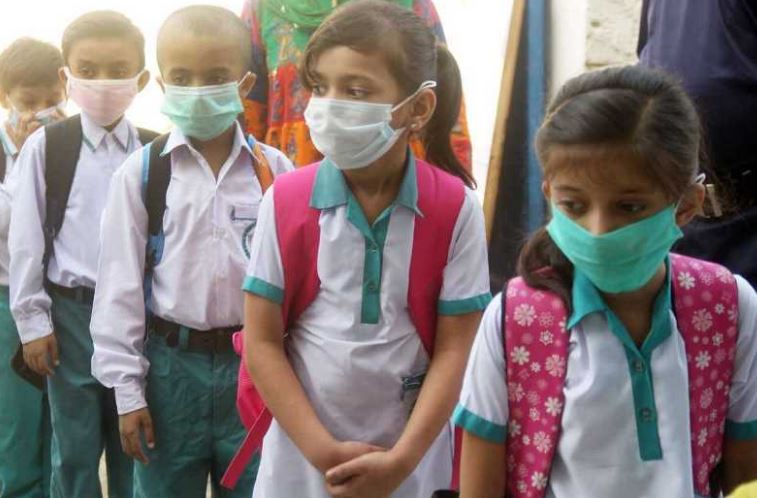
ISLAMABAD - The administration in Islamabad has decided to seal three educational institutions after new cases of the coronavirus were reported there.
In a letter, the district health officer told the Islamabad deputy commissioner that at least four new cases of the deadly virus were reported at the Ali Trust School in the city’s Sector G-14, while two cases were reported at Jinnah Muslim School on Park Road.
Various departments at COMSATS University Islamabad will also be closed because a number of cases were reported there.
According to the authorities, the second wave of the coronavirus is underway in Pakistan. The government has already banned indoor weddings in major cities and government and private institutions have been told to allow 50% of their employees to work from home.
The virus has so far claimed 7,160 lives in Pakistan, while the number of confirmed cases in country has jumped to 359,032.
The government hasn’t taken any decision to close educational institutions so far.
The decision to close schools across Pakistan will be taken on November 23, Federal Education Minister Shafqat Mahmood said Monday morning.
After the meeting of the National Command and Operation Centre and the education ministers of all the provinces, it was decided that educational institutions across the country will not be closed yet.
Mahmood said that after the meeting on November 23, it will be decided whether winter vacations will be extended or schools will be closed.
----------------------
Monday, 16 November 2020

The appearance of female golfers, dressed in casual T-shirts and trousers, is a striking anomaly in Saudi Arabia
Denmark's Emily Pedersen won the first-ever women's golf tournament in Saudi Arabia in a tense playoff, but the event designed to soften the kingdom's austere image has drawn charges of being a “sportswashing” exercise.
With a birdie on the extra hole, Pedersen edged out England's Georgia Hall and secured the $150,000 winner's cheque in the inaugural Saudi Ladies International on Sunday at the King Abdullah Economic City close to the western city of Jeddah.
“I'm so happy to be the first winner of this event,” Pedersen said in a statement. “It's been such a fantastic experience to be here in Saudi Arabia.”
But Amnesty International and other rights groups said the event glossed over Saudi's poor human rights record and the jailing of several women activists who have called for reforms.
Liberalisation or sportswashing?
The appearance of female golfers, dressed in casual T-shirts and trousers, is a striking anomaly in Saudi Arabia, that has long imposed a strict dress code on women.
As part of a sweeping liberalisation drive, de facto ruler Crown Prince Mohammed bin Salman has accelerated investment in glitzy sports and entertainment events in a bid to improve its reputation.
In March, the kingdom hosted the world's richest horse race, after staging the Italian and Spanish football Super Cups last year.
It already hosts the Dakar Rally, a 12-day marathon through the Arabian desert, and the all-electric Formula E series, in addition to an array of boxing, golf and tennis events.
And this month, Saudi Arabia announced it will host a Formula One Grand Prix for the first time in 2021.
The expanded sporting schedule is part of a push to draw more international tourists, business and investment, as the kingdom embarks on reforms designed to lessen its reliance on oil revenues. But critics have accused the country's rulers of “sportswashing” to improve their image after long being condemned over rights abuses.
Sportswashing is the hosting of a sporting event, or owning of a team, as a means for a country to improve its reputation, particularly if it has a poor record on human rights.
“Saudi citizens and residents should enjoy top-notch entertainment and sporting events, but they also should enjoy basic rights such as free expression and peaceful assembly,” said Michael Page, deputy Middle East director at Human Rights Watch.
“So, when Hollywood A-listers, international athletes, and other global celebrities take government money to perform in Saudi Arabia while staying silent on the government's atrocious rights record, they are boosting the kingdom's strategy of whitewashing Crown Prince Mohammad bin Salman's abuses.”
'New page in Saudi history'
Alexandra Armas, CEO of the Ladies European Tour, shrugged off the criticism and said that taking the opportunity to bring the game to Saudi was an “easy decision”.
“We did discuss it with our members how they would feel about coming to play in Saudi, and it was very accepted,” she told AFP.
Maha Haddioui, a Moroccan and the first Arab professional on the Ladies European Tour, said she was thrilled to be playing in the event and to help write “a new page of history in Saudi”.
“I got a lot of messages from young Saudi women telling me how does it work if I want to start golf [...] so just being part of this, for me it's a winning week. “
-------------------------------------
What are
your thoughts on this? Please share with us in the comment section below.

SCO Secretary-General Vladimir Norov
Every year on November 16 the world celebrates the International Day of Tolerance. On this day in 1995 UNESCO member states adopted the Declaration of Principles on Tolerance and the Program of Action.
“Tolerance” in the Declaration is understood as “respect, acceptance and proper understanding of the rich diversity of our world’s cultures, our forms of expression and ways of expressing human individuality”.
The Declaration proclaims “recognition that human beings are inherently different in appearance, position, speech, conduct and values and have the right to live in peace and preserve their individuality”. The declaration addresses threats to humanity posed by intolerance and offers methods and programs to combat intolerance.
In 1997, the UN General Assembly (Resolution No. A/RES/51/95) invited UN Member States to celebrate the International Day and to hold relevant events focused on both educational institutions and the general public.
The UN is committed to promoting tolerance through better understanding between cultures and peoples. It is even more relevant today when we face negative tendencies of increasing terrorism, separatism and extremism, escalation of various conflicts and manifestations of xenophobia.
Special UNESCO prize named after Mr. Madanjeet Singh – Indian artist, writer and diplomat, UNESCO Goodwill Ambassador – is dedicated to propagation of tolerance and non-violence ideals to the International Day of Tolerance. It was established in 1995 and is awarded every two years to institutions, organizations or individuals for significant contributions and effective artistic, cultural or communication activities aimed at creating an atmosphere of tolerance and non-violence.
A total of 18 laureates have received this award. And here I am proud to note that five times they were representatives of the “SCO family” countries. Among the award winners were representatives of India, Pakistan, Russia and South Asian countries.
This year the Madanjeet Singh Prize was awarded to the Conflict Resolution Center of the Democratic Republic of Congo in recognition of its work on human rights protection, liberation of children from military camps, as well as their rehabilitation and reintegration into their native communities.
SCO – space for tolerance, cultural diversity and joint development
In the conditions of modern international relations, I believe that maintaining and strengthening tolerance at the interstate level directly depends not only on the desire and efforts of individual countries, but also on the model of interaction.
20 years ago, the heads of six countries – Kazakhstan, China, Kyrgyzstan, Russia, Tajikistan and Uzbekistan – wishing to reveal the enormous potential of good neighborliness, unity and cooperation between the states and their peoples, announced the establishment of one of the largest international organizations to date.
The SCO is a unique example of symbiosis of peoples, cultures, traditions, customs and mindsets. The association space includes 18 countries with more than 3 billion people representing almost 200 nationalities. Our peoples are united by common destinies, historical memory, long-standing close contacts and ties. And most importantly, mutual trust and respect for each other make us one.
Throughout the existence of the SCO we have remained faithful to the principles of the “Shanghai spirit”, which implies mutual trust, mutual benefit, equality, mutual consultations, respect for cultural diversity, and a desire for common development.
First of all, this is manifested by the fact that it includes different countries with different economies, territories, mentality, resources and potential. Active cooperative interaction is built on the basis of joint determination of zones of intersection of interests, equal importance of opinions of all together and each one individually, irrespective of political and economic power of member states, with full preservation and respect of independence in their internal affairs and foreign policy.
The SCO’s transparency and openness have become an integral feature. The Organization strictly follows the principles set out in the SCO Charter, including its non-targeting against other states and international organizations; actively develops contacts and cooperation with other international and regional organizations, primarily the UN and its institutes. I also cannot but emphasize that in our “family” each country has equal weight and equal voice. Invariably, all decisions within the SCO are taken only and exclusively on the principle of consensus. Nobody is left unheard, everybody brings their own vision to further development.
I also emphasize that the member states respect the right to choose the path of political, economic, social and cultural development taking into account the historical experience and national peculiarities of each state, promote inter-civilization dialogue, common peace, tolerance, progress and harmony, and are guided by the principles of non-interference in internal affairs, respect for sovereignty and territorial integrity of the SCO member states.
Today, we can confidently note that the “Shanghai spirit” has introduced a new trend in theory and practice of modern international relations, implementing the universal aspiration for globalization and close integration. No matter how acute the issue is, each side is striving to find the way towards mutual consent.
It is on this basis that we promote and develop multidisciplinary cooperation, maintain and strengthen peace, security and stability in the region, and contribute to building a new democratic, just and rational political and economic international order.
Principles of coexistence
Today the world has entered in an era of profound transformation and large-scale globalization. The desire for peace, development, equitable and mutually beneficial cooperation, and the formation of a community of global peace and prosperity is becoming increasingly important.
There are high rates of economic growth, humanity is becoming more and more mobile and new technologies are being actively developed. At the same time, global challenges and threats, as well as factors of uncertainty and unpredictability, are increasing in the world.
There are still unresolved issues and new regional and local conflicts are emerging. Under these conditions, the most important task is, undoubtedly, the protection of peace and universal development. In the foreground there is a need to build a universal, integrated, transparent security and sustainable growth architecture in the region based on the principles of the rule of international law, non-use of force or threat of use of force, respect for territorial integrity, state sovereignty and independence of countries, open, equal and mutually beneficial cooperation. In this regard, the ideas of tolerance are more relevant in the present time than ever.
I believe that the solution of this problem lies in the concept of implementing tasks in different directions. First of all, it is necessary to strengthen security and stability, in particular to actively resist various manifestations of terrorism, extremism, to provide information security, to fight any manifestations of discrimination against people.
I would like to emphasize separately that in the “Moscow Declaration” adopted on November 10, 2020 at the SCO summit the member states noted the importance and humanitarian orientation of the operations carried out to return their own citizens from the zones of armed conflicts, most of them women and children. They attach particular importance to social rehabilitation and reintegration measures for citizens who are victims of terrorism.
Economic cooperation is also an important element in ensuring stability in the SCO region. Joint development of infrastructure and communications, implementation of multilateral projects to improve the welfare and quality of life of citizens is one of the priority tasks in cooperation between the SCO member states.
Cultural symbiosis
I would like to emphasize separately that the key factor in strengthening the spirit of tolerance in the SCO region is its rich cultural potential, as well as its diverse ethnic and religious composition.
The member states traditionally advocate the development of inter-civilization dialogue, strengthening ties in educational, cultural, humanitarian and tourism areas, contributing to further strengthening of good neighborhood, friendship and cooperation relations, directing efforts to multiply cultural diversity, to cooperate in the study and protection of cultural and natural heritage of the region.
In recent years, as part of the comprehensive project “SCO – Our Common Home”, whole series of cultural and mass events have been held to promote the preservation of cultural heritage and mutual enrichment of peoples of the Organization’s member states.
Among them are Days of Culture of SCO countries. Since 2016 China, Kazakhstan, Kyrgyzstan, Belarus, Tajikistan, Russia, Afghanistan, Azerbaijan and Uzbekistan have presented their cultural heritage. In 2017-2018 a series of classical concerts “Nine Magic Notes” was held, in which each country had demonstrated its musical potential.
In June 2019, in celebration of the 19th anniversary of the Organization was presented a large-scale project – “Eight Wonders of SCO”. It is a series of thematic presentations, initiated on tourism topics. Its main goal is to present the national wonders of the eight member states through the presentation of national wonders, to present widely the tourism resources, projects, cultural and creative products and culture of the SCO countries. To date, as part of this project we have conducted a series of presentations of sites of the eight SCO member states in Beijing, Tashkent, Xi’an, St. Petersburg, Dushanbe and Helsinki.
The International Day of Nowruz is actively celebrated, which was included in 2009 in the list of intangible cultural heritage of mankind as a cultural tradition of many peoples, symbolizing friendship, mutual understanding, harmony and creativity.
The development of sport is of great importance in promoting and strengthening the spirit of solidarity, tolerance and tolerance.
Yoga and Tai Chi Days have been held annually since 2018 within the SCO. I believe that these events are designed to simultaneously strengthen the human spirit, harmonious attitude towards nature and the world around them, as well as to promote a healthy lifestyle and strengthen dialogue between cultures and civilizations.
An important sporting event in the activities of the Organization is the SCO Kunming Marathon, which gathers tens of thousands of people from around the world, and is an important factor in the integration of peoples, promoting cultural exchanges and cooperation. Its international status is also being strengthened. In March 2020, the International Association of Athletic Federations awarded the marathon a silver license, making it a world-class sporting event.
I would like to remind you that marathons of the SCO were held in other member states of the organisation, in particular in Nur-Sultan (Kazakhstan) in June 2017, as well as on the shore of Lake Issyk-Kul in Kyrgyzstan in May 2019, and we plan to further expand the geography of the marathons.
Great importance is also attached to working with young people, their upbringing in a spirit of patriotism, respect for diversity of cultures, the development of skills for independent thinking and developing judgments based on moral values.
The “Model SCO ” is regularly held – an intellectual game that simulates the activities of the organisation and allows participants to learn in practice the basics of international relations, improve their negotiation skills, work in a team, conduct discussions and develop new ideas and projects. This year the participants discussed the importance of entrepreneurship development and support in the context of post-Pandemic economic recovery, which is one of the urgent tasks facing humanity today.
Separately, I would like to note the importance of the Exhibition of children’s paintings of SCO countries held in June 2020 on the theme “Unity in the fight against the epidemic, protecting the common home”. In their works the participants not only revealed the theme of fighting the virus, but also reflected the ideas of peace, friendship, joint support and aspiration for development – the ideas of the “Shanghai spirit”. It is gratifying that the young generation of SCO shares the principles of mutual support from an early age and calls for solidarity.
“Shanghai spirit” of mutual aid
The issue of maintaining tolerance is of great importance this year in the context of the coronavirus pandemic. It has exacerbated the socio-economic situation in many countries around the world, significantly increased political tensions between major powers and had a significant impact on the familiar lifestyle of millions of people. The threats to global security began to grow.
The pandemic has clearly demonstrated the interconnectedness of all countries on the planet. However, it is not without regret that solidarity and joint efforts to counteract COVID-19 are giving way to isolationism, there is a transition from globalization to localization, and persecution of one’s own benefit is at the forefront. These approaches are splitting society, provoking the rampant traditional security threats and unconventional challenges, which include xenophobia and the escalation of intolerance.
The nations of the world should understand that this negative trend endangers all countries and continents and damages our common home. Therefore, I believe that now the most important task is to overcome political confrontation and protectionism on a global and regional scale. It is necessary to stop any attempts to split mankind by politicizing the problem of coronavirus pandemic as one of the factors of escalation of intolerance.
The SCO has convincingly confirmed its significant potential as an effective platform for responding to emerging challenges and building work to overcome the political, social, trade and economic consequences of the COVID-19 pandemic.
Building on the “Shanghai spirit”, the SCO countries have effectively exchanged experience in the fight against coronavirus, as well as mutual humanitarian, financial, medical and technical assistance. The existing mechanisms for cooperation in the sphere of health care and sanitary-epidemiological well-being were fully utilized within the SCO.
In general, under current conditions, close coordination of activities of international organizations to combat pandemics and the growing cross-border threats and challenges is required.
According to UN Secretary General António Guterres, SCO is a reliable partner of the UN and a leading player in regional diplomacy of Eurasia, actively promotes cooperation to solve the most acute security problems facing Eurasia today – in particular, the fight against xenophobia, incitement of hatred and extremism.
I note that the acceleration of large-scale changes in the modern architecture of international relations opens new opportunities for interaction and strengthening of contacts. But, at the same time, it imposes a huge responsibility on all participants, both before their countries and before all of humanity.
As negative ideas and trends spread, it is necessary to support the dialogue of cultures and nations.
I am confident that SCO will continue to be faithful to the “Shanghai spirit”, will continue to promote and popularize the ideas of tolerance and humanism in the name of strengthening the world order and maintaining tolerance.
----------------------------
What are
your thoughts on this? Please share with us in the comment section below.

ISLAMABAD, NOV 16 – Envoys of the Permanent Members of the United Nations Security Council were briefed by the Foreign Secretary today on the Dossier on Indian State Sponsorship of Terrorism.
The Envoys were apprised of India’s involvement in planning, promoting, aiding, abetting, financing and execution of terrorist activities in Pakistan.
The Dossiers containing irrefutable evidence of India’s state sponsorship of terrorism against Pakistan were handed over to them.
Pakistan will continue to highlight to the international community India’s state sponsorship of terrorism and destabilizing activities against Pakistan.
--------------------------

Infinix is renowned in Pakistan for bringing the latest technology for the masses and it’s all set to release its latest offering, the Infinix Note 8. Owning up to its predecessor Note 7,the Note 8 an upcoming deviceoffers Pakistan’s first 64MP quad rear cameras, supports ultra-night mode and steady video recordingexpected under30k price range. It’s anincredible phone inside out with6.95” dual Infinity-O HD+ display.
Powered by an upgraded MediaTekHelio G80 chipsetthat makes device incredibly fast and provides a smoothperformance which is known for power gaming with improved ANTUTU ranking.
The phone is surely going to demonstrate superior gaming performance in heavier games like PUBG, Call of Duty and Asphalt to name a few. Infinix Note 8’s AI based power management leads to even longer gameplay.It has 6GB of RAM & 128GB of internal storage. The other amazing feature is split screen with one-hand mode which enables multi-tasking.
The upcoming Infinix Note 8has64MP quad ultra HD camera thatsupports ultra-night mode and steady video recording which you can zoom up to 6X with crystal clear clarity. The new device also has 16MP front punch hole dual selfie camera which supports Eye focus and AI beauty recording mode. It has also improved AI document mode 2.0, faster debris removal technology.

Moving forward, the new device has 5200 mAh powerful batterywith unique power marathon technology to enhance battery performance. Which stays up to 45 hours call talk time, 141 hours music playback time, 1347 hours standby time and most important 17 hours gaming time. Isn’t amazing??? Not only this but, It supports super charge technology of 18W with type C and has Dual charge engine, 8 degree lower temperature during charging than last generation.
Who is excited for this upcoming Infinix Note 8 device?The company has yet to release the further information later. Stay tuned for more updates we will be revealing soon!!
---------------------------
What are
your thoughts on this? Please share with us in the comment section below.
Social Media
Search