Tuesday, 24 November 2020

KARACHI, NOV 24 – Hameed Haroon, President, Sarmad Ali, Secretary General, APNS on behalf of the Office Bearers and members of the Society have expressed profound grief over the sad demise of Pir Sufaid Shah Hamdard, a veteran journalist and Chief Editor of Daily Wahdat, Peshawar. Pir Sufaid Shah Hamdard was born in August 1928 in a religious family of Qasim Shah Bacha.
He did his Pushto Honors from Peshawar. He has 46 year long outstanding experience injournalism including 16 years with various newspapers and later as Editor-in-Chief of Pushto daily Wahdat, Peshawar. Pir Sahib has been Member of the Executive committee of the APNS as well as Convener for Khyber Pukhtoon Khawa Provincial Committee of APNS for several terms. For his outstanding services in the field of Pushto literature and excellence in journalism, Government of Pakistan decorated Pir Sahib with Tamgha-e-imtiaz.
He was elected Vice President for the terms 1996-1997, 2001-2002 and 2002-2003.The APNS Office Bearers expressed their condolences to his son Haroon Shah and the bereaved family and prayed that Almighty Allah may rest the departed soul in eternal peace and give patience and courage to the bereaved family and his colleagues to bear the loss.
-----------------------------------------------

Assistance will help UNHCR mitigate short-term and medium-term impact of COVID-19 pandemic on refugees and Pakistani host communities
ISLAMABAD, NOV 24 – The European Union (EU) is providing €10 million to significantly boost UNHCR’s assistance for Afghan refugees and their host communities in Pakistan. The funding will focus on mitigating the short and medium-term impact of the COVID-19 pandemic.
With this funding, UNHCR will expand its health response as well as improve water, sanitation and hygiene (WASH) facilities in refugee and host communities. Another important component of the new project will be implementing activities that help protect and empower vulnerable Afghan refugees and host communities, including through livelihood opportunities.
The three-year project will be implemented across the country and is expected to benefit some 370,000 Afghan refugees and Pakistani host communities.
The Ambassador of the EU Delegation to Pakistan, Androulla Kaminara, and UNHCR’s Representative in Pakistan, Noriko Yoshida, signed the agreement at a ceremony on Monday.

The agreement coincides with the quadrennial Afghanistan Conference held in Geneva, which is intended to present an important opportunity for the Afghan Government and the international community to commit to common objectives for promoting sustainable development, prosperity and peace in Afghanistan.
At the signing ceremony, Ms. Kaminara said: “As the world faces a second surge of COVID-19, it is clearer than ever that we must assist the most vulnerable and the most in need. We are glad to partner with UNHCR in assisting the Afghan refugee community, which is generously hosted in Pakistan, as well as the Pakistani host communities.”
Placing the support for refugees in a larger political context, the Ambassador underlined: “The European Union has reaffirmed its strong support to an Afghan-led and Afghan-owned peace process which ultimately would ensure safety, fundamental rights and prosperity for all Afghans and allow refugees to return to their homeland in safety and dignity.”
The UNHCR Representative in Pakistan, Ms. Yoshida, welcomed the EU’s contribution and said such support amid the current COVID-19 pandemic demonstrates the EU’s commitment to “leaving no one behind”. “This support is truly significant. At a time when it is most urgently needed, the EU will help make a difference in the lives of so many refugees and Pakistani host communities impacted by the COVID-19 pandemic,” she said.
She said that UNHCR’s overall emergency response is in support of efforts by the Government of Pakistan to prevent and respond to the COVID-19 pandemic. She added that UNHCR has been advocating for the inclusion of refugees in the Government’s COVID-19 Prevention and Response Plan.
Since July 2018, the EU has contributed €37 million from its development budget and €10 million from its humanitarian resources to support Afghan refugees and their host communities, in particular through UNHCR’s regional programmes.
In May 2020, the EU announced a €150 million package to support Pakistan’s efforts in addressing the short-term and long-term public health and socio-economic effects of the COVID-19 pandemic, including this new funding of €10 million for UNHCR. This funding will be channelled towards three sectors: health, WASH and social protection.
In the health sector, it will boost health initiatives by helping to provide personal protective equipment, medical supplies and other relief items to health facilities in support of refugees and host communities. Community outreach on the prevention and response to COVID-19 will also be strengthened.
In the WASH sector, the EU’s contribution will help enable UNHCR to upgrade or construct facilities such as toilets, handwash basins and water pumps in schools, health centres and communal facilities in or close to refugee villages – benefitting both refugees and Pakistanis.
In terms of social protection, the assistance will contribute to UNHCR’s emergency cash programme for the most vulnerable registered Afghan refugees in Pakistan. The one-time cash assistance mitigates the impact of the COVID-19 pandemic by helping refugees meet their basic needs.
In addition, the project – covering a three-year period – aims to support the COVID-19 recovery through medium-term interventions, such as income-generating activities and technical and vocational skills training. This will ultimately help provide new skill sets to both refugees and their host communities.
---------------------------------------------------

ISLAMABAD, Nov 24 - Pakistani Skipper Babar Azam on Tuesday said burden of the captaincy would not affect my batting as i kept both things apart without any pressure.
Babar was recently named as the Test captain tasking him to lead the teams in all formats. The 26-year-old’s first assignment as Test skipper would be the ICC World Test Championship matches against New Zealand, to be played in Mount Maunganui and Christchurch from December 26-30 and January 3-7, respectively.
Babar also spoke about the burden of expectations from Pakistan fans and said, “People have high expectations from me but this does not put me under pressure as I use it to build my confidence. Also, I don’t think burden of captaincy will affect my batting because I try to keep both things separate,” cricketpakistan.com.pk quoted him as saying.
The Lahore-born cricketer was confident about his team’s chances during the tour of New Zealand. “We are confident ahead of the series against New Zealand and hopefully we will put up a good show. Arriving in New Zealand, earlier than normal, will help us in acclimatising with the conditions and preparing adequately for the series.”
“We have a good record against New Zealand, both, home and away. Our team is performing well and there is a good combination of senior and junior players. We want to utilise this opportunity and make a solid team for the upcoming Twenty20 World Cup,” he said.
The right-handed batsman also shed light on the different experience of bio-secure bubble in New Zealand, as compared with England, while also opening up on the mental stress associated with it.
“The bio-secure bubble is different in New Zealand as compared to England. The first three days will be tough as we won’t be allowed to leave our rooms and meet other players. But having said that we are getting used to it and won’ be facing any major difficulty,” he said.
“Yes, I agree that it (bio-bubble) can be a bit stressful at times because we are following the same routine every day. We miss the fact that we are not able to go for outings and shopping during the tours,” he said.
Azam also admitted that he has a say in selection matters. “I give my feedback in selection of the side because I’m the one who is supposed to lead the side on the field. I try to ensure that my input proves beneficial for the team.”
Babar also responded to criticism from former cricketers regarding his ability to finish matches and said that he was trying to improve this aspect of his game.
“I agree that when a player is set, he should finish the match. I wasn’t able to finish the match against Zimbabwe despite scoring hundred and I think we lost that match because of me. But I’m trying to improve this part of my batting, which was also evident in PSL, and hopefully in the future I won’t repeat the same mistake,” he said.
-------------------------------------------------

ISLAMABAD, NOV 24 /DN/ – Responding to media queries, the Spokesperson categorically rejected baseless speculation regarding possibility of recognition of the State of Israel by Pakistan.
The Spokesperson underlined that the Prime Minister’s statements in this context have been clear and unequivocal.The Prime Minister has made it clear that unless a just settlement of the Palestine issue, satisfactory to the Palestinian people, is found, Pakistan cannot recognize Israel.
Pakistan steadfastly supports the Palestinian people’s inalienable right to self-determination.
For just and lasting peace, it is imperative to have a two-state solution in accordance with the relevant United Nations and OIC resolutions,with the pre-1967 borders, and Al-Quds Al-Sharif as the capital of a viable, independent and contiguous Palestinian State.=DN
--------------------------------------------

ISLAMABAD, NOV 24 – More than 1400 students, engineers and energy-sector professionals from Pakistan, South Asia and across the globe participated in the first ever digital job fair during the pandemic time.
This two-day event is organized by Women In Energy Pakistan (WIE) in partnership with fellow women-led communities,Women Engineers Pakistan, Women In Tech PK, andCodeGirls, to promote workforce participation of women in the STEM and the Energy sectors.
STEM Forward 2020 Job Fair was designed in response to COVID-19 to it help connect anxious fresh graduates and young professionals with STEM and Energy sector employers. The Pakistani workforce is facing unprecedented challenges this year with the drastic impact of COVID-19 in every sector. With a mission to help connect employers and job seekers with digital ease and training, STEM Forward 2020 Job Fairwill have more than 60 participating institutions from local and international power utilities, energy sector organizations and academic institutions from Pakistan.
H.E. Wendy Gilmour, High Commissioner of Canada to Pakistan and H.E. Lis Rosenholm, Ambassador of Denmark to Pakistan were keynote speakers along with other guests peakers including Ahsan Zafar Syed, CEO, Engro Energy Ltd; Mr Najy Benhassine, Country Director Pakistan, World Bank and Melinda Good, Operations Manager, World Bank

“A wonderful vision for Pakistan’s future: a green economy energized by the full participation of women!” H.E. Wendy Gilmour, High Commissioner of Canada to Pakistan
“Platforms like Women In Energy, which are established to build strong networks, will definitely facilitate growth and career for women in Pakistan” Ahsan Zafar, CEO Engro Energy Ltd.
With Engro Energy and K-Electric at the forefront as lead sponsors, top Pakistani companies such as WAPDA, Telenor, Contour Software, 10Pearls, HBL; as well as top tier Universities such as NED, UET Lahore, NUST, ITU, and LUMS, among others participated in this event.
The two-day event offered a wide array of interactive and engaging segments including exhibitor e-booths, capacity-building workshops, breakout track sessions and live discussions. This was more than just a Zoom-based webinar – the online platform hosting this unique event allowed for real-time one-on-one networking between candidates as well with company representatives.

“STEM Forward 2020 covers Science, Technology, Engineering and Energy - and we could not be prouder to be able to facilitate our collective 1500+ candidates!” Nameerah Hameed, Founder of Women In Energy Pakistan
With 1500+ registered attendees, the event welcomed participants from all over Pakistan from diverse fields.
“Our partnerships were critical. Engro Energy, K-Electric and World Bank were significant enablers in achieving the success we did with this event.” Hira Wajahat, Co-Chair Women In Energy Pakistan
A key strategic partner of the job fair is South Asia Women in Power Sector Professional Network (WePOWER). The World Bank’s South Asia Gender and Energy Facility supports WePOWER and its partners as the interim secretariat of the network.

Through this support, and working with a number of public and private institutes, we are honored to be the conduits for a successful Virtual Job Fair.”Seher Abbas, Co-Chair Women In Energy Pakistan
“We are incredibly proud to have orchestrated this event on a national scale.” Ramla Qureshi, CEO Women Engineers Pakistan
----------------------------------------------------------------

Hassan Baig
Human Development is defined as the process of enlarging people’s freedoms & opportunities and improving their well-being. Human Development is about the real freedom, which ordinary people have to decide who to be, what to be and how to be. Now, Health and Education have also been acknowledged & included as the most important drivers of human development.
The dismal picture of Human Development in Pakistan as portrayed in UNDP Human Development Index (HDI) Report has indeed raised the eyebrows of many across Pakistan. I being representative of the only National Commission for Human Development (NCHD) am the most effective in the series.
Unfortunately, Pakistan’s HDI value for 2019 is 0.560 which put the country in the medium human development category, positioning it at 152 out of 189 countries and territories.
Following the UN Millennium Summit held in September 2000, where Pakistan became a signatory to the targets of the Millennium Development Goals (MDGs), improvement in the status of human development in Pakistan assumed urgency.
In order to convert this concept into reality, the then President of Pakistan established a Task Force on Human Development (September 2001), with a mandate to find innovative solutions to improve and fill implementation gaps in social service delivery at the grassroots in the sector of Education, Health and Poverty Alleviation. The following deficiencies in delivery of social services in Pakistan were identified by the Task Force:
- Inadequate capacity, competency and managerial efficiencies within:
- Government line departments
- Elected representatives
- Private sector delivery system (NGOs, CBOs)
- Lack of community participation and decision making rights;
- Lack of integration/coordination in planning and implementation; and,
- Gaps in service delivery, quality and financing.
After extensive research the panel proposed a National Commission to lead the country in a coordinated manner towards human development. Thus, NCHD was established as a Federal Autonomous Body under Cabinet Division by a Presidential Ordinance in 2002, and mandated to support the district line department, elected representatives and Civil Society Organizations, in Education, Health and Capacity building of the Line Departments, launched a phase wise program on Literacy and Universalization of Primary Education (UPE) based on the adapted best practices, in the whole of the country, with the approval of the Federal Government.
However from July 29, 2011 NCHD has been placed under the Federal Education and Professional Training Division by amending Rules of Business 1973.
NCHD is an innovative public private partnership (PPP) between the Government of Pakistan and Pakistan Human Development Fund (PHDF) for improving social sector delivery to deal with the challenges of human development in Pakistan. NCHD takes a holistic approach to human development, focusing on people’s needs.
It works through existing frameworks to leverage human and financial resources, building capacity, raising awareness, promoting community participation and volunteerism, and encouraging public-private partnerships.
The Commission successfully overcame the initial challenge of delivering social services on a ‘scale’ and established outreach nationally in a brief span. NCHD started its operations in 2002 in just two districts, Mardan and Narowal. Since then it has scaled up its network, and its programs are now being implemented in 134 districts/administrative units out of total 150 Districts across Pakistan.
The main premise of the human development approach is that expanding peoples’ freedoms is both the main aim of, and the principal means for sustainable development. If inequalities in human development persist and grow, the aspirations of the 2030 Agenda for Sustainable Development will remain unfulfilled.
Accordingly, NCHD is well poised to assume a pioneering role in reshaping and influencing the movement for social change in Pakistan. NCHD as per its mandate conferred upon through the ordinance and The Decision of the Honorable Supreme Court of Pakistan is a potential organization to support the government in achieving the following Sustainable Development Goals by the year 2030.
- End poverty in all its forms everywhere (Goal #1)
- End hunger, achieve food security and improved nutrition.(Goal # 2)
- Ensure healthy lives and promote well-being for all at all age.(Goal # 3)
- Ensure inclusive and equitable quality education and promote lifelong learning opportunities for all.(Goal #4)
- Achieve gender equality and empower all women and girls.(Goal #5)
- Ensure access to water and sanitation for all. (Goal #6)
- Promote sustained, inclusive and sustainable economic growth, full and productive employment and decent work for all.(Goal #8)
- Take urgent action to combat climate change and its impacts (Goal#13)
- Promote just, peaceful and inclusive societies (Goal #16)
NCHD has vast experience of running large scale programmes related to MDGs, EFA i.e. Education, Health, Capacity Development, Poverty Alleviation, Environment Protection etc. There is a responsibility gap at the national level with regards to Govt. of Pakistan’s International and regional commitments like SDGs and Vision 2025. NCHD may be given the responsibility to address the responsibility gap.
No special legislation will be required to assign the desired role to NCHD and the most important of all no Start-up Cost will be required. It is the only potential organization to achieve the international commitments and SDGs’ Targets in Pakistan.
One of the Prime mandates of NCHD is to help Pakistan achieve the target of 90% literacy as envisioned in the vision 2025 in order to achieve this goal, the commission has prioritized and a two pronged approach towards this:
- Dealing with the back log of adult illiterates by implementing Adult literacy programs in the communities.
- Ensuring that all children should be enrolled and retained in schools for the completion of full primary schooling cycle through its Universal Primary Education Program.
In order to achieve gender equity, equality NCHD launched its mass Literacy initiative in August 2002 to support the Ministry of Education. The goal of the Program is to enhance adult literacy in Pakistan, with special emphasis on female literacy.
NCHD realizes that the issue of female literacy is built on sharply differentiated gender roles. Therefore, the issue of planning, gender mainstreaming, programming and matching resources for equitable provision of female education has to be addressed. Over the long run, it is expected that educating females will improve the status of women in Pakistan.
NCHD Literacy program has been recognized both internationally and at the national level. The United Nations Educational, Scientific and Cultural Organization has conferred the UNESCO International Reading Association Literacy Award for 2006 on the recommendation of the International Literacy Prize Jury on the NCHD for increasing the literacy ratio in Pakistan by implementing a community based and effective intervention design.
The Award consists of a medallion, prize of US $ 20,000 and a certificate. Recognizing the achievement of increasing the literacy ratio and the nation-wide scale (covering all districts and federal agencies) of the NCHD in field of literacy, the President of Pakistan has declared the NCHD as Lead Agency for Literacy in Pakistan.
First and foremost, NCHD has been working with the Federal and Provincial Governments through their education departments in primary education to achieve the target of 100% enrolment of children (age group 5-7 years) in schools. Preventing dropout of children from schools and reducing the dropout rate from the current level of 50% to less than 20% and ensuring quality education through teachers training.
NCHD is the only organization which has established National Training Institute (NTI) in 2017 for training on the Non-formal and Accelerated Learning Programs.
From August 2002 to 2020 in a period of about 18 years, the Commission has made commendable success in all its established programs. Till December 2008, the outreach of NCHD’s programs was in 122 districts of Pakistan. NCHD has reached to 134 districts during 2019-20. NCHD has::
- Supported enrolment of 16 million out of school children (5-7 years) under its UPE Program
- Established 10, 939 Community Feeder Schools (CFs) and provided about 15, 000 Feeder Teachers in Govt. Primary School to cater for the increased enrolment
- Trained 296,276 teachers in enrolment, dropout prevention and quality education
- Established over 170,190 Adult Literacy Centers
- Made 3.98 million Adults literate with 92% females
- Trained more than 187,000 teachers on adult literacy teaching techniques, and assessment of learning achievements
- Trained about 2000 professionals of 100 civil society organizations in Implementation of Literacy Program
- Trained 12,000 Literacy Supervisors in Management of literacy centers
- Provided door to door preventive health care to 1.17 million Households
- Trained 16.68 million women in preparation and usage of ORS in 80 districts
- Vaccinated over 669,000 women and children all over Pakistan
- Screened 2.67 million children for eye sight and hearing problems under School Health Program
- Launched Relief Operations for over 3.0 million Internally Displaced Persons (IDPs) in Swat, Buner, Shangla, Lower Dir of Khyber Pakhtonkhwa Province and Wazirastan.
- Established 620 medical camps, extended treatment to 4,512 patients and distributed medicines worth Rs. 37 million among the IDPs
- Identified and registered 478, 941 volunteers across Pakistan and trained them in community participation techniques in education and health programs at grassroots level
- Trained 11,261 EDOs/Govt. Officials and elected representatives in planning & budgeting
- Trained 4,384 elected representatives on their role in Zilla Management Committees / Citizen Community Boards (CCBs)
- Trained 2,437 EDOs, DOs and TMA officers on their role in operationalization of CCBs.
- A total of US$ 27.14 million has been mobilized through global and local resources.
Despite being a relatively young organization, NCHD has already established a niche for itself by becoming an International Best Practice through the positive outcome of its interventions, its contribution for promotion of human development through literacy & volunteerism, and is being promoted as a model public private partnership (PPP) for replication in other developing countries:
- Pakistan has become the first country in the developing world to set up a National Volunteer Corps for achievement of MDGs through NCHD, whose key role was acknowledged by United Nations (UN) Secretary General in his General Assembly address (2003).
- NCHD co-hosted the first ever UN-sponsored International Conference on Volunteerism and MDGs held in Pakistan in Dec. 2004 involving participation of experts from over 30 countries, whose findings contributed in enhancing awareness about the role of Volunteering.
- NCHD has been presented as a Model organization to be emulated for achieving MDGs in developing countries by the UN. This is attested by the high-powered Chinese delegation visit in March 2005, facilitated by UNDP, to study the NCHD’s PPP model for replication in China.
- NCHD literacy program was awarded the prestigious UNESCO International Reading Association Literacy Prize in 2006 for increasing the literacy ratio in Pakistan.
- In September 2010, NCHD was declared the Lead Agency for spread of literacy programmes in Pakistan in recognition of its efforts in promoting literacy in the country and the efficacy of its literacy model.
- The findings of three independent Third-Party Evaluations by UNDP (2004 and 2006) and Shell Pakistan Ltd. (2005) have endorsed the NCHD model and recognized the positive contribution made by NCHD in the social sector delivery in its operational districts.
Keeping in view the above track record NCHD may effectively be used by the Present Government and it may play its pivotal future role in paving the ways for achieving the Human Development Targets in Pakistan by supporting and facilitating Provincial Ministries of Education through its unique programs of Universal Primary Education and Adult Literacy by Imparting literacy and numeracy skills to illiterate adults (15+ Years) through;
- Basic Literacy Centers ii. Post literacy centers
iii. Quranic Literacy Centers iv. Mobile based literacy
- Literacy Centers in Jails vi. Community Learning centers
vii. Literacy centers at work places viii. Each one Teach one Initiative
Provide basic education to illiterate out-of-school children (10-14 Years) through schools/centers based on Accelerated Learning/condensed syllabus of 32 months. NCHD may act as an Implementing Partner for BISP and different components of EHSAS program through its trained human resource and country wide out reach benefiting from its rich experience in social development sector. Through its vast network of volunteers, NCHD can play a significant role in successful execution of Government initiatives like ‘Clean and Green Pakistan’ .
NCHD has completed the ‘Mainstreaming of Madaris’ project in Federal Areas and currently implementing ALP syllabus in 100 Deeni Madaris in the provinces. NCHD is currently supporting Directorate General of Religious Education (DGRE) through all its districts offices and 137 Staff as District Registration & Facilitation Officers.
NCHD may be given full responsibility of this important national initiative in future as it is the only Federal organization with an access and mandate to work throughout Pakistan in wake of 18th Constitutional Amendment.
However, the unforeseen financial constraints have always restrained it partially from delivering vital services to the nation. After giving valuable services to government line departments, ministries, district and local governments for about 18 years, it is now high time for NCHD to move from project to a complete program for the uninterrupted delivery of its most needed services in the field of Human Development which will help the government to achieve its international commitments on SDGs and Vision 2025 through its unique programs in the next 10 years.
The writer is an Analyst and Economic Expert. He can be reached at hassanbaig2009@gmail.com
---------------------------------------------------------------

BEIJING, NOV 23 – Pakistani film Parwaaz Hai Junoon is a symbol of friendship between China and Pakistan, said the Pakistani ambassador to China and spectators after watching the movie, Gwadar Pro reported on Monday.
The embassy of Pakistan organized a special screening of the film where the ambassador Moin ul Haque addressed the audience and said the Pakistani movie has been in China for almost 45 years. The film was released across the Chinese cinemas on 13 November 2020.
“This film has everything, action, drama, romance, emotions, values of friendship and, of course, feeling of patriotism which is very important, and these are values that the people of Pakistan and China share”, he stated.
He further said that this film is a tribute to Pakistan Air Force and its really brilliant pilots, while these cultural exchanges will help in fostering a better understanding of each other.
“I do hope that this auspicious start that we have made this week, this momentum we carry on becomes something very lasting, very permanent, an area of cooperation between the two countries. We hope to have more movies, screenings in China and additional Pakistani movies and dramas as well.
We are also going to look at joint ventures and joint production of movies between Pakistan and China”, Haque mentioned.
The ambassador further said that next year, Pakistan and China are celebrating 70 years of diplomatic relations, a very important milestone in this journey of friendship between our two countries. So next year we are also organizing and planning more than 100 events.
The cooperation and the screening of films and dramas next year will be performed as a very important part of these activities.
He further said that in the future he would try to bring more Pakistani films and dramas for the Chinese audience.
After watching the movie, Hina Shiekh said that a strong friendship can give us support for good and hard times and JF-17 is the best example of the friendship between Pakistan and China.
She really likes the scene in the film when an instructor at the air force training academy asked newly joined cadets to compare JF-17 with Mirage 2000 in class.
A female cadet proudly answered that JF-17 has many advantages, including flexibility and safety, and is praised by the instructor.
It may be mentioned here that Pakistan and China would celebrate the 70th anniversary of diplomatic relations next year and such kinds of events would help build relationship in the entertainment sector as well.
--------------------------------------------------------------------
Monday, 23 November 2020

ISLAMABAD, NOV 23 – Center for Global & Strategic Studies (CGSS), Islamabad and Hanns Seidel Foundation (HSF) Pakistan jointly organized a conference on “Water Security Challenges and Conservation Strategy for Pakistan” at Margala Hotel, Islamabad.
The discussion commenced with the opening remarks by Major General Hafiz Masroor Ahmed (Retd), Vice President, CGSS who stated that water is not important for life, water is life and has immense significance for life.
Dr. Steffen Kudella, Resident Representative, HSF Pakistan in his welcome remarks stated that Pakistan is one of the most naturally arid countries in the world. It has an average of only 240 mm of rainfall per year. Around one fourth of the country’s land area is cultivated, and most of this agriculture is water-intensive and dependent on man-made irrigation systems.
These irrigation systems need to be efficiently maintained. Pakistan’s dependence on a single river system is extremely risky. In order to reduce this risk, the country needs to: fight water shortages, promote reforestation, maintain water infrastructure, harvest more rainfall, and strengthen its water management. Water also needs to become a topic of regional dialogue. Regional dialogues on water need to be prepared by discussions on Pakistan’s national level first.

Dr. Yusuf Zaraf, TI, Former Chairman, Pakistan Agricultural Research Council (PARC) stated that water security is Pakistan’s most critical development challenge. 95% of water goes to agriculture and major user of field water is agriculture. We have taken 70 years to use water for electricity. It is expected that water scarcity will be much higher by 2025. The latest national water policy was issued by the Government of Pakistan in 2018 and new Federal Ministry for Water Resources was made. We are not making any small dams and are also exposing the population to consistent flooding. Water pricing for all wages must be made and there should be better governance and coordination among the Ministries.
Dr. Muhammad Ashraf, Chairman, Pakistan Council of Research in Water Resources (PCRWR) stated that no country has made progress without science and technology. Our national security is dependent on food security and food security is dependent on water supply and security. In 1991 and 2005, we touched water scarcity line and it is expected to become worse by 2025. There is a huge pressure on ground water, anyone can install tube wells to pump and sell unlimited ground water. Therefore, it is important to regulate it. We need to legislate and restrict indiscriminate groundwater absorption before our water becomes saline.
Advocate Ahmer Bilal Soofi – Former Federal Law Minister highlighted the effective law reforms that can ensure water security. He stated that legal framework provides potential to move ahead and address these problems. Water is a state specific issue and we need to have a holistic and pragmatic approach towards it. We do not have legislative clarity for water management, everyone is working on a separate path. He recommended that international law interns team can be invited to Pakistan and their suggestions for scientific community must be taken.
Mr. Shahid Hameed, General Manager (Hydro), WAPDA Headquarters, Lahore stated that water is less and limited but it is life. Only 1% of water is present in the form of fresh water in streams. We need water reservoirs to save flood water, rain water so that it can be used in due course. We have to transfer water from western to eastern areas through water barrages, canals etc.
Dr. Shaheen Akhtar, Professor, Department of International Relations, National Defence University, Islamabad stated that water diplomacy can be a tool to counter water challenges in Pakistan. For last seven decades, water problem has been left to technical people. Foreign policymakers can ensure stronger agency at international level. Our economy is linked with waters of Indus. Indus Basin has a unique hydrology, one just has to regulate its water throughout the year.
Prof. Dr. Muhammad Khan, Member Board of Experts, CGSS highlighted security of water sources and catchment areas. He stated that water security is an increasingly important issue that constitutes one of the biggest challenge to Pakistan. It is a multi-dimensional problem therefore there cannot be a single solution. Water sources of Pakistan are declining and water scarcity is increasing.
Dr. Hifza Rasheed – Director NWQL, Pakistan Council of Research In Water Resources (PCRWR) stated that Pakistan has external and internal threats related to water security and conservation and our vulnerability index is very high as compared to other countries. Our storage capacity is less and must be increased and we must establish good water distribution mechanism.
Brigadier Muhammad Aslam Khan (Retd) – Chairman Gomal Damaan Area Water Partnership Pakistan stated that there is no water scarcity issue at the global level, rather issues related to water conservation and unequal distribution of water creates problem. He highlighted the projects that are currently undertaken for controlled usage and storage of water.
The event was attended by approximately 125 participants, and was moderated by Ms. Minahil Shawal Afridi, Research Executive, CGSS.
All Sops were followed deligently…
--------------------------------------------------------------

ISLAMABAD, NOV 23 – Chinese learning continues during epidemic in Pakistan, Gwadar Pro reported on Monday. The risk of a second Covid-19 epidemic has not extinguished the enthusiasm of the country’s students to learn Chinese and take HSK/HSKK test.
China-Pak Educational Cultural Institute (CEPCI) held its first offline HSK test this Saturday since the outbreak. A total of more than 100 Pakistani students took the HSK test at five levels.
According to the report, tests originally scheduled for March and May had to be cancelled due to the severe epidemic situation. However, in response to the strong request of the candidates, CPECI has applied to Hankao International for approval and formulated a detailed epidemic prevention and control plan specifically for the examination.
Prevention and control of the epidemic and ensuring the safety of personnel are the top priority of this test.
The faculty and staff have made adequate preparations, including measuring body temperature at the entrance, spraying disinfectant alcohol, and distributing medical masks; disinfect the examination room and open windows for ventilation.
“We were moved by the candidates’ spirit of studying diligently and taking the exam actively during the difficult time.
This test encouraged Pakistani students for learning Chinese and promoted cultural exchanges between China and Pakistan.” Ma Bin, Principal of CPECI said.
Confucius Institute at University of Agriculture, Faisalabad (CI-UAF) held its first HSK&HSKK exam during the epidemic on 17 October and the second on Saturday.
Zhou Changming, Chinese Dean of CI-UAF introduced that the retrieved test papers would be exposed to the open air for several hours, then handled by faculty and staff wearing masks and gloves.
“The purpose of holding examinations during the epidemic is not to hinder students’ learning progress and study abroad plans. I hope that through our efforts, students can continue to be full of motivation for learning.” Zhou said.
------------------------------------------------

Israeli media reported on Monday that Prime Minister Benjamin Netanyahu flew to Saudi Arabia for a clandestine meeting with Crown Prince Mohammed bin Salman, which would mark the first known encounter between senior Israeli and Saudi officials.
Hebrew-language media cited an unnamed Israeli official as saying that Netanyahu and Yossi Cohen, head of Israel’s Mossad spy agency, flew to the Saudi city of Neom on Sunday, where they met with the crown prince. The prince was there for talks with visiting United Secretary of State Mike Pompeo.
A Gulfstream IV private jet took off just after 1740 GMT from Ben-Gurion International Airport near Tel Aviv, according to data from website FlightRadar24.com. The flight traveled south along the eastern edge of the Sinai Peninsula before turning toward Neom and landing just after 1830 GMT, according to the data. The flight took off from Neom around 2150 GMT and followed the same route back to Tel Aviv.
The Israeli prime minister’s office did not respond to requests for comment.
Pompeo traveled with an American press pool on his trip throughout the Mideast, but left them at the Neom airport when he went into his visit with the crown prince.
While Bahrain, Sudan and the United Arab Emirates have reached deals under the Trump administration to normalise ties with Israel, Saudi Arabia so far has remained out of reach.
King Salman long has supported the Palestinians in their effort to secure an independent state. However, analysts and insiders suggest his 35-year-old son, Crown Prince Mohammed bin Salman, is likely more open to the idea of normalising relations without major progress in the moribund peace process.
The kingdom approved the use of Saudi airspace for Israeli flights to the UAE, a decision announced the day after Jared Kushner, Trump’s son-in-law and senior adviser, met with Prince Mohammed in Riyadh. Bahrain normalising ties also suggests at least a Saudi acquiescence to the idea, as the island kingdom relies on Riyadh.
Israel has long had clandestine ties to Gulf Arab states that have strengthened in recent years as they have confronted a shared threat in Iran.
---------------------------------------------------
COURTESY DAWN NEWS
-------------

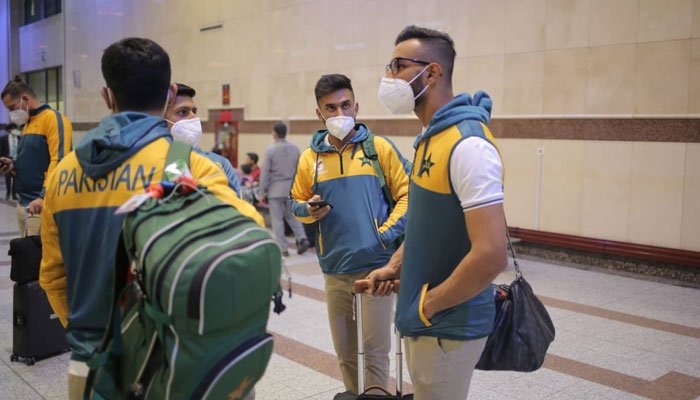
LAHORE, NOV 23 - The Pakistan cricket team left Lahore on Monday for New Zealand ahead of a series between both countries starting on December 18.
The national squad team will quarantine for 14 days at the Lincoln University as per the New Zealand government’s COVID-19 protocols.
Left-arm opener Fakhar Zaman was ruled out of the tour a few hours before departure due to fever.
Pakistan announced its tour to New Zealand in September this year. The two teams will play three T20Is and two Tests from December 18 to January 7.
The 54-member squad for New Zealand includes 34 players and 20 officials from Pakistan.
The squad will be in isolation for the first three days after arriving in New Zealand. After the first phase of COVID-19 testing, the players will be divided into groups and other activities, including training, which will continue in those respective groups.
During quarantine, there will be three rounds of COVID-19 tests and after 14 days, the squad will be allowed to move around freely.
-----------------------------------------------
Social Media
Search