Thursday, 21 January 2021

China-brokered tripartite meeting will bring no solution for either Bangladesh or Rohingya refugees
Maung Zarni
With an air of renewed optimism, Bangladesh side has widely reported on the Beijing-brokered meeting yesterday to resuscitate the repatriation process of 1 million Rohingya.
In sharp contrast, today's [Wednesday's] Global New Light of Myanmar, Naypyidaw's official mouthpiece, completely downplayed the significance of this resumed virtual meeting by sticking the news of the "Tripartite Informal Vice Ministerial Meeting" on page 6, under "National" news and allocating less a quarter of a page, at the bottom.
Yesterday there was a total silence on news reportage from Myanmar about Tuesday's China-brokered tripartite virtual meeting supposedly to speed up repatriation of the “displaced people” from Rakhine State.
This total silence of media speaks volumes about how little pressure -- economic, diplomatic, political or military -- the Burmese civilian and military leadership feels.
The painful truth is it is not only the Rohingya survivors in Bangladesh who now make up the world’s largest pocket of Rohingya, within and without Myanmar, who find themselves in between a rock and a hard place, but Bangladeshi leadership too is in an unenviable situation.
A country with a population of 160 million, scattered across densely populated regions with much smaller inhabitable land areas, Bangladesh has been significantly burdened by the presence of and the need to feed, and keep law and order among, a total of 1 million Rohingya whose literal survival depends on humanitarian hand-outs from rich western nations -- “donors” -- such as the US, Canada, the UK, and EU countries.
Dhaka also has to contend with drug and human trafficking crime networks that prey on desperate and destitute Rohingya in the vast complex of refugee camps in Cox’s Bazaar and Tek Naf provinces.
Rahman Nasir Uddin, anthropologist and author of The Rohingya: An Ethnography of Subhuman Life, summed up the situation for the Rohingya in his interview in Bangladesh’s leading bilingual paper Prothom Alo (dated 17 January) thus: 'No clear future for the Rohingyas in sight'.
As early as July 1978, this scenario of Rohingya becoming the Palestinians of Asia -- without the determined resistance or the UN’s political recognition -- had been speculated by journalists and scholars alike. Successive large scale waves of Myanmar’s violent genocidal purges since -- 1992, 2016 and 2017 -- have proven the worst case scenarios for Rohingya are not without merits. One million Rohingya today -- with 60,000 new births in Bangladesh camps -- are not welcome in either their country of immediate refuge, namely Bangladesh, or at their ancestral home of Western Myanmar state of Rakhine.
Myanmar, particularly the military leaders with their signature Islamophobic paranoia, has long institutionalized the policies of genocidal persecution of the predominantly Muslim Rohingya -- framed falsely as “illegal British colonial era migrant workers” who did not go home after the British rule ended in January 1948.
These anti-Rohingya state policies from the late 1970s have been popularized by the military-controlled government of former President Thein Sein 10 years ago, using Buddhist monks, monks associations, other civil society organizations and local Buddhist Rakhine communities who share the state’s fear and loathing of Muslims -- as a threat to Buddhist way of life and the “racial purity” of Myanmar people.
By their nature, the crime of genocide is an international state crime prohibited under the UN Convention on the Prevention and Punishment of the Crime of Genocide (or the Genocide Convention), the first ever inter-state human rights treaty adopted by the United Nations on 9 December 1948, one day older than the Universal Declaration of Human Rights (adopted on 10 December 1949). Out of 194 UN member states, a total of 152 UN member states that have ratified and/or ascended the Genocide Convention as of July 2019. Irrespective of their consent to or acceptance of this crucial international human rights law, all states are obligated to, and expected, not to commit this mother of all crime -- the crime to exterminate the entire ethnic, rational, religious or national group, either in whole or in part, and to prevent other states from committing genocide.
While all member states have by and large failed to end genocides that have since the closure of Auschwitz in 1945 taken place in Asia, Africa, Europe and Latin America the powerful states, particularly those who wield veto-power in the Security Council, the most powerful body principally tasked by the UN Charter to maintain peace and stability in the world, that is, peace as lived by the people, not just peace among states.
As in the previous cases of atrocity crimes, particularly genocide, for instance, Indonesia (1965), Bangladesh (1971), Cambodia (1975-79), Rwanda (1994), Bosnia (1994), South Sudan (2003), as well as Latin American atrocities that are as yet to be recognized as genocides, Myanmar genocide of Rohingya has not been resolved.
As many observers have pointed out all member states, including Bangladesh, have continued with its business-as-usual approach with Myanmar, however disturbed they may be about Myanmar’s state crimes against Rohingya (or other national minorities such as Karens, Kachin, Shan, Rakhine, etc). Typically, media, human rights organizations and liberal governments have called out the two neo-totalitarian states of Russia and China on the latter’s (Russian and Chinese) opposition against any firm measures aimed at ending the ongoing genocide of Rohingya in Myanmar. These two veto-wielders do not even bother to pay human rights a lip service. They have established a record of protection of Myanmar with their double-vetos at the Security Council in previous human rights resolutions against Myanmar.
Other veto-wielders such as the US, France and the UK have, on their parts, used the certainty of the two vetoes as an excuse for their inactions at the Security Council while failing to formulate any policy alternative beyond throwing humanitarian dollars at the 1-million Rohingya in refugee camps in Bangladesh and a sprinkle of aid to facilitate ineffectual dialogue among the two Rakhine and Rohingya communities, traditionally pitted against each other by the Burmese military.
All the while, other regional powers and global economic powerhouses such as India, Japan and the Republic of Korea (South Korea) pursue relentlessly their own strategic and commercial ends in Myanmar by fully cooperating with the genocidal civilian and military leaderships. For Myanmar, an export consumer market of 50+ million peoples, is rich in natural sources such as gas and oil, jade and rubies, forest and agricultural products and is geo-strategically important as the land-bridge between South Asia and Southeast Asia.
European Union countries both as a bloc and individually, as well as the non-EU Switzerland and Norway, pursue lucrative commercial deals. Effectively no-ASEAN member state, not even Malaysia with its most vocal opposition to Rohingya genocide is prepared to forgo their national economic interests in the forms of natural gas joint ventures and the import of hundreds of thousands of Myanmar migrant workers many of whom are known to cheer on Myanmar genocide of Rohingya.
Finally, beyond its preamble of its founding Charter, the United Nations is a system of nation-states, not of people. As such, the United Nations itself stands in the way of genocide prevention and punishment of the genocidaires, states and persons. For it is the organization founded, in effect, on the 370 years-old, read obsolete, backward and anachronistic, principle of inter-state relations called Westphalian Principle. Absolutist state sovereignty undergirds the post-WWII and post-Holocaust inter-state organization of the UN.
According to this principle, states have more or less exclusive sovereignty over its territory -- and the populations under the states’ typically militarized administrative and political control. This obsolete principle is enshrined in the United Nations Charter, which states that, “nothing [...] shall authorize the United Nations to intervene in matters which are essentially within the domestic jurisdiction of any state.” That is, no sovereign states will intervene in affairs of other sovereign states as long as international trade, flow of goods and services, and boundary arrangements remain un-interrupted.
There is then little wonder that Rohingya have been subjected to the slow genocide by Myanmar over the last 40 years, and no state, near or afar, has really acted to effectively end their genocide. The virtual tripartite meeting is not about to make any difference. Myanmar has not even bothered to report on its participation in the meeting.
More than ever both stakeholders -- Dhaka and Rohingya -- need to develop mutually helpful strategic cooperation as the world isn't showing signs of resolve to put an end to Myanmar's institutionalized persecution of Rohingya.
--- ---- -- ----- ------
[ The writer is a Burmese coordinator of the Free Rohingya Coalition and a fellow of the Genocide Documentation Center in Cambodia. ]
*Opinions expressed in this article are the author’s own and do not necessarily reflect the editorial policy of DIPLOMATIC NEWS (DN NEWS).
--------------------------------
COURTESY aa.com.tr
----------------

WhatsApp's controversial data-sharing policies, Pakistan-Turkey relations deciding factors in switch to BiP
Islamuddin Sajid
ISLAMABAD, JAN 21: Mohammad Ibrahim Qazi recently installed BiP, a popular Turkish messaging app that is winning over more and more users worldwide.
He is one of the many Pakistanis who are looking for alternatives after WhatsApp recently decided to introduce a new policy people fear will undermine their privacy.
"Pakistanis do not want to trade their privacy for a free messaging service. BiP is a good option by Turkcell,” a leading GSM provider in Turkey, Qazi, a director at the University of Management and Technology in Lahore, told Anadolu Agency.
He found BiP, which has both voice and video calls, interactive and its value-added services such as games and instant translator useful.
For Shamsuddin Amjad, features such as multilingual instant messaging, channels, and group chats are "better than many other apps."
"You can add up to 1,000 people in groups," said Amajd, who heads the social media of Jamaat-e-Islami, Pakistan’s mainstream religiopolitical party that has joined BiP.
Like WhatsApp, which is owned by Facebook, messages on BiP are also end-to-end encrypted.
"BiP takes the security of your personal data seriously," a company spokesperson told Anadolu Agency in an email interview.
The Turkish app, founded in 2013, has more than 65 million users worldwide, 10 million of which were added in the last week alone, the representative said.
On Google Play, it now ranks first in Bahrain, Bangladesh, Qatar, Pakistan, Saudi Arabia, and Oman, the spokesperson said, adding: "Pakistan is one of our major markets."
Even Indian users are not left behind. "I downloaded the app BiP made by Turkish company and found it better than WhatsApp / Signal / Telegram. Its features are amazing," Sayyed Ibrahim from Mumbai, India wrote on Twitter.
This is partly because of WhatsApp's controversial new privacy policy, which has now been postponed for implementation.
"WhatsApp's new privacy policy reveals that personal data of users, including phone number, IP address, contacts, status, groups (including group name, group picture, group description), payments or business features, profile photo, and timestamp, will be shared with third party websites such as Facebook," said Ramsha Jahangir, a Pakistani journalist currently based in Denmark.
"Every user wants to use a secure app and recent massive switching to other apps from WhatsApp is part of that move."
Pakistan-Turkey relations
Another factor for BiP's success in Pakistan is its strong, brotherly relations with Turkey.
Attshan Ali Abbasi, the founding director of National Youth Assembly Pakistan, said Pakistanis feel close to Turkey, and consider BiP as their own. "Youngsters are downloading BiP because of their love for Turkey," he said.
If the company keeps improving and gives priority to its user interface and privacy, it could become the most downloaded app in the world, especially the Muslim world, Abbasi added.
In a statement, Atac Tansug, vice president of Turkcell digital services and solutions, said new features are in the works, which are sure to attract more users.
"People should switch to those applications which are offering best privacy protection," said Nighat Dad, a Pakistani cyber security expert who heads the Digital Rights Foundation.
---------------------------------------------------
COURTESY aa.com.tr
----------------

LAHORE, JAN 21 /DN/ - Newly appointed Additional Chief Secretary Punjab Irum Bukhari has chaired the first All Punjab Assistant Commissioners Conference.
Additional Chief Secretary Punjab Irum Bukhari during her first interaction she discussed several important matters related to general public problems and the interaction was thought provoking and meaningful.
In that important All Punjab Assistant Commissioners Conference the young officers expressed their resolve to eliminate corruption and improve the service delivery for citizens.
People from all walks of life hope that newly elected Additional Chief Secretary Punjab Irum Bukhari will put her 100% efforts to resolve their issues.
Citizens are hoping that Irum Bukhari will take concrete steps to provide them a bit of relief by finding solution to their problems.
The large number of people belonging to civil society as well as government sectors congratulated Irum Bukhari for taking charge as Additional Chief Secretary Punjab and presiding the first APAC conference.=DN
--------------------------------------------------------

ISLAMABAD, JAN 20 /DN/ - Ambassador of United Arab Emirates Hamad Obaid Alzaabi met Foreign Minister of Pakistan Shah Mehmood Qureshi and exchanged views on several issues.
During the meeting both leaders discussed general situation, mechanism for joint coordination and prospects of cooperation between two friendly countries.
-----------------------------------------

Farukh Shehzad
Editor-in-Chief
DIPLOMATIC NEWS (DN NEWS)
Nawaz Sharif the former PML-N Chief over the past many months is in hot water after completing his duration for medical treatment in London which was granted by Pakistani Court. and he was also criticized due to his remarks against Pak army.
Nawaz Sharif or (How to bring Nawaz Sharif Back in Pakistan) was one of the most focused and most discussed topic at Talk Shows on Television and how to bring Nawaz back in Pakistan was also discussed in National Assembly and all other major forums in past days.
During the discussion on various talk shows we noticed about an option of “Deal or grand dialogue” between PML-N / Nawaz Sharif and government’s high profile figures.
Although health condition of Nawaz Sharif is not up to the mark but it is not the reason that is being stopped him for arriving Pakistan. Nawaz Sharif and Pakistan Muslim League Nawaz possibly looking for a Deal or grand dialogue or an open door.
Officials of Pakistan government negotiating with high level officials of British government over the past few months but unable to find any success so far.
The possibility of Deal or grand dialogue exist, that’s for sure. And the Deal or grand dialogue could be in any format and it could take place at any time. This is what I noticed by observing things which are taking place in political ground.
Muhammad Ali Durrani, a senior leader of the PML-F, met Sharif at Kot Lakhpat Jail in last month DEC 2020 and delivered the PML-N leader an important message from his party chief Sibghatullah Shah Rashidi.
After that meeting on DEC 25, 2020 a Pakistan’s senior journalist and analyst Suhail Warraich said in a interview that Muhammad Ali Durrani’s meeting with PML-N leader Shehbaz Sharif inside the Kot Lakhpat prison should be watched carefully because some powers within the establishment could be behind it.
“Durrani is a very old political character,” Warraich told. “He understand Pakistan's establishment and has also remained close to it.”
If Nawaz Sharif is able to find any way-out at anytime he will arrive Pakistan despite his health condition and if needed he will continue his medical treatment in Pakistan.
Earlier Pakistan government allowed Nawaz Shairf to leave for medical treatment in London.=DN
----------------------------------------------------------

ISLAMABAD, JAN 21: Prime Minister Imran Khan on Wednesday night congratulated newly sworn in US President Joe Biden following his inauguration.
"Look forward to working with @POTUS in building a stronger Pak-US partnership through trade and economic engagement, countering climate change, improving public health, combating corruption & promoting peace in region and beyond," the premier tweeted.
Biden became the 46th President of the United States on Wednesday, declaring that “democracy has prevailed”. He swore the oath of office to take the helm of a deeply divided nation and inheriting a confluence of crises arguably greater than any faced by his predecessors.
On Tuesday, the Biden administration's nominated defence chief Gen Lloyd J. Austin said the incoming government sees Pakistan as an “essential partner” in any peace process in Afghanistan and believes that “continuing to build relationships with Pakistan’s military will provide openings for the United States and Pakistan to cooperate on key issues”.
Gen Austin made these remarks during his confirmation hearing for the post of secretary of defence before the United States Senate Armed Services Committee.
“Pakistan is an essential partner in any peace process in Afghanistan," Austin, a former head of the US Central Command, told the committee. "If confirmed, I will encourage a regional approach that garners support from neighbours like Pakistan, while also deterring regional actors, from serving as spoilers to the Afghanistan peace process.”
Asked if he has perceived any change in Pakistan’s cooperation with the US since the Trump administration’s decision in 2018 to withhold security assistance, Gen Austin said: “I understand Pakistan has taken constructive steps to meet US requests in support of the Afghanistan peace process. Pakistan has also taken steps against anti-Indian groups, such as Lashkar-i-Taiba and Jaish-i-Mohammad, although this progress is incomplete.”
The general, however, acknowledged that “many factors in addition to the security assistance suspension may impact Pakistan’s cooperation, including Afghanistan negotiations and the dangerous escalation following the Pulwama terrorist attack”.
“Pakistan is a sovereign country,” he said when asked what tools and options the US had to influence Pakistan.
“I will press Pakistan to prevent its territory from being used as a sanctuary for militants and violent extremist organisations. Continuing to build relationships with Pakistan’s military will provide openings for the United States and Pakistan to cooperate on key issues.”
-----------------------------------------
COURTESY DAWN NEWS
-----------

WASHINGTON, JAN 21: Democrat Joe Biden was sworn in as the 46th president of the United States on Wednesday, ending the tumultuous four-year term in the White House of Republican Donald Trump.
Biden, 78, took the oath of office from Supreme Court Chief Justice John Roberts at a solemn ceremony at the US Capitol which was snubbed by the outgoing president and took place in the shadow of a raging coronavirus pandemic.
Before Biden, Kamala Harris was sworn in as US vice president, becoming the first woman, the first Black person and the first Asian American to hold the office.
Biden became the oldest US president in history at a scaled-back ceremony in Washington that had been largely stripped of its usual pomp and circumstance, due both to the coronavirus and security concerns following the January 6 assault on the US Capitol by Trump supporters.
Following his oath of office, Biden celebrated his incoming administration not as a celebration of a candidate but a victory for US democracy, saying more work must be done to heal the nation.
“The will of the people has been heard, and the will of the people has been heeded. We’ve learned again that democracy is precious and democracy is fragile. At this hour, my friends, democracy has prevailed," Biden said in his inaugural speech. “Today we celebrate the triumph, not of a candidate, but of a cause. The cause of democracy.”
And then he pivoted to challenges ahead, acknowledging the surging virus that has claimed more than 400,000 lives in the US. Biden looked out over a capital city dotted with empty storefronts that attest to the pandemic's deep economic toll and where summer protests laid bare the nation's renewed reckoning on racial injustice.
“We have much to do in this winter of peril, and significant possibilities: much to repair, much to restore, much to heal, much to build and much to gain,” Biden said. “Few people in our nation's history have more challenged, or found a time more challenging or difficult than the time we're in now.”
He vowed to defeat political extremism and domestic terror. The US faces “a rise of political extremism, white supremacy, domestic terrorism, that we must confront, and we will defeat”, he said in his first speech.
After a bitter campaign marked by Trump's baseless allegations of election fraud, Biden struck a conciliatory tone, asking Americans who did not vote for him to give him a chance to be their president as well.
“To overcome these challenges to restore the soul and secure the future of America requires so much more than words. It requires the most elusive of all things in a democracy: unity,” he said. “We must end this uncivil war that pits red against blue, rural versus urban, conservative versus liberal. We can do this — if we open our souls instead of hardening our hearts.”
The ceremony on Wednesday unfolded in front of a heavily fortified US Capitol, where a mob of Trump supporters stormed the building two weeks ago, enraged by his false claims that the election was stolen with millions of fraudulent votes.
The violence prompted the Democratic-controlled US House of Representatives to impeach Trump last week for an unprecedented second time.
Thousands of National Guard troops were called into the city after the siege, which left five people dead and briefly forced lawmakers into hiding. Instead of a throng of supporters, the National Mall on Wednesday was covered by nearly 200,000 flags and 56 pillars of light meant to represent people from US states and territories.
“Here we stand, just days after a riotous mob thought they could use violence to silence the will of the people, to stop the work on our democracy, to drive us from this sacred ground,” Biden said. “It did not happen; it will never happen. Not today, not tomorrow, not ever.”
Biden, in his third run for the presidency, staked his candidacy less on any distinctive political ideology than on galvanising a broad coalition of voters around the notion that Trump posed an existential threat to American democracy. Biden did not mention Trump by name in the early moments of his inaugural address but alluded to the rifts his predecessor had helped create.
“I know the forces that divide us are deep and they are real. But I also know they are not new. Our history has been a constant struggle between the American ideal that we all are created equal and the harsh, ugly reality of racism, nativism, fear, demonisation that have long torn us apart,” Biden said. “This is our historic moment of crisis and challenge, and unity is the path forward and we must meet this moment as the United States of America.”
Trump departs
Trump left the White House with his wife Melania just after 8am (1300 GMT) and went by helicopter to a sendoff event at Joint Air Force Base Andrews, where he promised supporters “we'll be back in some form” and extolled his administration's successes before flying off to Florida.
Top Republicans, including Vice President Mike Pence, were not there to see him go. Biden arrived at the Capitol just before 10:30am for his inauguration after a visit to church, where he was joined in a show of unity by the two most senior Republicans in Congress: Senator Mitch McConnell and House of Representatives Minority Leader Kevin McCarthy.
With only a small number of attendees present, Biden took the oath of office around noon, placing his hand on an heirloom Bible that has been in the Biden family for more than a century.
Trump flouted one last convention on his way out. His refusal to attend his successor's swearing-in breaks with more than a century and a half of political tradition, seen as a way of affirming the peaceful transfer of power.
The president did, however, leave a customary note for Biden in the Oval Office, according to a White House official, though it was not yet known what it said.
Biden's running mate, Harris, the daughter of immigrants from Jamaica and India, became the first Black person, first woman and first Asian American to serve as vice president after she was sworn in by US Supreme Court Justice Sonia Sotomayor, the court's first Latina member.
Tense atmosphere
The tense atmosphere in Washington evoked the 1861 inauguration of Lincoln, who was secretly transported to Washington to avoid assassins on the eve of the Civil War, or Roosevelt's inaugural in 1945, when he opted for a small, secure ceremony at the White House in the waning months of World War II.
As Biden and Harris were sworn in, Vice President Mike Pence, standing in for Trump, sat nearby as Lady Gaga, holding a gold microphone, sang the National Anthem accompanied by the US Marine Corps band.
Biden oversaw a Pass in Review, a military tradition that honours the peaceful transfer of power to a new commander in chief. Later, Biden, Harris and their spouses were to be joined by former presidents Bill Clinton, George W. Bush and Barack Obama — all of whom attended the ceremony along with their wives — to lay a wreath at the Tomb of the Unknown Soldier at Arlington National Ceremony.
Still later, Biden was to join the end of a slimmed-down inaugural parade as he moves into the White House. Because of the pandemic, much of this year's parade was to be a virtual affair featuring performances from around the nation.
In the evening, in lieu of the traditional glitzy balls that welcome a new president to Washington, Biden will take part in a televised concert that also marks the return of A-list celebrities to the White House orbit after they largely eschewed Trump. Among those in the lineup: Bruce Springsteen, Justin Timberlake and Lin-Manuel Miranda.
"I protested 45's inauguration, and I wanted to be here when he left," said Raelyn Maxwell of Park City, Utah. "And I wanted to celebrate the new president." She brought a bouquet of roses she hoped to toss to Harris and some champagne to toast the occasion.
Trump's second impeachment trial could start as early as this week. That could test the ability of the Senate, poised to come under Democratic control, to balance impeachment proceedings with confirmation hearings and votes on Biden's cabinet choices.
Biden was eager to go big early, with an ambitious first 100 days that includes a push to speed up the distribution of Covid-19 vaccinations to anxious Americans and pass a $1.9 trillion virus relief package. On day one, he'll also send an immigration proposal to Capitol Hill that would create an eight-year path to citizenship for immigrants living in the country illegally.
He also planned a 10-day blitz of executive orders on matters that don't require congressional approval — a mix of substantive and symbolic steps to unwind the Trump years. Among the planned steps: rescinding travel restrictions on people from several predominantly Muslim countries; rejoining the Paris climate accord; issuing a mask mandate for those on federal property; and ordering agencies to figure out how to reunite children separated from their families after crossing the border.
------------------------------------------------
COURTESY DAWN NEWS
-------------
Wednesday, 20 January 2021
Anjum Ibrahim
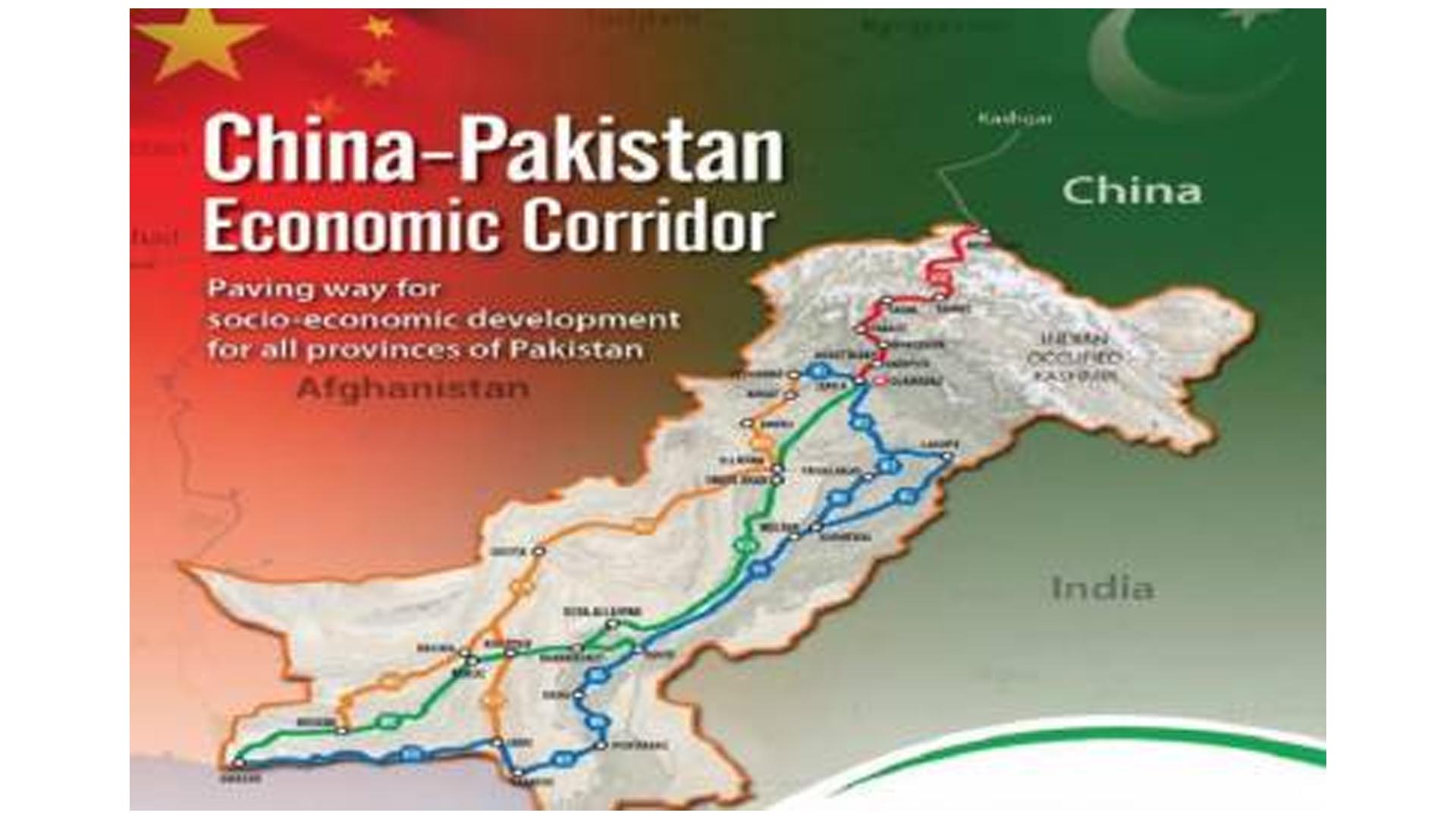
Fiftyone memoranda of understanding (MoUs) with an initial 46 billion dollar envisaged investment were signed in April 2015 during Chinese President Xi’s visit to Pakistan when Nawaz Sharif was the Prime Minister; and ever since then China Pakistan Economic Corridor (CPEC) remains a major engine of growth for the country’s beleaguered economy.
Sadly, while the Chinese have worked with three Pakistani administrations amicably, in spite of some irritants, reflective of their sustained commitment to CPEC - defined domestically as a Chinese initiative to improve/strengthen Pakistan’s deficient infrastructure – as well as a vital component of President Xi’s Belt Initiative Road (BRI), those heading the three administrations have not been so forthcoming in acknowledging the contribution of their predecessors.
Former President of Pakistan Asif Ali Zardari in the first week of January 2017, claimed that Pakistan Peoples’ Party was the ‘pioneer of the idea of the multi-billion dollar CPEC and is not concerned who takes credit for the project by placing advertisements in the media.’ This was confirmed by Lijian Zhao, Deputy Chief of Mission and Minister Counselor at Chinese Embassy, Islamabad, during a seminar end-June 2018 titled CPEC & Role of Media – Separating Facts from Misconceptions. And reconfirmed by the Chinese Ambassador to Pakistan Yao Jing in September 2020 when he called on the former President to inquire about his health by publicly acknowledging that former President Zardari is the founder of CPEC.
This was not recognized by Nawaz Sharif or any member of his cabinet during his premiership (2013-17); and notwithstanding the two national parties ongoing cooperation under the umbrella of Pakistan Democratic Movement (PDM) today there has been no statement from any PML-N leader acknowledging the role played by Asif Ali Zardari in CPEC’s launch.
On 25 May 2017 Nawaz Sharif while addressing a BRI forum in Beijing highlighted CPEC’s relevance to our economy succinctly: “we are striving to leverage geography for economic prosperity, we are also trying to build a peaceful, connected and caring neighbourhood….CPEC is owned and nurtured by all Pakistan” – a sentiment not shared by Imran Khan at the time.
Before taking oath in August 2018 as the country’s Prime Minister Imran Khan opposed CPEC projects for multiple reasons ranging from maintaining that the road route approved and the location of the special economic zones injudiciously bypassed poor areas and lamenting the lack of focus on social (health, education) sectors. In the following month Prime Minister’s Advisor on Commerce Razzak Dawood in an interview to the Financial Times stated that all 57 billion dollar CPEC projects could be eligible for suspension in a review to be conducted under Prime Minister’s orders, adding that “I think we should put everything on hold for a year, so we can get our act together …perhaps we can stretch CPEC out for another five years….Chinese companies received tax breaks, many breaks and have an undue advantage in Pakistan; this is one of the things we are looking at because it’s not fair that Pakistani companies should be disadvantaged.” Pakistan’s stock exchange fell by 0.4 percent in response to this statement and Dawood was forced to retract his statement a day later.
Such publicly expressed sentiments led to Prime Minister Khan receiving at best a lukewarm reception during his first visit to China in November 2018, prompting the opposition to maintain that the new leadership’s injudicious remarks on CPEC, and the offer to Saudi Arabia and the UAE (as well as others) to join CPEC projects made by Prime Minister Khan after the assistance pledged by Saudi Arabia (3 billion dollar loan and 3.2 million dollar deferred oil facility) and the UAE (three billion dollar pledged but one billion dollar disbursed to date), had not gone down well in China.
By 2019 the Prime Minister was fully on board on the criticality of CPEC projects to our economic development no doubt realizing that China – public and private sector – was, contrary to any other foreign private company/government, willing to invest billions of dollars in Pakistan. On 12 May 2019 Imran Khan’s new economic team leaders – Dr Hafeez Sheikh and Dr Reza Baqir – signed off on Pakistan’s 23rd International Monetary Fund (IMF) programme with the guarantee (the first time ever in our long history of going on IMF programmes) to ensure that the loans acquired from China, Saudi Arabia and the
UAE would not be recalled during the duration of the programme because, “financing support from Pakistan’s international partners will be critical to support the authorities’ adjustment efforts and ensure that the medium-term program objectives can be achieved” - the usual assumption in previous Fund loans was that once a country is on a Fund programme concessional funding becomes readily available from other multilaterals/bilaterals.
China has not only kept its pledge but also met the shortfall due to recall of loans by Saudi Arabia (two billion dollars to date) though some concerns over our ability to repay are reportedly surfacing.
A couple of weeks later, on 26 May 2019 Imran Khan with Chinese Vice Premier Wang Qishan witnessed the signing of several MoUS for cooperation in different sectors as per the official website and two projects that began during the tenure of PML-N with a progress update were identified: (i) Matiari-Lahore 660kV HVDC transmission line project with an agreement signed between PPIB and State Grid of China on May 2018 which achieved financial close on 27 February 2019 with an expected COD in March 2021; and (ii) 300 MW imported coal-based project at Gwadar with a No Objection Certificate issued by Balochistan Environment Protection Agency in August 2018 with groundbreaking on 4 November 2019.
Three projects signed during the tenure of the Khan administration that were highlighted included: (i) Kohala Hydel project agreement signed on 25 June 2020; (ii) Cacho 50 MW wind power project and Western Energy 50 MW - both in LoI stage: and (iii) Azad Pattan Hydel project agreement signed on 6 July 2020.
On 8 October 2019 President Alvi promulgated two ordinances – one to set up CPEC authority, headed by Lt-General Asim Saleem Bajwa (retd) (former DG ISPR 2012-16) on the eve of Prime Minister’s second visit to China and, two, granting tax concessions to Gwadar and its free zone. The appointment was seen as providing a safety comfort level to Chinese staff engaged in CPEC projects.
Prime Minister Khan thence began extolling the successes of the Chinese government in ending poverty and improving farm output through reforms though inexplicably he continued to espouse a right wing formula for Pakistan notably that the private sector must be allowed to create wealth and thereby to jump start the economy.
While addressing the Country Strategy Dialogue on Pakistan organized by the World Economic Forum in November 2020 Imran Khan stated that “this is the first government in Pakistan since the 1960s which has made it a point that we want to make profit-making easy for people ... and investors.” These sentiments were in parallel with Imran Khan’s frequent denouncement of mafias (read collusion to set a price higher than the market rate), smugglers and middlemen determining prices through promoting market imperfections. In this context one would hope that the issuance of licences to a select few private companies to import RLNG, with the objective of ensuring timely imports and improving efficiency, does not lead to collusion.
CPEC projects have also been subjected to considerable international criticism. Alice Wells, a former Assistant Secretary of State for South and Central Asian Affairs, in a seminar in November 2019 argued that Pakistan’s indebtedness had increased manifold due to CPEC. Geng Shuang (Chinese Foreign Ministry Spokesperson) rejected these claims as “mere repetition of old slanders against China, the CPEC and BRI” as did the Planning Minister Asad Umer who stated that Pakistan’s mounting debt crisis had nothing to do with China.
In 2019-20 95.73 billion rupees was budgeted for CPEC projects (as counterpart funds) and while the Planning Commission claims it released the entire budgeted amount actual disbursement was 57.44 billion or 60 percent of the total budgeted amount. In 2020-21 the government has budgeted 77.33 billion rupees for CPEC projects (a decline of nearly 20 percent from the year before) and by July-December 2020 the release was 40 billion rupees though the actual disbursed data is not yet available.
China as well as Middle Eastern countries including particularly Saudi Arabia and the UAE are reluctant to publicly announce total amount and terms of investment/loans/grants to a third country including special incentives by the recipient country to the pledged inflows. The Khan administration was injudicious in highlighting the pledges of assistance that were later not realized which provided fodder to CPEC critics, local and foreign.
One major lesson learned therefore should be information sharing with relevant documentation with members of the opposition in parliament – be it in-camera or not - to ensure that subsequent governments do not roll back the process to the country’s detriment. Pakistan has paid hundreds of millions of dollars in penalties in arbitration and courts for reneging on contracts signed off by previous governments – the Broadsheet case is just the most recent example.
Disturbingly, Prime Minister Imran Khan refuses to engage with the opposition but would hope that an institutional measure that seeks to share information be put in place to ensure that all are on board with respect to any foreign, public or private sector, contract. Failure to do so may compromise his long-term pet projects including the Ravi City project and development on the islands off the coast of Sindh.
Copyright Business Recorder, 2021
COURTESY defence.pk
------------------------------

ISLAMABAD, JAN 20: The government has appointed Lt-Gen (retd) Bilal Akbar as Pakistan’s Ambassador to Saudi Arabia, replacing Raja Ali Ejaz, a career diplomat, who was on his first ambassadorial posting and had been the envoy for about two years.
With this, Islamabad and Riyadh both will be having each other’s ambassadors in their respective capitals from the armed forces since the Saudi ambassador in Pakistan Nawaf bin Saeed Al-Maliki was from the Royal Saudi Navy and retired as Rear Admiral. He was the defence attaché of Saudi mission in Islamabad and elevated as the ambassador here four years ago.
Well-placed diplomatic sources told The News here on Monday that sudden shuffling of ambassador for Saudi Arabia is a conspicuous development with regard to the relationship of two countries in the backdrop of lessening warmth in ties.
Interestingly, relations between Saudi Arabia and India have experienced a marked improvement in recent years. Indian Army Chief for the first time visited the Kingdom late last year. It is understood that General Bilal Akbar will have to bring the relationship with Saudi Arabia back on track and save the relations from further deterioration.
Diplomatic observers say some officials in Pakistan were expecting high echelon delegations from the Kingdom but no schedule has been announced on this behalf, including a high profile visit of Saudi Foreign Minister Prince Faisal bin Farhan Al-Saud, who was believed to be visiting this month.
--------------------------------------
COURTESY defence.pk
-----------------

Emma Reilly, an OHCHR employee and human rights lawyer, accuses the UN of trading the background information of dissidents with China in what has been dubbed a name-sharing scandal.
The United Nations High Commissioner for Human Rights (OHCHR) shared the names of Tibetan, Hong Kong, and Uighur dissidents with the Chinese government, according to Emma Reilly, a human rights lawyer who works at OHCHR.
Reilly’s claim has taken on a new dimension with new documents and correspondences accessed by the Anadolu Agency.
Reilly has repeatedly raised these allegations while on active duty at OHCHR.
She had had several email correspondences with OCHR staff, press officers, and coworkers, flagging the issue with utmost urgency.
As Reilly’s concerns became public knowledge, the UN Human Rights Office came under fire. The ones whose names were given to China were mainly Uighur activists, Tibetans and Hongkongers, who took part in UN activities, for a long period.
Reilly recently provided the emails she received, while working actively at the UN body, to the Anadolu Agency.

Even though the OHCHR was quick to deny such allegations, the emails between its employees, press releases and interviews revealed that the UN shared the names of many activists as well as some opponents with the Chinese government who attended panel discussions, conferences, and open sessions on human rights.
Last week on Twitter, Reilly said that she could be dismissed after accusing her employer of sharing the names of Chinese government opponents who took part in UN activities.
The OHCHR has however repeatedly defended itself saying the controversial practice of sharing background information of dissidents has ceased in 2015.
But an OHCHR press release issued in 2017 confirms that the Chinese authorities “regularly” asked the UN office to confirm whether particular names were attending their meetings.
“Chinese authorities, and others, regularly ask the UN Human Rights Office, several days or weeks prior to Human Rights Council meetings, whether particular NGO delegates are attending the forthcoming session. The Office never confirms this information until the accreditation process is formally under way, and until it is sure that there is no obvious security risk,” the press release read.
Several human rights organisations such as UN Watch and Human Rights Watch argue that the UN’s move puts not only the lives of Chinese activists and dissidents at risk, but also exposes their families and relatives to harm.
Reilly has maintained that the UN continues to share names and background information of dissidents with other countries.
Talking to Anadolu Agency about her experiences after reporting the issue, she said; “I don’t actually have a job. The UN continues to pay me a salary that I have no terms of reference. They can’t fire me because they know I’m telling the truth. But they don’t want me doing any work.”
As per the emails, several incidents took place between 2012 and 2019. On September 7, a diplomat from the Chinese Mission to the UN office in Geneva, asked as a “usual practice” an NGO liaison officer at the OHCHR whether anybody from the list the diplomat had sent to the 21st session of the HRC, had requested accreditation.
The officer passed on two names to the Chinese diplomat in a responding email: Dolkun Isa and He Geng.
Isa was a prominent Uighur politician and activist who attended the UN Human Rights Council meetings in Geneva in 2016 and 2019. Reilly said that Dolkun Isa also testified in her favour.
“Chinese agents visited his family home to tell him to stop his advocacy. He’s been arrested several times. He was refused entry into the UN itself as a direct result of his name being given to the Chinese government. His brother was arrested,” she added.
Going further about her allegations, Reilly said the UN’s practice was “complicit in international crimes”.
“The UN Human Rights Office should not be actively endangering human rights defenders. And that shouldn’t be controversial. And it has been shocking that the only concern of the Human Rights Office has been to stop me reporting it, but not to stop the practice.”
The UN’s denial
Speaking to the Anadolu Agency on January 14, OHCHR Spokesperson Rupert Colville said; “For the past five years, OHCHR has not confirmed the names of individual activists accredited to attend UN Human Rights Council sessions to any State. Ms. Reilly’s repeated claims the practice continues to this day are false.”
However, Dolkun Isa who testified in favour of Emma Reilly told Anadolu Agency that they wanted to attend the UN Human Rights Council meeting in 2013 with Uighur activist Rabia Kadir and other Uighurs, but that the police attempted to get them out of the council room, which he says was the result of pressure from Chinese authorities.
Isa, who is also the president of the World Uyghur Congress, also added that in 2018, a Chinese diplomat called him a “terrorist” and tried to stop him from entering the UN. The issue was later solved by Germany’s initiative.
The Uighur activist also noted that in 2017 he was detained before a meeting in Italy – again due to pressure from China.
According to Isa, he has not been able to contact any family member since 2017. Also in 2018, Isa says his mother died in a “concentration camp” in China in 2018, and his older brother was arrested, while his younger brother has been missing since 2016.
Later on, he also learned from the Chinese daily Global Times that his father was dead although he had no idea when or where he had died.
---------------------------------------
COURTESY trtworld
--------------
Social Media
Search