Tuesday, 9 February 2021

Seymur Mammadov
Less than a month after Joe Biden took office, the Atlantic Council think tank released a report titled “The longer Telegram: Toward a new American China strategy”. The purpose of the report is to convince the Biden administration to continue to exert maximum pressure on China and, in fact, to resurrect the Cold War strategy toward Beijing. The report defines the rise of China as “the most important challenge facing the United States and the democratic world in the 21st century”.
The claims of the Atlantic Council do not stand up to scrutiny. The rise of China should be viewed not as the most important problem for the United States or a threat to the democratic world, but as a good opportunity for close cooperation in the formation of a multipolar world, the creation of a community of the common destiny of mankind, wrote Seymur Mammadov in his article published by China Daily.
The authors of the report are trying to expand the ideological differences and conflicts between China and the United States, to create an atmosphere of the Cold War between the two major powers that play a very significant role in the world economy.
It is high time for the United States to understand that the world does not revolve only around them, that there is no longer a unipolar world that the Americans are claiming. Washington should abandon the Cold War thinking and start looking for ways to cooperate with China. This is the most sensible way to address the global challenges that all countries of the world are facing amid the spread of COVID-19.
In addition, any rhetoric should be at least based on grounded facts, and not replete with unfounded accusations. Calling the very factor of China’s growth and the attempt to influence the world with their political model led by the Chinese Communist Party as a threat, the authors of the report are overly carried away in building the image of the enemy, forgetting about the picture of reality. And they look at the situation from only one “ideological” angle. Through the same magnifying glass of perceptions and prejudices of the Cold War.
And the reality is that many of China’s positive innovations being introduced in various countries of the world are in fact aimed not at changing the “political system” in certain countries, but at building and creating active business models that can serve well to stabilize the business climate on the planet. Also, China is actively funding young economies in developing countries. And the role of China in this can hardly be overestimated.
Recall that back in May 2020, at the opening of the 73rd World Health Assembly, President Xi Jinping announced that China will provide $2 billion over two years to help with COVID-19 response and with economic and social development in affected countries. Thus, China became one of the first countries in the world to express its desire to invest its financial resources to combat the global pandemic and maintain the potential of the global economy. More specifically, China tried to mitigate the negative effect of the pandemic and help African countries by showing a global, open and friendly gesture – China signed agreements on the suspension of debt service with 12 African countries and wrote off matured interest-free loan for 15 African countries.
The Belt and Road Initiative is making an even more global contribution to the potential for world economic development. In Africa alone, 46 out of 55 countries have signed agreements with China on the Belt and Road Initiative. At the same time, the initiative itself is a unique proposal for the involved countries. The bottom line is the uniqueness of the offer – most of the investments in projects in different countries are made by China itself, giving the poor countries the opportunity to compensate these investments as a long-term loan.
For some developing countries, the BRI has become the only opportunity to modernize, and sometimes even create from scratch, their infrastructure, transport communications and social facilities. Thus, in a number of African countries, thanks to the initiative, new schools, hospitals, roads and railways were built, and this led to the development of poor African countries, providing employment for tens of thousands of jobs.
Therefore, we can confidently say the opposite – Washington, as well as organizations such as the Atlantic Council, completely ignore the promising benefits of China’s innovations in various economies of the world, which opens up new opportunities for the same business in the US and European countries. The bottom line is that by raising the economies of underdeveloped countries, China is pulling these countries to the level of real cooperation, and in a more or less cost-effective format for world business. And at this stage, the business circles of the United States and European countries are indeed acquiring new markets for sales and cooperation with an already more established infrastructure, communications, and human potential. And of course it is unreasonable to refuse such opportunities that China presents to the Western world.
One way or another, all the reproaches and accusations recently voiced against China are created against the background of the policy of far-fetched statements by the US political forces interested in this and have little to do with the real state of affairs. In this sense, China, perhaps earlier than other European countries, realized this truth – cooperation is always more beneficial than confronting each other. And the United States certainly needs to respond to these examples of humane political will and meaning.
The author is the director of the international experts’ club EurAsiaAz, and editor-in-chief of Azerbaijan’s news agency Vzglyad.az.
----------------------------------------------------
COURTESY dndnews
-----------
Monday, 8 February 2021

RAWALPINDI, FEB 8: Pakistan beat South Africa by 95 runs in the Second Test Match at Pindi Cricket Stadium on Monday, registering a whitewash against the visitors in a two-match Test Series.
It’s the first time in 17 years that Pakistan won a Test Series against South Africa.
In the pursuit of 370-run target to win the match, South Africa were bowled for 274 runs the second innings.
Hasan Ali picked up 5 wickets in the second innings as well, taking a 10-wicket haul in the match for 114 run.
The left-army Shaheen Shah Afridi bagged 4 wickets in the second innings while Yasir Shah added one more wicket to his tally.

For South Africa, Aiden Markram remained the highest scorer in the second innings with 108 runs followed by Temba Bavuma with 61.
In both of their innings, Pakistan scored 272 and 298 runs respectively while South Africa put 201 and 274 runs on the board.
The wicket-keeper batsman Mohammad Rizwan also smashed his maiden Test Century for Pakistan in the second innings and remained not out for 115.
Earlier Pakistan won the first Test match against South Africa at National Stadium in Karachi by 7 wickets.
----------------------------------------------
COURTESY dndnews
-------------

RAWALPINDI, FEB 8: The Chinese People’s Liberation Army (PLA) has donated the COVID-19 vaccine to Pakistan’s Armed Forces.
In a statement, the Director-General Inter-Services Public Relations (ISPR) Major General Babar Iftikhar said that the Pakistan military is the first foreign military to receive vaccine assistance/donation from the PLA.
However, keeping with the Pakistan’s Armed Forces’ traditional spirit of ‘nation comes first, always and every time’, it has been decided to contribute the complete vaccine donation by the PLA to the Pakistan military in the national vaccine drive to be administered to front line healthcare workers across Pakistan who are real heroes fighting against the COVID-19 pandemic and saving precious lives.
The director-general ISPR said that Pakistan’s Armed Forces extend their deepest gratitude to the PLA and People’s Republic of China for this magnanimous donation during testing times.
------------------------------------
COURTESY dndnews
-------------

By Prof Shazia Cheema
You can find countless articles and comments on the Azerbaijan-Pakistan Bilateral Relationship and most of the articles deal with historic perspectives and military relationships between young nations. Yes, historical perspectives are a core component of any relationship but do only historical perspectives can transfer good feelings to the young generation?
PAKISTAN HAS HISTORIC LINKAGES WITH SEVERAL COUNTRIES ALL OVER THE WORLD BUT DO ALL OF THEM TAKE A BOLD DIPLOMATIC STANCE ON KASHMIR WHEN PAKISTAN NEEDS IT?
Pakistan has military relations with several countries but do they stand with Pakistan on Kashmir cause as does (did) Azerbaijan that stands (stood) shoulder to shoulder with Pakistan in every hard time at Diplomatic Arena? The answer is simply No— So what is unique in the Azerbaijan-Pakistan relations that transform both nations as one entity at Diplomatic Sphere?
Pakistan has historic linkages with several countries all over the world but do all of them take a bold Diplomatic stance on Kashmir when Pakistan needs it? The answer is No. Even many so-called brotherly left Pakistan in a situation in OIC when the Kashmir issue was supposed to push. Azerbaijan, Turkey, and Malaysia were three countries that kept the Kashmir issue alive in OIC Forum.
AZERBAIJAN UNDER THE LEADERSHIP OF PRESIDENT ILHAM HEYDAR ALIYEV HAS RECLAIMED ITS TERRITORY WHICH WAS UNDER THE ILLEGAL OCCUPATION OF ARMENIA. YEREVAN WILL REMAIN LICKING ITS WOUNDS FOR ALL TIMES TO COME INFLICTED BY SHAMELESS DEFEAT IT (YEREVAN) FACED AT THE HANDS OF THE STRONG AND RESILIENT NATION OF AZERBAIJAN
We need to find the strong foundations of Azerbaijan-Pakistan relations through the perceptive journey of events, social fabrics, and norms both the nations possess.
There are several writers who believe that Azerbaijan always helps Pakistan on the Kashmir issue because Pakistan was co-author of several UNSC resolutions on Nagorno-Karabakh and stands with Azerbaijan on this, particularly diplomatic matter.
SINCE NAGORNO-KARABAKH IS RESOLVED AND BAKU MAY NOT NEED THE SUPPORT OF ANY COUNTRY ON THIS ISSUE AFTER WINNING A HISTORIC WAR THEN WHY BAKU EVEN NOW STANDS SO STRONGLY WITH PAKISTAN ON KASHMIR CAUSE? THE WORLD SAW THAT BAKU STOOD ON THE KASHMIR ISSUE AGAIN ON KASHMIR SOLIDARITY DAY BY ILLUMINATING THE ICONIC HEYDAR ALIYEV CENTRE IN BAKU WITH THE PAKISTANI FLAG ON FEBRUARY 5, 2021.
I always believe such an approach to the Azerbaijan-Pakistan relations is just on the surface and does not represent the depth of the unusual bond between Baku and Islamabad. Azerbaijan under the leadership of President Ilham Heydar Aliyev has reclaimed its territory which was under the illegal occupation of Armenia. Yerevan will remain licking its wounds for all times to come inflicted by shameless defeat it (Yerevan) faced at the hands of the strong and resilient nation of Azerbaijan. Since Nagorno-Karabakh is resolved and Baku may not need the support of any country on this issue after winning a historic war then why Baku even now stands so strongly with Pakistan on Kashmir cause? The world saw that Baku stood on the Kashmir issue again on Kashmir Solidarity Day by illuminating the iconic Heydar Aliyev Centre in Baku with the Pakistani flag on February 5, 2021.
This was a historic event that must be documented with a new vision in the book of Azerbaijan- Pakistan bilateral relations.
According to official information, one of the most important landmarks of Baku—- Heydar Aliyev Centre was lit with a Pakistani flag on Kashmir Solidarity Day to express the solidarity of Azerbaijan with Pakistan on the “Kashmir Solidarity Day”.

The projection of the Pakistani flag on its national monument to mark the “Kashmir Solidarity Day” is a testimony of Azerbaijan’s bold and principled stance on the just struggle of the people of Jammu and Kashmir.
According to the media reports, the Embassy said that today’s event reflects that the peoples of Pakistan and Azerbaijan stand together in raising the voice for the oppressed people of Indian Illegally Occupied Jammu and Kashmir (IIOJK).

According to regional Foreign Affairs experts, the bilateral relationship between the land of modern Pakistan and modern Azerbaijan are centuries-old but not stagnant and improving with every passing day although, unfortunately, both countries have no direct railway, road, or air contact. Traveling between both the countries is not easy and it is trans traveling through third countries. There is no direct by air linkage established between Pakistan and Azerbaijan and people-to-people contact is not as frequent that can be with direct travel linkages.
EXPECTATIONS FOR GOOD SUPPORT AND BROTHERLY RELATIONS ARE THE DRIVING FORCE FOR THE AZERBAIJAN-PAKISTAN BILATERAL RELATIONSHIP
Let me explain what I think about Perceptive linkages between both countries that are enhancing and consolidating contact between Baku and Islamabad.
Perception is based on old experiences and it is not only the passive receipt of old experiences rather it is also shaped by the recipient’s (subject) learning, memory, expectation, and attention.
The process that follows connects a person’s (Subject) concepts and expectations (or knowledge), restorative and selective mechanisms (such as attention) that influence perception. In simple words, I wish to say that expectations for good support and brotherly relations are the driving force for the Azerbaijan-Pakistan bilateral relationship, and this core point—Expectation for respectable support— is the focal point that needs to be enhanced in the future.
AZERBAIJAN AND PAKISTAN FEEL THE SAME COMFORT LEVEL IN EXPECTATIONS TO EACH OTHER, IT IS MAINLY BECAUSE BOTH THE NATIONS BELIEVE IN POSITIVITY AND PRODUCTIVITY.
Mutual expectations are based on the perception of each other, (Baku and Islamabad). The human cognitive system learns through embodied experiences, mare observation cannot formulate a tangible experience. We expect as much as our cognitive functions (reasoning, judging, decision making, evaluation) allow us. And all these cognitive functions work solely based on prior schemas. What decision in the past lead to what circumstances is a key factor in expectations? The human mind is trained to expect via perception.
Azerbaijan and Pakistan feel the same comfort level in expectations to each other, it is mainly because both the nations believe in positivity and productivity. No hidden agendas no bad intension, both want a safe, sovereign, prosperous future and both feel that they can expect any help in this regard based on their perceived notion. That’s why Azerbaijan never feel shy to initiate support for Pakistan just based on mutual perception. This is a unique and cherishable relationship, difficult to grasp in this give and take connotation, but giving and taking is not always bartering, some time is an investment, emotional, psychological investment which pave way for people to people relationship.
As we know that expectations are based on cordial mutual relationships and human relationship needs frequent physical contact, therefore I suggest that inexpensive and direct travel linkage between Azerbaijan and Pakistan must be established before the delay and experts exchange programs, student-exchange programs, transfer of knowledge programs must be enhanced.
The youth of both countries wish to meet and exchange their experience, knowledge, and skills and these desires need proper platforms, government support, diplomatic encouragement, and financial resources.
I believe that Diplomatic Relations can only be sustained when they are backed by Economic interests and bilateral trade is a nucleus power in the 21st century for Diplomatic Relationships. Therefore, traders and businessmen must work closely to enhance bilateral trade between the two-nation because the level of trade is not promising as it was reported just around US$ 16-17 million annually (according to 2019-2020 figures).
I remember in my meeting Ambassador Azerbaijan in Pakistan Ali Alizada rightly said that Azerbaijani and Pakistani are two brothers and they love each other. Yes, we are two brothers and we should meet frequently.
One should understand that Azerbaijan has again out rightly showed its unshaken support with Kashmir cause on February 5, 2021, and now this we (Pakistan) that must appreciate this event at Diplomatic as well as People to People level.
The writer Shazia Cheema is an analyst writing for national and international media outlets including Pakistan Observer, Eurasia Diary, InSight, and Mina News Agency. She heads the Thought Center of Dispatch News Desk (DND). She did her MA in Cognitive Semiotics from Aarhus University Denmark and is currently registered as a Ph.D. Scholar of Semiotics and Philosophy of Communication at Charles University Prague. She can be reached at her: Twitter @ShaziaAnwerCh Email: shaziaanwer@yahoo.com
-----------------------------------------------------
COURTESY dndnews
---------------

GENEVA, FEB 8: The World Health Organization (WHO) is asking Europe and the pharmaceutical industry to speed up the vaccination against COVID-19.
In the EU, only 2.5% of the population has received the first dose of corona vaccine, and the WHO is far from happy with the pace.
“We must work together to speed up the vaccination,” the UN organization’s European head Hans Kluge noted.
Conflicts between pharmaceutical companies and the EU, as well as logistical problems, have led to delays in vaccination.
So far, the EU has approved the vaccines for Pfizer/BioNTech, Moderna, and AstraZeneca.
In an interview with AFP, Kluge expressed concern about the new virus mutations. He said he wasn’t sure if the vaccines countered all of them.
“That is the big question. I’m worried,” he noted.
---------------------------------------------------------------------------
COURTESY norwaytoday
--------------

ISLAMABAD, FEB 8: Third-day rescue operation has been launched by Pakistan Army with local mountaineer to find missing climbers Ali Sadpara, Snorri (Iceland), and Mohr (Chile) who have gone missing attempting to summit K2 (28250 f).
According to Deputy Commissioner, Shigar helicopters are on the way to K-2 for the third consecutive day in search of missing mountaineers.

His son Sajid Sadpara came back with two porters before reaching K-2 Summit but Ali Sadpara, John Snorri and Juan Pablo Mohr reached Summit and placed flags of their countries.
The rescue and search team of the Pakistan Army using helicopters started on Saturday making at K2 in extremely challenging weather as high as 7000 meters but unfortunately so far have not spotted anyone.
Pakistan Army helicopters had been circling all around as there had not been any contact with Ali Sadpara and his team members from the past 80 plus hours.
Muhamad Ali Sadpara, born in 1976 is a Pakistani mountaineer and he was a member of the team which successfully achieved the first-ever winter summit on naked and killer mountain Nanga Parbat in 2016.
He has successfully climbed four eight-thousanders summits in a calendar year and a total of eight in his career.
Ali Sadpara and John Snorri reached the summit of K-2 on Feb 5, 2021, and shared photos of their success having flags of their countries in their hands. Since then, he lost contact with base-camp.
The scaling K-2 in winter started on January 24, 2021 and several attempts were made till February 3, 2021 but bad weather compelled the team to go back to Camp-4. They again attempted and reached the summit on February 5 morning.
-------------------------------------------------
COURTESY dndnews
-----------------

ISLAMABAD, FEB 8: Amid sharp criticism by opposition parties of the promulgation of the Elections (Amendment) Ordinance 2021 for open vote in the coming Senate polls, Adviser to the Prime Minister on Parliamentary Affairs Dr Babar Awan has explained that if the Supreme Court does not support the presidential reference, the ordinance will die immediately.
While talking to Dawn on Sunday, the PM’s aide said the government introduced the presidential ordinance with the sunset clause as it would die if an SC decision in the presidential reference came against open vote and before the Senate polls.
President Arif Alvi on December 23, last year approved Prime Minister Imran Khan’s proposal seeking SC opinion on holding of the Senate elections through open ballot. However, the government on Saturday promulgated the ordinance for open vote in Senate elections before an SC decision on the matter.
Awan points out the move was possible only before announcement of Senate elections schedule
The opposition accused the government of taking the country into constitutional crisis by introducing the ‘controversial’ ordinance only two days after the session of both Senate and the National Assembly was prorogued.
Asked why the ordinance had been promulgated ‘in haste’, Mr Awan explained the government wanted to introduce it before Thursday (Feb 11) when the Election Commission of Pakistan (ECP) was expected to announce the Senate elections schedule as the Election Act 2017 could not be amended once the schedule was announced. He argued that the government had table the constitution amendment bill on Wednesday with the clear intention of curbing the trend of horse-trading and use of money in the Senate polls, but the opposition marred the session by hooliganism. The Senate and National Assembly session lasted over three weeks yet the opposition did not utter a single word to justify their stance against open vote in Senate, he said.
The adviser on parliamentary affairs said that under the Charter of Democracy that the main opposition parties — Pakistan Muslim League-Nawaz (PML-N) and Pakistan People Party (PPP) — signed in 2006 they agreed to block the way of horse trading in the parliament. But when the government was making an attempt to curb horse trading, they both were opposing it, he added.
Responding to a question why President Alvi had to promulgate the ordinance, the adviser said the president had not violated constitutional norms by promulgating the ordinance as under Article 50 of the Constitution the president was a part of the parliament. He read out the article that stated: “There shall be a Majlis-i-Shoora (Parliament) of Pakistan consisting of the president and two Houses to be known respectively as the National Assembly and the Senate.”
Providing further justification, he also read out Article 86 of the Constitution that stated: “The president may, except when the [Senate or] National Assembly is in session, if satisfied that circumstances exist which render it necessary to take immediate action, make and promulgate an Ordinance as the circumstances may require.”
A source privy to the development said the idea of promulgating the ordinance was flouted by Attorney General Khalid Jawed Khan and it was endorsed by Prime Minister Imran Khan. Law Minister Farogh Naseem also supported the idea. There was no opposition to the idea by any of the ruling Pakistan Tehreek-i-Insaf (PTI) leaders, the source disclosed.
Interestingly, the proposal to seek Supreme Court’s opinion under Article 186 of the Constitution had also been floated by the attorney general.
So far, the ECP has been completely silent on the government move to amend the Elections Act. The elections are to be held for 52 seats of the upper house of the parliament, as half of the 104 Senate members will retire on March 11.
--------------------------------------------------------
COURTESY DAWN NEWS
----------------
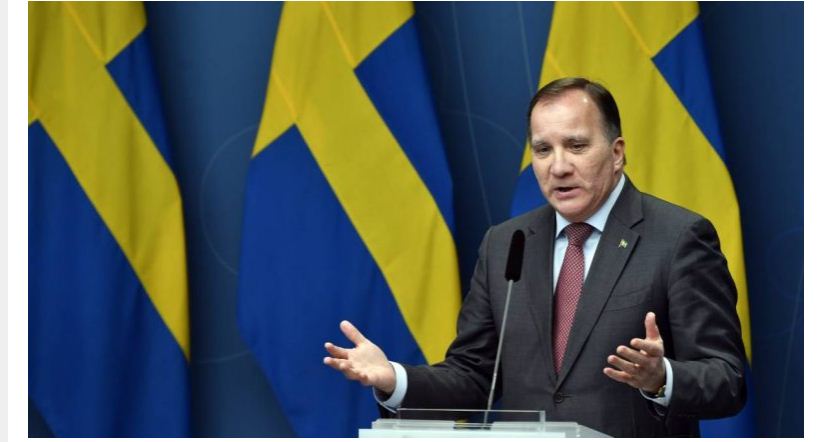
STOCKHOLM, FEB 8: The Swedish government decided to extend its entry ban for Norwegians, Danes, and Britons until March.
Other EU citizens are still allowed to enter the country if they have a negative coronavirus test, Swedish Radio reports.
Sweden’s Minister of the Interior Mikael Damberg defended the entry ban, noting that there is still a risk of mutated coronavirus variants entering the country.
------------------------------------------------------
COURTESY norwaytoday
-------------
Sunday, 7 February 2021

ISLAMABAD, FEB 8 /DNPK/ - Turkmenistan Embassy to Pakistan & Center for Global & Strategic Studies (CGSS), Islamabad are jointly organizing a 3 Days Online Course on, "Turkmenistan's Policy of Permanent Neutrality" from Feb 8 on Monday.
Turkmenistan has been successfully able to maintain its neutrality achieving economic cooperation under the strong leadership of President of Turkmenistan Gurbanguly Berdimuhamedow, who has paid special attention to ecological issues & rational use of water resources.

The details of the course are as below:
Key Takeaways:
- Analysis
of Turkmenistan's Foreign Policy
- Neutrality
Policy of Turkmenistan
- Energy,
Transport and Economic Diplomacy of Turkmenistan
Course Schedule:
- Day
1: 8th February 2021
Yhlas Haldurdiyev,
Lecturer, International University for Humanities and Development
Theme: Analysis of Turkmenistan’s Foreign
Policy
- Day
2: 9th February 2021
Begench Karayev,
Senior Lecturer, Institute of International Relations of the Ministry of
Foreign Affairs of Turkmenistan.
Theme: Neutrality Policy of Turkmenistan
- Day
3: 10th February 2021
Perhat Charyyev,
Senior lecturer, Institute of International Relations of the Ministry of
Foreign Affairs of Turkmenistan
Theme: Energy, Transport and Economic Diplomacy
of Turkmenistan
- Course Duration & Time:
3
Days Course: 8th February to 10th February
2021 from
1600
hrs. – 1700 hrs. (Pakistan & Turkmenistan Time)

NOTE:
- Compulsory to attend all the
lectures for the Course Certificate
- Send your Name, Email and
Contact Number via Zoom Chat
You are requested to join us via Zoom Application.
The Zoom Meeting ID is: 849 7841 1351 (For all three days) Or Visit the Link : https://us02web.zoom.us/j/84978411351 (For all three days).=DNPK
---------------------------------------------------
COURTESY CGSS TWITTER
----------------

- Digital media, an opportunity for the youth to explore Entrepreneurial ventures
He said that streamlining workflows, automating mundane tasks, crunching more data, digging out insights and generating additional outputs is the need of this time. It is anticipated that journalists will start serving as editorial gatekeepers while producing more complex and qualitative work, following the AI enabled newsrooms. Mr. Jahangir also explained that since, 2000 the mobile revolution has impacted greatly on the attention span of the young people, while the attention span has reduced to Eight seconds only, however, the ability to do multitask has improved many folds as well.
Speaking at the webinar, Mohsin Iqbal, Chief Operating Officer for Tech Saeein, informed the participants that Tech Saeein and DHA Suffa University are working together to focus the attention of our young people, budding entrepreneurs and business leaders, on evolving industries, emergence of tech-based industries, the professional expertise required in tomorrow’s workforce and the emerging entrepreneurial opportunities in a post COVID-19 era.
Amir Jahangir is a leading strategic communication & public policy professional. He was honoured as the Young Global Leader by the World Economic Forum for his work on development initiatives to improve the state of media and governance. He is the Co-founder & CEO of RINSTRA.com; Pakistan’s first digital platform for content creators. He leads Mishal Pakistan; a country partner institute of Future of Economic Progress System Initiative, World Economic Forum.
He has served as an Advisor to the Stanford Center of Innovation & Communication, Stanford University on Journalism & Media. The Festival of Media, Valencia ranked him among top 10 most influential media personalities in the world. At the age of 31, Jahangir was the youngest CEO for any CNBC franchise in the world.
He is an alumnus of the Harvard Kennedy School and the National Defense University, Islamabad on National & International Security. Jahangir has been trained as a public policy professional from Harvard, Yale, MIT, Tufts and the Lee Kuan Yew School of Public Policy of the National University of Singapore. He is a frequent speaker at the World Economic Forum, World Bank, Harvard, Stanford, BBC College of Journalism and other research institutions.
Tech Saeein is an online mall, which create a shopping experience with multiple options that caters to students and businesses alike. It is the brain-child of three veterans from Information Technology, Banking and FinTech, individually having over three decades of highest-level management experience of their fields. The thought process behind creating a Premium-Online store was to provide a One-Stop-Shop for those Quality Seeker who despite their extensive efforts couldn’t find the right gadget in the market. Tech Saeein aspires to become “First Choice” of the Quality Seekers, not only in the field of Technology gadgets, but also Quality Paper, Consumables and Accessories.
DHA Suffa University (DSU), was established in the year 2012. DSU has systematically taken giant strides to become the institution of choice in Pakistan. DSU not only helps to expand the mental faculties of individuals but also transforms them into more open-minded, accepting and involved citizens. With a vision to move forward, DSU is becoming a globally recognized institution of higher education and research by extending the frontiers of knowledge and contributing towards grooming the scholars of tomorrow. From the expansion of infrastructure to the development of technology, revamping of curricula to the formation of pedagogy, addition of foreign qualified faculty to the international collaborations multi face, DSU has been committed to provide well-equipped engineers, computer scientists, entrepreneurs and corporate leaders.
RINSTRA is Pakistan’s first short-form digital media platform for on-demand streaming and for creation of user generated original content on iRINSTRA. RINSTRA provides entrepreneurship opportunities to emerging and established content creators and film makers in Pakistan and beyond. RINSTRA gives content creators access to a large Pakistani community around the globe.
RINSTRA was floated as an idea at the DICE Foundation, USA’s annual meeting, where committed Pakistanis in North America and Europe felt the need to start a digital platform that can create opportunity for Pakistani storytellers to have Pakistan’s narrative in the global content stream.
----------------------------------------------------------------
COURTESY whenwherehow
-------------------------
Social Media
Search