Monday, 15 March 2021

ISLAMABAD, MAR 15: The Pakistani Prime Minister Imran Khan on Wednesday assured Uzbekistan of complete facilitation in access to Pakistani ports.
Mr Khan held out the assurance during a meeting with Uzbekistan’s Foreign Minister Dr Abdulaziz Kamilov, who was on a two-day visit to Pakistan.
Mr Khan, according to a statement issued by the Prime Minister Office after the meeting, said that Pakistan’s Karachi and Gwadar ports could become “the gateway to landlocked Central Asia as Pakistan provided the Central Asian Republics the shortest route to international seas”.
Pakistan, he said, would facilitate Uzbekistan’s access to its ports.
Uzbekistan, which currently relies on Iranian seaport of Bandar Abbas for external trade, is exploring other options and is prioritising Pakistani ports because of short distance, being more economical and due to some political considerations.
Uzbekistan is working with Pakistan on the development of two options — the first is the Trans-Afghan railway project while the second is the road route via China.
Pakistan, Afghanistan and Uzbekistan had in Tashkent in February signed a roadmap for the construction of almost 600km of Mazar-i-Sharif-Kabul-Peshawar railway line. The project, which is expected to take five years for completion at an estimated cost of $4.8 billion, enjoys the backing of international lending agencies including the World Bank.
Mr Khan welcomed the proposed Trans-Afghan railway project and underscored Pakistan’s commitment to support all efforts for the earliest realisation of this important connectivity project.
Meanwhile, Uzbekistan has been desirous of acceding to the Quadrilateral Traffic in Transit Agreement (QTTA), an agreement between China, Pakistan, Kyrgyzstan and Kazakhstan to facilitate transit traffic and trade. Pakistan has been supporting Uzbekistan in this regard also.
The road project under this agreement would provide an alternative link between Pakistan and Central Asia while bypassing Afghanistan through the Karakoram Highway which connects Gilgit-Baltistan to China’s Xinjiang region and further on to Central Asia.
Dr Kamilov’s visit was also focused on regional connectivity and he extended invitations to Mr Khan and Foreign Minister Shah Mahmood Qureshi for participation in Central Asia-South Asia Connectivity Conference in Tashkent in July.
Mr Khan told Dr Kamilov that he looked forward to visiting Uzbekistan and that his government wanted enhanced trade and regional connectivity.
DELEGATION-LEVEL MEETING
During the delegation-level talks, Foreign Minister Shah Mahmood Qureshi and his Uzbek counterpart Dr Kamilov exchanged views on enhancement of economic cooperation, mutual support in international fora, regional connectivity and tourism promotion.
The two foreign ministers, the Foreign Office said, expressed satisfaction at the progress achieved in advancing the rail connectivity between the two countries and agreed on early completion of the Trans-Afghan railway project.
Mr Qureshi called for establishing direct air connectivity between the two countries to boost up trade and tourism. He also stressed the need for quick facilitation of visas for businessmen and tourists.
Visit to GHQ
Dr Kamilov later visited the General Headquarters for a meeting with Army Chief Gen Qamar Bajwa. Director General of ISI Lt Gen Faiz Hameed also attended the meeting.
“Matters of mutual interest, overall regional situation including the Afghan Peace Process and bilateral cooperation in various fields were discussed. Both reiterated the desire to further enhance bilateral relations including efforts for peace and security in the region,” the ISPR said in a statement.
---------------------------------------------------------------------
COURTESY tashkenttimes.uz
---------------------
Sunday, 14 March 2021

ISLAMABAD, MAR 14: As the third wave of the novel coronavirus intensifies in the country, Punjab on Sunday reported more than 1,600 Covid-19 cases for the first time since June 2020.
Data from the government's coronavirus portal showed that 1,653 new infections were detected in the province in the last 24 hours, marking the fifth straight day Punjab recorded more than 1,000 cases.
The last time the province reported such a high number of cases was during the first wave on June 24, 2020, when it confirmed 1,655 infections. The province's tally now stands at 185,468.
The majority of cases – 973 – were reported in the capital, Lahore, followed by 81 in Gujranwala, 76 in Sialkot, and 73 in Rawalpindi, according to the daily situation report from the health department.
Amid the rising cases, the provincial government has imposed a lockdown in seven high-burdened cities, restricting the movement of the people to their homes, while "all commercial activities, establishments, markets and areas throughout the province of Punjab shall be closed by 6pm."
The major lockdown will start from Monday (tomorrow) for two weeks in the seven cities after a gap of a year. During the first wave of the infection, the government had imposed a complete lockdown across the province in March 2020.
Punjab cities under lockdown from tomorrow
- Lahore
- Rawalpindi
- Sargodha
- Faisalabad
- Multan
- Gujranwala
- Gujrat
While issuing a notification on Saturday, the Punjab Primary and Secondary Healthcare Department said a major lockdown had been imposed in Lahore, Rawalpindi, Sargodha, Faisalabad, Multan, Gujranwala and Gujrat, restricting the movement of the people within these districts and outside them.
Restrictions during lockdown in the 7 cities:
- A complete ban on gatherings of all kinds for social, religious, or other purposes at any place, public or private.
- All types of marriage and banquet halls, community centers and marquees to remain closed.
- A complete ban on all kinds of indoor gatherings while outdoor gatherings shall continue with upper limit of 50 people.
- A complete ban on indoor and outdoor dining.
- Only takeaway and home delivery will be allowed.
There shall also be a complete ban on gatherings of all kinds for social, religious or other purposes at any place, public or private, in these seven cities. All types of marriage and banquet halls, community centres and marquees will remain closed in these cities.
There shall also be a complete ban on all kinds of indoor gatherings while outdoor gatherings shall continue with upper limit of 50 people in the seven cities.
The government further said that there shall be a complete ban on indoor and outdoor dining in the seven cities while only takeaway and home delivery shall be allowed.
Restrictions imposed throughout Punjab
- All commercial activities, establishments, markets and areas in Punjab shall be closed by 6pm
- All public, private offices shall follow 50pc work from home policy
- Complete ban on all indoor gatherings
- Outdoor gatherings with a maximum limit of 300 persons allowed for 2 hours
- All sports, cultural and other activities banned
All public and private offices shall follow the 50 per cent work from home policy throughout the province, according to the notification.
The upper limit for outdoor gatherings in the rest of the province is 300 people for the maximum duration of two hours.
"All kinds of sports, cultural and other activities and events shall remain banned throughout the province," reads the notification.
Earlier this month, schools were closed in seven cities of the province — Faisalabad, Gujranwala, Lahore, Gujrat, Multan, Rawalpindi and Sialkot — till March 28.
Overall, the country reported 2,664 new coronavirus cases and 32 deaths on March 13.
UK variant behind increase in cases
One of the major reasons for the sharp surge of the cases was the presence of a highly infectious UK variant of the virus.
According to data generated by the next-generation sequencing (NGS) system, which has been imported from China, the United Kingdom’s highly infectious variant is present in Lahore, Jhelum, Okara, and Gujrat.
"The cluster-based surveillance of samples from different pockets of Punjab, including the four cities, shows about 70 per cent spike which correlates to the already-reported UK variant strain," said a health official.
He said a technical team of Punjab’s health department was working to get the sequencing data.
According to him, 70pc of the total cases reported in Punjab since April were of the infection originating in Wuhan, China.
--------------------------------------------------------------
COURTESY DAWN NEWS
---------------

ISLAMABAD, MAR 14: The opposition Pakistan Peoples Party (PPP) has put the entire responsibility of Friday’s Senate election fiasco on the secretary of the Senate Secretariat and demanded that he should be “dismissed and put in jail”.
Speaking at a news conference at the PPP Media Office here on Saturday, Sindh Education Minister Saeed Ghani said the conduct of the elections of Senate chairman and deputy chairman was the responsibility of the Senate Secretariat and not the Election Commission of Pakistan and the secretariat had failed to fulfil its responsibilities in this regard.
Mr Ghani said that not only the secretary was responsible for installation of spy cameras inside the Senate hall, he also “misguided” the voters and the polling agent of a candidate by telling them that the stamp could be put on the name of a candidate on the ballot paper and that it would be a valid vote.
Mr Ghani said after detection of spy cameras at the polling booth and inside the Senate hall, he along with Farooq Naek and Qasim Gilani, the son of Yousuf Raza Gilani, met the Senate secretary fearing that after failure of the government’s camera plan, there must be some other plan.
Official accused of telling voters that stamp can be put on candidate’s name
“We asked him that often it happens that a voter puts stamps on the name of the candidate — these were the exact words — so is that vote valid or invalid. And the secretary said that the vote [would be] completely valid because the stamp is inside the box.”
The PPP leader claimed that even during the polling, when one of the senators told Sherry Rehman that someone had put the stamp on the name of PPP candidate Syed Yousuf Raza Gilani, she approached the secretary and his reply was the same that it would be a valid vote.
Mr Ghani said when Syed Muzaffar Hussain Shah as the presiding officer was announcing rejection of the votes through a ruling, the secretary told Ms Rehman that the presiding officer had “over-ruled” him.
He alleged that the Senate secretary was also involved in the “rigging”. He asked the secretary to tell the names of those who had installed spy cameras and other equipment inside the Senate hall, which was under his custody.
Demanding that the secretary should be sacked, Mr Ghani said he was not fit for any government job.
He recalled that only a day before the elections for the posts of Senate chairman and deputy, federal Information Minister Shibli Faraz in a TV show had said the government would do anything to win the election and his body language was telling that they could break the laws and rules to achieve this goal and “the government did it exactly.”
Mr Ghani said spy cameras had been installed inside the polling booth by the government to monitor their own members.
“This was a criminal act by the government. It was a joke that when the government was caught red-handed it started accusing the opposition of installing those spy cameras,” he went on saying.
The PPP leader said the Senate hall was under the custody of both the Senate secretary and Chairman Sadiq Sanjrani and, therefore, the latter should also be dismissed with the security staff of the Secretariat.
Mr Ghani ridiculed the ruling given by Muzaffar Hussain Shah and alleged that he was acting as “more loyal than the king.”
He said the instructions regarding the voting process which were placed at different places in the Senate hall clearly stated that the stamp should be in the box containing the candidate’s name.
“There was only one box for each candidate so the voters could stamp anywhere in the box. The instructions in Urdu and English were different and both had been issued by the Senate Secretariat,” he said.
Mr Ghani dispelled the perception that the voters had intentionally wasted their votes.
“This perception is incorrect because if they wanted to waste their votes there were several other ways to do it. They were all our genuine voters,” the PPP leader said.
Replying to a question, he said the decision to approach courts on the issue would be taken by the PPP leadership with the consultation of the component parties of the Pakistan Democratic Movement.
Meanwhile, there are unconfirmed reports at social media that the seven opposition senators had specifically been asked to put the stamp on the name of Mr Gilani as a mark of confirmation that they had voted for him as the party was doubtful about their commitment. Interestingly, the reports claim that five of these senators had been asked to put the stamp at five different places i.e. on the words “Senator”, “Syed”, “Yousuf”, “Raza” and “Gilani” whereas the two others had been asked to put the stamp on two parts of Mr Gilani’s name.
Mr Ghani termed such reports an attempt to divert attention from the real issue of spy cameras and rejection of the votes. He said the issue was not where the stamp had been put, the issue was whether the votes were valid or not.
Bilawal has trust in opposition senators
PPP Chairman Bilawal Bhutto- Zardari has termed the installation of spy cameras inside the Senate hall before the elections of chairman and deputy chairman of the upper house a “Watergate-like scandal”.
Speaking to the party leaders at a dinner hosted by him for the PPP senators at Zardari House, Mr Bhutto-Zardari dispelled the impression that some opposition senators had intentionally wasted their votes by stamping on the name of Mr Gilani.
“No one had put the stamp wrongly. I have complete trust in all the opposition senators,” sources quoted Mr Bhutto-Zardari as having said in his brief speech on the occasion.
He said all the opposition parties, including the Pakistan Muslim League-Nawaz, Awami National Party and Jamiat Ulema-i-Islam-Fazl, were united on the platform of the Pakistan Democratic Movement.
The PPP chairman said the party would soon challenge the ruling given by Muzaffar Hussain Shah as the presiding to reject seven ballots in the Friday’s poll before the high court.
The sources said the party members attending the dinner were of the view that they should not resign from the assemblies rather should consolidate their position inside the parliament.
Talking to Dawn, PPP secretary general Farhatullah Babar said: “After the Senate elections, the possibility of resignation from the parliament has further receded.”
-----------------------------------------------------------
COURTESY DAWN NEWS
-----------
Saturday, 13 March 2021

ISLAMABAD, MAR 13: Reckitt Benckiser (RB), makers of Dettol, reiterated its purpose to protect, heal and nurture in the relentless pursuit of a cleaner and healthier world, in a meeting with the President of Pakistan, Arif Alvi.
The meeting was led by Laxman Narasimhan (CEO, RB Group plc) and Kashan Hasan, CEO, RB Pakistan Limited) where they discussed with the President on how the two parties can further collaborate on driving hygiene awareness for the masses and work towards a healthier and cleaner Pakistan. Other attendees from RB included Mehmood Khan (Non-executive Director, RB Group plc), Kris Licht (President, Health GBU) and Bart Meermans (Senior Vice President, AMET Region, Health GBU).
Good hygiene is the foundation of good health and RB takes pride in its fight to make access to the highest quality hygiene, wellness and nourishment a right and not a privilege. Now more than ever, the world needs sustainable solutions to tackle the new challenges related to health and hygiene and this is exactly where RB takes the lead to help people deal with these challenges through innovation in areas concerning nutrition, wellness, health and hygiene.

I commend the efforts made in the past by RB for the betterment of Pakistan and I hope that through this public-private partnership, we are able to minimize the social and health issues in Pakistan to achieve Sustainable Development Goals (SDGs).”
RB Pakistan has been working relentlessly to improve health and hygiene conditions in the country. In the past couple of years, under Dettol’s signature program “Hoga Saaf Pakistan” the Company has spent over 300 million Pakistani Rupees while officially collaborating and extending our full support to the Ministry of Climate Change for Clean Green Pakistan Movement (CGPM).
Furthermore, amidst the COVID-19 pandemic, RB partnered with the Ministry of Health to build awareness across the country investing around 500 million Pakistani rupees on relief efforts in addition to creating hygiene awareness.
-------------------------------------------------------

OSLO, MAR 13: The restrictions on entry to Norway will be continued until April 7. Most restrictions will probably be extended even after that.
“Strict entry rules will also be continued after April 7, but we will look at whether we can open up for a few selected groups by that date,” Minister of Justice and Emergency Management Monica Mæland (H) said at a press conference on Friday.
The entry restrictions that came into force on January 29 mean that only people with necessary purposes can travel to Norway.
New corona measures
Furthermore, Mæland announced that everyone who has been on holidays abroad will have to quarantine in a hotel in Norway until they have received a negative coronavirus test.
That can happen at the earliest on day three of the quarantine.
However, there will be some exceptions to the quarantine hotel requirement. These can include people who have been on necessary trips, people with minor children, people traveling due to the birth of their child, people visiting dying or seriously ill close family, and people participating in the funeral of a close family member.
The quarantine rules themselves will remain the same as before. The quarantine is still ten days. It can be shortened to seven days if a negative test is received.
-----------------------------------------------------------------------
COURTEYS norwaytoday
--------------

BAKU, MAR 13: The Azerbaijani State Border Service opened its new border commandant's office in liberated Zangilan region on the state border with Armenia on March 12, the State Border Service has reported.
The deputy head of the State Border Service, Lt-Gen Ilham Mehdiyev, who spoke at the opening ceremony, said that as a result of the counter-offensive operation held under President and Commander-in-Chief Ilham Aliyev's leadership, Azerbaijan restored its territorial integrity and put an end to the occupation of 20 percent of its lands, including 132-km state border with Iran and 500-km state border with Armenia.
He stressed the full mobilization of all forces and means for the successful fulfillment of the combat missions assigned by the supreme commander to the State Border Service during the second Armenia-Azerbaijan Nagorno-Karabakh War and the direct participation of the servicemen of the State Border Service in the liberation of the occupied part of the Azerbaijani-Iranian border, Fuzuli, Jabrayil, Zangilan and Gubadli regions, Hadrut settlement and Shusha city.
From the first days of hostilities, Azerbaijani border guards liberated large territories starting from the contact line in Fuzuli region to the state border with Armenia. The crushing blows were inflicted on the Armenian armed forces. A distance of 105 kilometers was covered within 24 hours. The Azerbaijani state flag was raised on the ancient Khudafarin bridge, Zangilan region's Aghband settlement and in Zangilan city. The strategic heights Bartaz and Shukurataz were liberated as a result of fierce battles on the border with Armenia, Mehdiyev said.
He added that the air defence systems, anti-aircraft missile systems, missile systems, tanks, combat armoured vehicles and other equipment, command posts, and numerous servicemen, in total, 290 targets of the Armenian armed forces were neutralized through the modernization of An-2 aircraft into unmanned aerial vehicles, their use within a special combat technique to reveal the Armenian armed forces’ air defence means, as well as thanks to the professional use of such UAVs as Harop, Guzgun, and Hermes.
At the end of the ceremony, a group of servicemen who distinguished themselves in their military service was awarded.
On November 10, Baku and Yerevan signed a Moscow-brokered deal that brought an end to six weeks of fighting between Armenia and Azerbaijan. The Azerbaijani army declared a victory against the Armenian troops. The signed agreement obliged Armenia to withdraw its troops from the Azerbaijani lands that it has occupied since the early 1990s.
On January 11, the Azerbaijani, Russian and Armenian leaders signed the second statement since the end of the 44-day war. The newly-signed statement is set to implement clause 9 of the November 2020 statement related to the unblocking of all economic and transport communications in the region.
---------------------------------------------------
COURTESY azernews.az
-------------

BAKU, MAR 13: Azerbaijan will start to conduct the operational and tactical exercises on March 15 under a plan approved by President Ilham Aliyev, the Defence Ministry has reported.
The exercises that will be held under the defence minister's leadership will involve up to 10,000 military personnel, up to 100 tanks and other armoured vehicles, up to 200 missiles and various calibre artillery systems, multiple launch rocket systems, and mortars, up to 30 military aviation assets, as well as unmanned aerial vehicles for various purposes, the ministry said.
Controlling troops, bringing them into the state of combat readiness and regrouping, improving combat coordination and interoperability between the Army Corps, Rocket and Artillery Troops, aviation and Special Forces will be the main focus of attention during the exercises to be held in a mountain-wooded area with difficult terrain.
The troops will fulfil tasks to fight against terrorist detachments (groups), in particular, illegal armed formations, and to conduct counter-terrorism operations as part of the drills that will last until March 18.
The 44-day war between Azerbaijan and Armenia from late September to early November in 2020 ended with the signing of a trilateral peace deal by the Azerbaijani, Russian and Armenian leaders.
The peace agreement stipulated the return of Azerbaijan's Armenian-occupied Kalbajar, Aghdam and Lachin regions. Before the signing of the deal, the Azerbaijani army had liberated around 300 villages, settlements, city centres and historic Shusha city. The Azerbaijani army declared a victory against the Armenian troops. The signed agreement obliged Armenia to withdraw its troops from the Azerbaijani lands that it has occupied since the early 1990s.
-------------------------------------------------------
COURTESY azernews.az
------------

ISLAMABAD, MAR 13: Despite internal rift over nomination of Senator Mirza Mohammad Afridi for the office of Senate deputy chairman, the ruling alliance on Friday managed to defeat the candidates of the opposition Pakistan Democratic Movement (PDM) in the elections for the posts of chairman and deputy chairman and claimed that the proceedings of any of the two houses of parliament could not be challenged in a court of law.
Senator Mohsin Aziz of the ruling Pakistan Tehreek-i-Insaf (PTI), who was polling agent of Sadiq Sanjrani in the election of Senate chairman, said in a TV programme that according to Rules of Procedure & Conduct of Business in Senate 2012, the proceedings of the Senate and National Assembly could not be challenged in the court of law.
He rejected the opposition’s contention that seven votes cast in favour of PDM candidate Yousuf Raza Gilani were illegally rejected and said the opposition members had intentionally wasted their votes. “They wasted their votes either under pressure or any commitment as they were not ready to vote for PDM,” he claimed, adding that these seven voters of the PDM came up openly in favour of the government’s candidate for the slot of deputy chairman.
Insiders said there was some reservation in the PTI rank on the nomination of Mr Afridi, but it was later well managed by the party leadership. Some top leaders of the PTI were of the view that the deputy chairman should be from Punjab and had proposed the names of party leaders Ijaz Chaudhry, Saifullah Niazi and Aun Abbas Bappi.
In the morning, the newly elected senators took the oath and later a luncheon was hosted for them at a banquet hall of the Parliament House. Before the election of Senate chairman and deputy chairman, the defence minister took all senators of the ruling alliance to a hall in the Parliament House for a final meeting during which he asked the senators to vote for the government candidates at any cost.
Interestingly, the Muttahida Qaumi Movement (MQM) removed an ambiguity about its stance on the election shortly before the poll when Senator Faisal Subzwari joined the meeting almost when it concluded.
Some close aides to Prime Minister Imran Khan were standing in the corridor, outside the meeting hall, and passing information on to him through mobile messaging about who was attending the meeting and who turned up there at what time.
Syed Muzaffar Ali Shah, who was appointed presiding officer for the election by President Dr Arif Alvi, also attended the meeting as a member of the government alliance (Grand Democratic Alliance from Sindh). He was the first senator who had left the meeting hall. Following the meeting, all the senators went directly to the Senate hall for taking part in the elections.
Later, talking to media outside the Parliament House, Minister for Information Senator Shibli Faraz said that with the defeat of Mr Gilani in the Senate chairman election, the politics of PDM, which revolved around personal interests, had doomed.
Flanked by Senator Faisal Javed Khan, he said Prime Minister Khan and his allies were striving to ensure transparency in the electoral process by moving a bill in parliament and sending a reference to the Supreme Court.
Mr Faraz said the prime minister had made all-out efforts to stop misuse of money, and sale and purchase of votes in the Senate elections. Accordingly, he added, the government had introduced amendments to the relevant laws in parliament and also approached the apex court for open balloting, but the opposition parties had opposed it.
He said Imran Khan wanted the country to move towards progress and prosperity, by eliminating the old system which had ruined the economy, ethics and democratic norms. On the contrary, those who had opposed transparency in the electoral system were against the country’s progress, he said, adding that the people should strengthen Imran Khan’s hands.
“Gilani’s defeat was in fact the defeat of old corrupt system and the narrative of corrupt politicians and their promoters,” he added.
The minister said the PDM had started its so-called movement from a long march, and then gave a deadline for resignations from assemblies, but nothing had happened so far. He said the opposition parties made a malicious attempt to breach the secrecy of ballot, but it was exposed with the detection of hidden cameras installed by them around the polling booth. “Similar drama was staged by their leaders outside parliament on the day of PM’s vote of confidence.”
Mr Faraz said that with the blessings of Allah Almighty, Sadiq Sanjrani, a brave and upright person, got a success, and those who believed in malpractices were humiliated with replay of their own rejected votes saga.
The Pakistan Muslim League-Nawaz should better question its own members whether they had availed the services of Ali Haider Gilani for getting their votes rejected, he added. He said the opposition parties’ corrupt practices could be judged from the fact that they managed to win the Senate seat of Yousuf Raza Gilani despite minimum number of votes in the National Assembly.
------------------------------------------------
COURTESY DAWN NEWS
-----------

These Amazing clicks are the Nephew of Farukh Shehzad, Editor-In-Chief of DIPLOMATICNEWSPK.BLOG


These Amazing clicks are the Nephew of Farukh Shehzad, Editor-In-Chief of DIPLOMATICNEWSPK.BLOG
----------------------------------------------

Munaza Kazmi
Pakistan, one of the most naturally beautiful country on the planet, the only requisite is that, its tourism and hospitality industry needs to showcase its hidden diversity and rich heritage and colorfully attractive cultural.
Good news is that, the Tourism in places like the scenic northern areas and the
historical region of Punjab and Sindh has amplified in the past few years, due
to the fact, many big hotel chains of the world had shown interest in building
projects countrywide, reasoning thecareful steps taken by the contemporary government
of Prime Minister.
Serena Hotels, that enjoys the luxury of being Pakistan’s big name in the hospitality sector has alsobecome anexemplary in promoting activities that fall within the framework ofCorporate Social Responsibility (CSR), a concept under which companies integrate social and environmental concerns in their business operations and interaction with their stakeholders. Serena Hotel has a fair history of empowering communities by consistently implementing a comprehensive program to strengthen efforts of the Government in promoting causes of the country and addressing central concerns of the communities.
Among other CSR projects, Serena Hotels’ “Karighar” a vocational center that
established back in the year 2016, has been making a
significant contribution to provide entrepreneurship training to various
segments of communities mainly women in Gilgit-Baltistan
region of Pakistan,for a sustainable
growth and quality of life. Karighar
provides skills trainings to locals, thereby empowering them to supplement the
household income.

Initially Karighar was set up to facilitate and develop a value chain where women are the primary actors, but later a new initiative namely “Honey Bee-Farming” took place under the banner of Karighar, that involve both men and women.Since Gilgit Baltistan is naturally blessed with an abundance of flora and honey bee farming has traditionally been a primary source of income for many inhabitants in the area. The Karighar Honey Bee Farming project aims to empower people involved in honey bee farming by providing them with professional trainings and subsequently purchasing their production at a premium price with guaranteed purchase, hence promoting sustainable livelihood in these remote regions, thereby meeting some of the unique challenges of the region.
Gilgit-Baltistan widely beautiful, land of fairies, djinn and gigantic marvelous mountains and beautiful landscapes however remote as well, the region is somehow a lonely planet, reasoning the topographical, environmental and strategic reasons. Located in north of the Khyber Pakhtunkhwa province, Gilgit-Baltistan borders Afghanistan, Azad Jammu & Kashmir, Indian Occupied Kashmir and China.Gilgit-Baltistan is the meeting point of three high altitude mountain ranges namely the Himalayas, Karakoram and Hindu Kush. The topography and climate, therefore, are not conducive to economic activity, particularly during the winter season, which is marked by extreme weather conditions. Moreover, the area doesn’t have much facilities, even there are a few areas where one can have the ease of transport and communication.
Here Serena Hotels operated by Tourism Promotion Services (TPS) of Agha Khan Development Network (AKDN) have taken the pioneer step, in building the luxury hotels, that not only contributed in heightening the tourism of Pakistan in international market but also provided employment along with education and trainings to the communities, that resulted in a drastic increase in literacy rate, financial uplift of communities, empowering of locals, along with elimination of corruptions. On my visit to the region, I was surprised and equally happy to find out that in Gilgit-Baltistan region the Corruption rate is zero percentage, moreover I even failed to witness any beggar here and there, since the communities there are self-sufficient and empowered.
Karighar the CSR project of Serena Hotel aims to empower communities by providing them with education and training related to the bee-farming, besides stitching and embroidery, also supporting in setting up their own small business houses, which is the success story for the institution.Furthermore, Serena Hotel has attempted to hire the most deserving of the skilled trainees and they include a widow and a girl living with disability.
Besides, Karighar goes beyond
simply providing skills trainings, as the center creates distribution channels
and develops supplementary sources of income through the sales of the unique,
handmade products and raw honey.
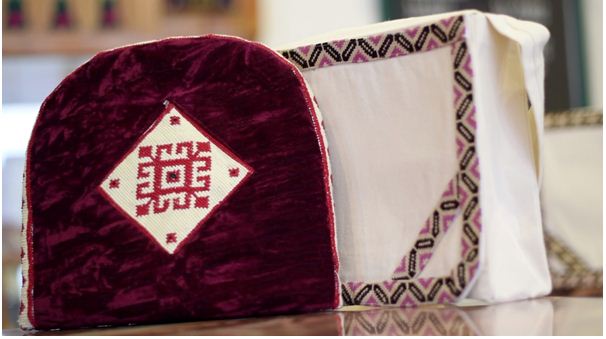
Serena Hotels provides the women with raw material and purchases the finished products to use in Serena Hotel’s properties, showcasing them for the much wider audience of guests. Through cottage industry production, local women are empowered to reach national and international market. Thus, in addition to supporting the community Serena Hotels is able to provide its own properties with unique products, such as linens, corporate gifts, carpets, bathroom amenities and others, that are not only tailor-made but handmadealso, depicting the rich cultural heritage of Pakistan and showcasing the uniqueness of the crafts of Gilgit-Baltistan. By now, Karighar is making the uniforms, bedding and Food & Beverages Linen for Serena Hotels properties all across Pakistan.
Hence, it can be contemplated that, by such CSR initiatives, highlighting “Krighar” Serena Hotel is proving to be helpful inintroducingthe financial independence and empowering of communities. And on the broader end Serena Hotel is helping in strengthening the economy of Pakistan.
I believe, the CSR activities by Serena Hotels are worthemulating
and there are reasons to believe that economic and social landscape of Pakistan
can change for the better if other companies too initiate their corporate
social responsibility with the same zeal as is being done by Serena Hotels.
----------------------------------------------------------
Social Media
Search