Tuesday, 6 April 2021

Khalid Taimur Akram, Executive Director, CGSS
After the disintegration of the Soviet Union in 1991, the Republic of Azerbaijan has progressed by leaps and bounds. It has come a long way from being a newly interdependent country through its inclusive economic goals and friendly foreign policy options.
It happened due to the vigilant policies initiated by Former Azerbaijani President Haider Aliyev. The visionary leadership continued and improved by his ingenious son and incumbent President His Excellency Ilham Aliyev.
In present times, the country stands as a united and developed nation. It has signed multilateral agreements of regional connectivity and socio-economic development with other countries to gain broader international support vis-à-vis its political and military narrative.

The incumbent government under President Ilham Aliyev has
masterfully outmaneuvered its rivals on all fronts. In this article, important
aspects of Azerbaijan’striumphs’ rise during the past couple of decades are elaborated. Moreover, the success stories of Azerbaijan under the visionary
leadership of President Ilham Aliyev are also highlighted.
Azerbaijan’s Military
Victory in Nagorno-Karabakh
The brave and patriotic Azerbaijani people never forgot the illegal Armenian occupation of the Nagorno-Karabakh region during the first Nagorno-Karabakh war. It ended after a cease-fire agreement in 1994. To avenge those losses, the Azerbaijani people increased their preparations during the last decade and left no stone unturned in getting ready to teach a memorable lesson to the arrogant Armenian people. The hostilities between both countries culminated when the Azerbaijani government under the leadership of President Ilham Aliyev.

He decided to push away the tyrannical Armenian army from their rightful land and achieved a landmark victory. The act had forced the over-confident Armenian government to give up all of its illegal possession in the region under an agreement signed on 10th November 2020.
In the aftermath of this agreement, the world started to notice and appreciate the valor and prowess of Azerbaijani citizens who have not hesitated to sacrifice their lives for a noble and just cause. In this regard, the news of the U.S. army's eagerness to study and understand Azerbaijan's excellent use of drone warfare during this conflict is an apt example.
This victory also effectively defies the absurd statements from the international media about the unrest and miserable political atmosphere in Azerbaijan as such outstanding victory cannot be achieved without complete unity.
Azerbaijan’s Foreign
Policy Initiatives: An Analysis of Successful Implementation
While discussing Azerbaijan's successful military campaign
against Armenia, one must not forget the diplomatic efforts conducted by
President Ilham Aliyev to portray to the world vis-à-vis Azerbaijan's
Nagorno-Karabakh’s stance. Due to the vigilant activities by Azerbaijan's
officials during the past couple of decades, the world was convinced that
Azerbaijan has every right to reclaim the conflicted lands. It has also been
witnessed in the recent Nagorno-Karabagh conflict.
Azerbaijan’s visionary leadership made sure that its rightful stance is duly propagated and disseminated throughout the world. For example, whether it was the platform of the Organization of Security and Co-operation in Europe (OSCE)Minsk Group made for the amicable resolution of the Nagorno-Karabakh conflict in 1992, other bilateral or multilateral platforms vis-à-vis this conflict. Consequently, important international platforms like the United Nations Organization (UNO), the Organization of Islamic Cooperation (OIC), and many conscientious countries worldwide have accepted Armenia's atrocious role in this conflict. Moreover, it was demanded evacuation from the Nagorno-Karabakh region until the start of the second Nagorno-Karabakh war.

Under the guidance of President Ilham Aliyev, Azerbaijan has
always kept its key allies like Pakistan and Turkey close to their heart. In
recent times, they have reached new heights of international, military,
academic and socio-economic cooperation. Furthermore, more dynamics of regional
cooperation have been enhanced and are expected to strengthen further in the
near future. The country has also fostered active engagement and cooperation
with significant regional and global organizations.
Azerbaijan’s Growing
Influence in the Region:
Under President Ilham Aliyev's dynamic leadership, Azerbaijan has continued its effective policies of developing strong regional political and economic partnerships. In this aspect, certain factors are important to highlight that has led to the exponential increase in forming regional alliances for the greater good of the whole region.
For instance, Azerbaijan's geopolitical and strategic location, unified stance over the Nagorno-Karabagh region, effective structural and international policy reforms. Instead of throwing caution to the wind and blindly joining alliances of major world powers, Azerbaijan’s foreign policy objectives of restraining itself from joining joint military alliances of the superpowers and keeping its neutrality intact have remained commendable.
Moreover, its inclusive economic initiative, peacekeeping
missions, and education programs in Iraq and Afghanistan have been appreciated,
worldwide.
Successful Inclusive
Economic Plans
Azerbaijan is a country that has been bestowed with abundant natural resources. Its oil and gas production facilities have bought huge sustenance to its economic structure over the past decades. Its 1994 “contract of the century” agreement with multiple global oil companies has significantly boosted its Gross Domestic Product (DGP). Moreover, these resources have also provided the necessary impetus for its economic uplift during President Ilham Aliyev's tenure, which continues to this day. Consequently, its exports have steadily increased across the globe.

Furthermore, the structural reforms of the early 1990s
related to price liberalization, privatization reforms, fiscal reforms, and
agricultural reforms have also substantially modernized Azerbaijan's economy
during the past three decades. Due to the worldwide downfall in oil-gas prices
and the rampant spread of the Covid-19 pandemic, the world’s economies have
suffered drastically. In this regard, Azerbaijan's economy has faced a minor
setback. However, the minor setback is covered and substituted with positive
economic indicators and efficient policies, and visionary leadership.
Rise of Azerbaijan's
Tourism Industry:
Presently, the significant increase in the efficacy of
Azerbaijan’s tourism industry for economic growth and soft image building
cannot be denied in the modern age. With the fluctuating oil and gas prices in
the international market, the incumbent government has focused on developing
and expanding its tourism industry to recover from any economic repercussions.

As a result of the consequent prudent steps, tourism in
Azerbaijan has increased exponentially in recent years. In the year 2019, the
success of the tourism industry in the country reached a new height. 3,170,400
foreigners from 193 countries visited Azerbaijan during this year. These numbers
were 11.3% more than in 2018 which is a testament to the country’s tourism
industry’s success. The main activities that attracted the visits from
countries around the world were leisure, serenity business, exploring
cultural-religious sites and to some extent seek better medical assistance.
Conclusion:
The 21st century C.E has given a plethora of development and growth opportunities to the world and the people of Azerbaijan as well. Since 2003, President Ilham Aliyev has tried his best to facilitate and uplift his country’s socio-economic and political development. For achieving this goal, he has used all his intellect and understanding of the region's economic and political affairs to become a desired leader in his country. He has also outplayed and outlasted his regional opponents in search of Azerbaijan’s stability. Under such circumstances, it is needless to say that Azerbaijan’s future is prosperous. In this context, it is also expected that this generation of Azerbaijani people will be witnessed and add to become a more stable nation.
Moreover, the country will continue to play a substantial role in regional economic prosperity, enhancing people-to-people connectivity and increasing peace and stability in the wider region under President Ilham Aliyev’s visionary leadership.
-----------------------------------------
The writer of this Article is Khalid Taimur Akram, Executive Director, Center for Global & Strategic Studies (CGSS), Islamabad
------------------------

ISLAMABAD, APR 6: Minister for Education and Professional Training Shafqat Mehmood said on Tuesday that there will be no in-person classes for grade 1 to 8 in areas affected by Covid-19 till April 28.
The minister was addressing the media after the National Command and Control Centre (NCOC) held a meeting to review the opening of the country's educational institutions.
He started off by stating that two main topics were discussed during today's NCOC meeting. The first was whether educational institutions that have been closed down till April 11 will continue as is or will they be opened, he said.
The second topic of discussion was the schedule for exams, he said, adding that this included the exams for grade 9, 10 and 11 as well as those for O and A levels.
"During today's meeting it was decided that classes for grade 1 to 8 will not be held in districts that are affected [by Covid-19] and this will go on till April 28."
For example, the Punjab education minister informed the meeting that he has 13 districts that have been affected, he said. Therefore, in these 13 districts classes for grade 1 to 8 will not require the physical presence of students.
"The provinces will decide which areas are the most affected and where this will be implemented."
The minister said that this decision will be reviewed again on April 28, when the NCOC will debate on whether or not to allow classes for grade 1 to 8.
Mehmood also said that classes for grade 9, 10, 11 and 12 will be allowed resume from April 19 with strict standard operating procedures (SOPs).
Earlier, Mehmood said on Twitter that during the session the government will "decide whether to open or further close educational institutions. The exam situation will also be discussed."
---------------------------------------------------------------------
COURTESY DAWN NEWS
----------

ISLAMABAD, APR 6: Minister for Education and Professional Training Shafqat Mehmood is currently addressing the media after the National Command and Operation Centre (NCOC) reviewed the opening of educational institutions in Covid hotspots across the country.
He started off by stating that two main topics were discussed during today's NCOC meeting. The first was whether educational institutions that have been closed down till April 11 will continue as is or will they be opened, he said.
The second topic of discussion was the schedule for exams, he said, adding that this included the exams for grade 9, 10 and 11 as well as those for O and A levels.
"During today's meeting it was decided that classes for grade 1 to 8 will not be held in districts that are affected [by Covid-19] and this will go on till April 28."
For example, the Punjab education minister informed the meeting that he has 13 districts that have been affected, he said. Therefore, in these 13 districts classes for grade 1 to 8 will not require the physical presence of students.
"The provinces will decide affected provinces and where this will be implemented."
The minister said that this decision will be reviewed again on April 28, when the NCOC will debate on whether or not to close down educational institutions till Eid.
Earlier, Mehmood said on Twitter that during the session the government will "decide whether to open or further close educational institutions. The exam situation will also be discussed."
-----------------------------------------------------
COURTESY DAWN NEWS
------------

ISLAMABAD, APR 6: The National Command and Operation Centre is currently holding a meeting to review the opening of educational institutions in Covid hotspots across the country.
Minister for Education and Professional Training Shafqat Mehmood is chairing the meeting which is also being attending by provincial health ministers and officials.
Today's NCOC session will also review standard operating
procedures (SOPs) for Ramazan in light of suggestions from religious scholars.
Mehmood said on Twitter that during the session the government will "decide whether to open or further close educational institutions. The exam situation will also be discussed."
Earlier, even though Mehmood had announced that schools will remain closed, he had stressed that board examinations will take place according to their timetable as giving students "baseline" grades was no longer an option.
Schools and learning centres in Islamabad and several major cities of Punjab and Khyber Pakhtunkhwa have been closed since March 15 in light of surging coronavirus cases.
The decision on closures during the third wave of the virus was first taken on March 10 by the NCOC, when it was decided that educational institutions in 10 major cities, including Islamabad, will be given a two-week spring break from March 15 to March 28.
However, as cases continued to rise and spread to more cities in Punjab and KP, the NCOC in a review on March 24 decided to extend the closures till April 11, this time including more cities in the said provinces. At the time, institutes in Balochistan and Sindh were advised to maintain a 50 per cent attendance policy since the incidence of cases was lower in these provinces.
Areas other than Islamabad where educational institutes are closed:
Punjab
- Lahore
- Rawalpindi
- Gujranwala
- Gujrat
- Multan
- Faisalabad
- Sialkot
- Sargodha
- Sheikhupura
KP
- Peshawar
- Mardan
- Charsadda
- Swabi
- Kohat
- Lower Dir
- Malakand
- Swat
- Nowshera
- Buner
Two days ago, the Sindh government also suspended physical classes for grades one till eight in all public and private schools for 15 days starting April 6 (today) in view of the rising incidence of Covid-19 cases in the province.
Sindh Education Minister Saeed Ghani said schools will be able to continue delivering online classes, or keep the students engaged through homework and other means.
-------------------------------------------------
COURTESY DAWN NEWS
----------

NUR-SULTAN, APR 6: The Head of State decreed to appoint Akan Rakhmetullin as the Deputy Foreign Minister of Kazakhstan, on Monday, Apr 5.
Born in Almaty is the graduate of the Almaty Energy Institute, Diplomatic Academy of Kazakh MFA. Prior to the appointment, he served as Extraordinary and Plenipotentiary Ambassador of Kazakhstan to Pakistan.
----------------------------------------------------------
COURTESY inform.kz
--------------

ISLAMABAD, APR 6: The First Session of the International Online Internship Program, “Contemporary Dynamics of Indonesia” was held. The internship program is jointly organized by the Embassy of Indonesia to Pakistan and the Center for Global & Strategic Studies (CGSS), Islamabad.
The session commenced with the welcome remarks of Adam Mulawarman Tugio, Ambassador of the Republic of Indonesia to Pakistan. He appreciated the initiative to conduct this Online International Internship Program. He was of the view that this program will provide an opportunity to Indonesia and Pakistan for further cooperation as both countries are democratic and home to the largest Muslim populations.
He also emphasized that Indonesia has exciting opportunities
for scholars and researchers that can be explored during this internship
program. He concluded by inviting more ideas and areas of cooperation between
Indonesia and Pakistan.
The theme of the first session was Indonesian Politics:
Between Islam and Nationalism and the speaker for this session was Dr. Abdul
Gaffar Karim from the faculty of Political Science, Gajah Mada University,
Yogjakarta, Indonesia.
He discussed four perspectives during the session including,
brief history and geography of the country, the political history of Indonesia,
implementation of Syariah (Shariah) in the daily lives of Muslims in the
country, and lastly the prospects.
He highlighted the social outlook of the country and
mentioned that Indonesia has almost 17000 islands and it is the 4th most
populous country. Moreover, it is the home to hundreds of ethnic and religious
groups with a majority Muslim population.
Discussing the political outlook of the country, Dr. Abdul
Gaffar shared that the state ideology is based on Pancasila, it is a democratic
state with a bicameral legislature and presidential form of government where
people elect their president after every 5 years,
He also highlighted the Syariah Banking system under the
Bank Syariah Indonesia that follows the finance system based on the concept of
Islamic monetary system, Non-riba. Furthermore, 40.4% of the Islamic bank
industry is controlled by the state through the Bank Syariah Indonesia.
He added that the Syariah banking on the local level marks the
presence of Islam in the daily life of people and is implemented pragmatically.
Dr. Abdul Gaffar stated that Indonesia will remain a
nationalist, semi-secular state with some Islamic-inspired policies in many
sectors.
The session was moderated by Ms. Laraib Fatima Hassan, Communication & Coordination Manager, Center for Global & Strategic Studies (CGSS), Islamabad. Masters and Ph.D. level Students from across Pakistan are a part of this Online International Internship Program. This program will equip them with the knowledge of the contemporary dynamics of Indonesia and its various sectors.
-----------------------------------------------------------------
COURTESY cgss.com.pk
------------------
Monday, 5 April 2021

Munaza Kazmi
Readers must have heard the name
of Hunza, as a paradise on earth, let me tell you it’s more than what you are
wondering. I would name it as a Hidden Treasure, The Magical, & Absolutely
Incredible!
Recently have come back to Islamabad from this wonderful fairy land, with suitcase full of magical moments & stories, that I wish to tell the world. Moreover, it was my solo trip, which make it much more important to share, since I want to tell the communities around the world with much confidence that, it is Safe to visit Pakistan, even as a solo woman.
Pakistan, a land blessed with vibrant landscapes; rivers, sands, lakes, snow-capped mountains, valleys, waterfalls, springs, glaciers and a lot more, moreover in great abundance.Hunza is one from the list.
Hunza is a mountainous valley, situated in the northern part of Gilgit-Baltistan, Pakistan, bordering with Khyber Pakhtunkhwa to the west and the Xinjiang region of China to the north-east. The valley is situated at an elevation of 2,438 meters, which make the topography and climate particularly extreme. People of the area speak local languages such as Burushaski, Wakhi, and Shina, however, the native of the valley can speak English very well.
The region has one of the highest literacy
rates as compared to other similar districts in Pakistan due to the influence
of His Highness Prince Karim Aga Khan, whom most of the Hunzakuts follow as
their spiritual leader.
One my visit I found as much as girls going to schools as boys, also community is broad minded, hospitable and friendly. Likewise, you would witness women working as café owners, farmers and shop keepers as well. Much thanks to AKDN, that educated and empowered the community.
I
came to Hunza in the first week of March. Far before landing, I got the
understanding that, what I have read about the region was nothing in front of
what am watching. Snowcapped mountains, the blue sky, it’s totally dreamlike.
PIA
landed on a beautiful tiny airport of Gilgit, it was much fun to see clear blue
sky and huge rocks towering every sides of the airport.

My first stay was at Gilgit Serena Hotel. An attractive and luxurious lush green hotel, encircled with huge mountains casting spell on the viewer, with a scenic view of Rakaposhiworld 6th highest peak from the Dumani restaurant, and the hospitable staff.
Next
morning, I set for the journey with a guide to known paradise, here I would
like to suggest the people who always ask questions about safety and security
that, all you need is to book a reputable
hotel and a travel-guide, as this will help you in knowing places and a sense
of safety. Hunza is 2.5 hours away from Gilgit, the journey is as exciting,
scenic and adventurous as one can imagine, and I was wondering, if the journey is that spellbinding, what
about the destination.

Reaching
Hunza, I felt like the whole land is celebrating Pink day! Since the
roadside farms, trees and meadows, all were laden with pinkish-white flowers.
Before
checking in to the hotel, I decided first to explore the celebrated Altit Fort
that enjoy a history of 1,100 years and the surrounding 100-year-old heritage
village and its civilization, that is renovated by Aga Khan Cultural Services
Pakistan.

It
was extreme cold, which made my heads spinning, equally from the encircled road
trip, thus I told my driver to take me straight to Karimabad. I checked in to
Hunza Serena Inn, immediately I was moved into the comfort of Deluxe Room, they
served me with a hot cup of tea with some traditional biscuits that saved me
from getting cold. The hotel offers a variety of tasty food, also you can order
something that is not in the menu and it will appear in minutes.
Later,
the evening I spent switching off my mobile phone watching the mountains, in
mountains, one feels seclude: secluded from word, from everything but the
hospitable people and the love of nature.

Early morning, I packed by the bag to explore more
of Hunza, my first stop was Baltit Fort. A fairy-tale-like fort built in the
8th Century BC on top of a hill overlooking Karimabad, is the most prominent
landmarks in Hunza. Its majestic location, being surrounded by the snowy
mountains, make this fort one of the most photogenic.

In order to get to the fort, one will have to
climb a steep road for 15 minutes through a local village before you will
arrive at the fort where you will be able to get an unobstructed view of
Karimabad and the valleys beyond. On a clear day, you can see Rakaposhi and
Diran peaks all the way from the fort.
The local village around the fort is also worth exploring as well so be sure to spend some time and walk around the village.
Later
in the noon, I set off for Passu Cones & Glacier, the grandeur of Cones on
very sight will enthralled your spirits. Meanwhile, on crossing Attabad Lake I
become speechless by encountering the tranquility of emerald green water, with
the background of huge mountains.
The next spot was a sparkly frozen Passu lake, whose glittery crystals dragged me down the sloppy hill, and there I felt as a living character of The Arabian Nights: walking on water, really it felt magical, well Hunza itself is a magic.
Late afternoon occurred as an adventurous
journey of crossing Hussaini Bridge, known as the most dangerous
bridge in the world. By now I was totally tired, however still I
maneuvered myself up to a hill way for reaching Borith Lake, a gorgeous pond
where you would discover a number of birds, and maybe yaks, also the locals are very
hospitable, and they would love to host you. Having tea with the loving and
hospitable host is all I have wanted.
------------------------------------------------

ISLAMABAD, APR 5: The Pakistan Democratic Movement (PDM) has served show cause notices to the PPP and the ANP (Awami National Party), it emerged on Monday.
The development was confirmed by PDM secretary general and PML-N stalwart Shahid Khaqan Abbasi. It was not yet clear on what grounds the notices were issued, but earlier this week it was reported that they would be sent for not attending the alliance meeting on April 2 and violating its decision.
Speaking to Dawn News, Abbasi said that the show cause notices have been issued after approval from PDM President Maulana Fazlur Rehman.
"The notices have been sent on WhatsApp. Hard copies will be handed over during today's Senate session," he said, adding that both the parties have been given seven days to respond to the notices.
Whatever answer is received will be presented during a meeting of the opposition alliance's constituent parties, he said. "The PDM will decide the future course of action."
He also said that it was written on the notice that the opposition alliance will not make it public. However, both the parties can make them public if they wish to do so, he said.
Meanwhile, Leader of the Opposition in the Senate Yousuf Raza Gilani confirmed that the PPP had received the notice.
Five parties within PDM form new bloc
Last week, the PDM decided to part ways with the PPP and ANP, and form a new alliance of five opposition parties having 27 members in the Senate. The decisions were taken at a meeting of senators of five opposition parties, minus the PPP and the ANP.
The five parties included the PML-N, Jamiat Ulema-i-Islam (JUI-F), Pakhtunkhwa Milli Awami Party (PkMAP), National Party (NP) and Balochistan National Party (BNP-Mengal).
In the meeting, PDM President Maulana Fazlur Rehman was asked to serve show cause notices to the PPP and the ANP seeking explanation why both parties had violated the PDM decisions. At the meeting, questions were also raised why the two parties got votes of Balochistan Awami Party (BAP) in the recent Senate polls and why an alliance was made with a ruling coalition partner.
These five opposition parties are angry over the PPP’s move to get the slot of the Senate opposition leader with the support of the independent senators who are known to be affiliated with Balochistan Awami Party (BAP), a party considered to be created by the establishment only weeks before the 2018 general elections and which is a partner with the PTI in the ruling coalition.
The differences within the PDM first came to the surface when the PPP, while backtracking from its earlier agreed formula regarding the distribution of the three top Senate offices, unilaterally nominated Gilani for the opposition leader’s office and started lobbying for it.
By now the relationship between the PPP and the PML-N has become so tense that the parties have started accusing each other of damaging the opposition’s unity with clandestine support of the establishment.
PPP can take on govt alone, says Bilawal
On Sunday, PPP Chairman Bilawal Bhutto-Zardari had announced that the party was prepared to fight against the ‘selected’ government even if it would have to do opposition without the support of other parties.
“The PPP is not only ready to do opposition along with other parties but is also prepared to fight alone, as the party is sure that the ‘selected’ government will be sent packing,” vowed Bilawal while addressing a gathering at Naudero House on the 42nd death anniversary of former prime minister and PPP founder Zulfikar Ali Bhutto.
The PPP chairman also announced that on the insistence [of some PDM members] the party at its central executive committee meeting would discuss the issue of en masse resignations from assemblies.
“We will hold the government accountable for price hike, unemployment, for usurping your [people’s] economic, democratic and constitutional rights. We will also make them answerable for the PTI-IMF deal," he said.
------------------------------------------------------
COURTESY DAWN NEWS
---------------
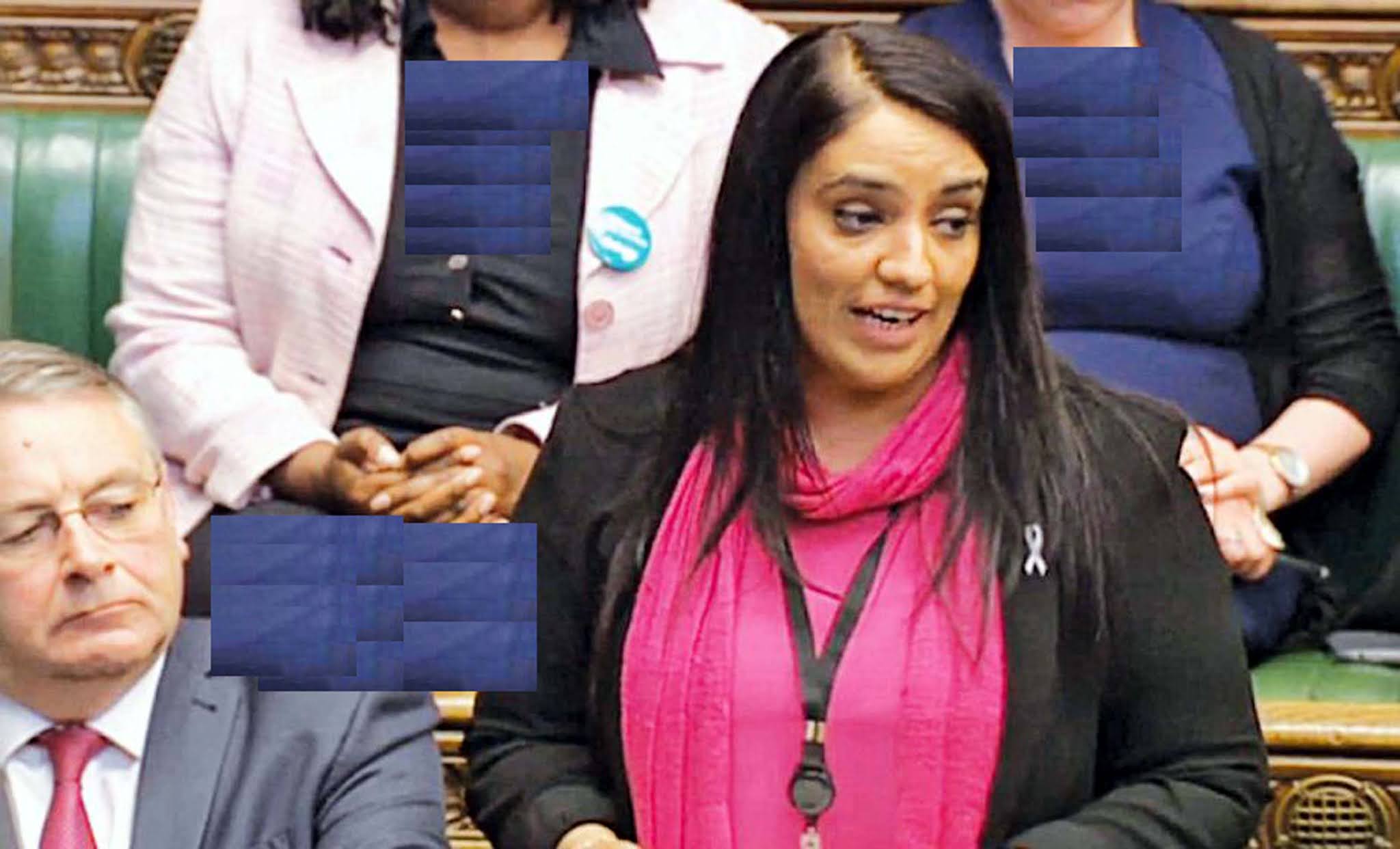
LONDON, APR 5: A British Labour MP has criticised the UK government’s decision to curtail travel from Pakistan in view of Covid-19 cases, dubbing the move “consciously and knowingly discriminatory”.
Bradford West MP Naz Shah wrote a letter to UK Foreign Secretary Dominic Raab, asking for an explanation about why Pakistan was added to the ‘red list’ when it has “substantially lower cases” as compared to France, India and Germany.
“What scientific data is any decision being led by?” she wrote, noting that France, Germany and India had 403, 137 and 24 infections per 100,000 persons, respectively, whereas Pakistan had 13.
She pointed out that the South African variant was not a concern in Pakistan whereas “it is in France”. “This begs the question why hasn’t the government extended the red list to France, Germany and India”.
Letter prompts Asad Umar to question whether UK decision is based on science or foreign policy
Her letter came after the UK said Pakistan was on the list of countries from where travelers would have to pay to quarantine in a government-approved hotel effective April 9.
Passengers from Pakistan will be denied entry to the UK unless they are British or Irish nationals or have residency rights. The cost for one adult in a hotel room for 10 days is £1,750, which does not include the mandatory £210 each passenger has to pay for testing in this period.
The announcement came as Pakistan’s National Command and Control Centre (NCOC) for Covid-19 reported over 5,000 new cases in the previous 24 hours, with over 80 deaths. The government has been criticised for low testing and a slow vaccination drive, and officials have warned that the third wave of the disease is yet to peak.
MP Shah said the decision to include Pakistan in the ‘red list’ led her to conclude that the government did not have a coherent strategy to deal with the list and that it was applying its decisions by “politics not data”.
“It is knowingly and consciously discriminating against Pakistan and the Pakistani diaspora community,” she wrote, asking for a clarification and answers to her questions.
Federal minister and NCOC head Asad Umar tweeted Ms Shah’s letter and said the UK’s decision raised an important question. “Every country has a right to take decisions to safeguard the health of their citizens.

“However, the recent decision by UK govt to add some countries including Pakistan on the red list raises a legitimate question whether choice of countries is based on science or foreign policy,” he wrote.
Ms Shah is a British politician of Pakistani descent who was elected in May 2015 from Bradford, a district that has a 20 per cent Pakistan-origin population. In July 2018, she was appointed Shadow Minister of State for Women and Equalities.
MP Shah was barred from Labour party’s activities for three months in 2016 in a row over anti-Semitism, after she admitted her social media posts about the Israel-Palestine conflict were anti-Semitic.
She was re-elected as the MP for Bradford West in the 2019 general election. She is a fierce advocate for British Pakistanis in the UK, and has frequently called out racism and discrimination by both the government and the media.
Last year, she called out rightwing paper The Telegraph, which ran a report saying Pakistan was responsible for 50 per cent of the UK’s ‘imported’ Covid-19 cases with data from Public Health England (PHE) involving just 30 cases.
Ms Shah at the time said the headline and the report had “racist undertones” and unfairly shifted the blame of the UK’s failures on Pakistan.
British Pakistanis ‘thankful’
Dozens of Twitter users responded to the MP’s letter and praised her stance, with one thanking her for “being the voice of Pakistanis”.
Some even tagged their constituency MPs and urged them to join Ms Shah in raising concerns over the travel ban for Pakistanis.
Distressed travelers expressed hope that the UK government would rethink its decision. “Please take Ramazan into consideration and postpone the decision so we can get back home. Pakistani placed [the UK] from Category C to B and the UK placed it in the red list so it’s not our fault,” said one account.
Another said: “My mother (67 years old) who is scheduled to return to the UK from Pakistan on April 13 would now have to quarantine in a hotel for 10 days but she isn’t well to do that due to her medical condition. Why isn’t there no medical exemption? It is ridiculous.” He added that flights before April 9 were not available.
Students said the decision had left their plans to travel to the UK for university and educational training in limbo. Journalist Zahrah Mazhar told Dawn she had planned to go to the UK in June on a fellowship programme which has already been cancelled twice. “This will probably be the third time!”
--------------------------------------------------
COURTESY DAWN NEWS
-------

NUR-SULTAN, APR 5: Kazakhstan aims to strengthen bilateral relations with Turkey in the field of communications to benefit from its experience and expertise, said the country's information and social development minister on Sunday.
Aida Balayeva spoke to Anadolu Agency ahead of her two-day
visit to Turkey set to begin on Monday.
Recalling that Turkey was the first country to recognize
Kazakhstan's independence in 1991, Balayev said Turkey has always stood by
Kazakhstan. "Despite its own economic difficulties during the 1990s,
Turkey unconditionally invested in Kazakhstan," she said.
Noting that Turkey-Kazakhstan diplomatic relations will
complete 30 years next year, Balayev said: "The productive partnership and
interaction between our countries will continue to expand."
Cooperation between Anadolu Agency and Kazinform
The minister said that a cooperation agreement was signed
between Kazakhstan's state news agency Kazinform and Anadolu Agency in 2018.
"Today, very close cooperation has been established
between the news agencies of the two countries. The agencies share daily news,
photos, and images with each other. They are currently planning to implement
joint projects to mark the 30th anniversary of Kazakhstan's independence."
She pointed out that the previously created union of Turkic
language news agencies is not active enough.
"We can think of creating a common platform again between media organizations and their representatives. We can organize this platform within the framework of Astana Media Week," an annual event to develop domestic media field and promote business relations in the industry at the regional level.
----------------------------------------------------
COURTESY anews
--------------

ISLAMABAD, APR 4: Prominent Indian writer and Editor of FORCE, an Indian magazine on national security and defence, Pravin Sawhney, has said that the Russian Foreign Minister, Sergei Lavrov’s upcoming visit to Pakistan shows Pakistan’s successful foreign policy.
Pravin Sawhney in a tweet said, “Russian foreign minister
Lavrov’s visit to Pakistan after India should tell us aplenty about Pak’s
successful foreign policy pivoted on prosperity and connectivity. Not that
Pakistan has given up on Kashmir. It has found a peaceful way to get there!”
Russian Foreign Minister Sergei Lavrov is scheduled to pay a
visit to Pakistan from April 6 to 7, Pakistan Foreign Ministry said on Friday.
Pakistani Foreign Office spokesperson Zahid Hafeez Chaudhri
said the broad agenda of discussions will include bilateral ties with
particular focus on economic cooperation between the two countries. “The two
sides will also share their respective perspectives on regional and
international issues of mutual interest,” Chaudhri said at his weekly briefing.
Before arriving in Pakistan, Sergei Lavrov will also visit India on a two-day tour starting from Monday (April 05).
------------------------------------------------------------
COURTESY kmsnews
------------
Social Media
Search