Friday, 9 April 2021

LONDON, APR 9: About 50 members of parliament signed a letter addressed to British Prime Minister Boris Johnson, demanding charter flights for stranded citizens in Pakistan and Bangladesh. They also asked for clarity on when the ‘red list’ would be reviewed.
Led by Yasmin Qureshi, a British Pakistani MP for Bolton South East, the letter said the ban came into force at a short notice and that travellers had been “put into a position of either being stuck abroad or getting into considerable debt” to pay to get home. The MPs asked the government to explore charter flight options or provide financial support for stranded UK residents.

“If this cannot be done, then measures need to be put in place to extend the cut-off date,” the letter said, adding: “The vast majority of UK residents currently in those countries will have had to save up for some time to fly over there. Most are not risk or even moderately wealthy people but are working class citizens.”
The UK government announced last week that Pakistan would be added to the ‘red list’ of countries, a travel curb that is effective from April 9. Passengers from Pakistan will be denied entry to the UK unless they are British or Irish nationals or have residency rights. The cost for one adult in a hotel room for 10 days is £1,750, which does not include the mandatory £210 each passenger has to pay for testing in this period.
The letter raised concerns about “lack of available data and evidential and scientific reasoning” behind Pakistan’s inclusion on the ‘red list’. It noted that the current rate of infection in Pakistan is reported to be lower than the UK.
The MPs also asked the government to clarify when the next review date would be for removing countries from the red list “so constituents can make realistic travel plans”.
-------------------------------------------------
COURTESY DAWN NEWS
-----------

ISLAMABAD, APR 9: Prime Minister Imran Khan on Thursday called upon member countries of the Developing Eight (D8) grouping to expand the scope of trade between themselves and mobilise resources to tackle the challenge of the Covid-19 pandemic.
He was addressing the 10th virtual summit of the D-8 Organisation for Economic Cooperation, a group that aims to facilitate cooperation in the field of development and counts Bangladesh, Iran, Turkey, Malaysia, Egypt, Indonesia, Nigeria and Pakistan among its members.
The theme of the summit, hosted by Bangladesh, was "Partnership for a Transformative World: Harnessing Power of Youth and Technology".
In his remarks, Prime Minister Imran said the D8 had been formed to "improve member states' position in the global economy, diversify and create new opportunities in trade relations, enhance participation and decision-making at the international level, and improve living standards".
He noted that today, the D8 was a grouping of over one billion people with a combined GDP of $4 trillion and "we possess two essential prerequisites for growth: resources and enterprising people".
He proposed the following five-pronged roadmap to "realise the vision of D8 in these testing times".
- Financial and resource mobilisation:
"We must mobilise financing and resources to recover robustly from the economic and health crisis induced by the Covid pandemic," Imran said.
He recalled that he had already proposed a five-point plan which included debt relief, creation and redistribution of special drawing rights, mobilisation of climate finance, elimination of illicit financial flows and return of stolen assets to developing countries.
"It was in this context that I called for a global initiative on debt relief last April. I invite the D8 members to consider these five points and join in advocacy of Covid-related relief measures."
- Expansion of intra-D8 trade:
The prime minister suggested that "concrete actions" should be taken to expand trade between the D8 countries from the current $100 billion to $500bn by 2030.
"It should include measures like simplification of border procedures, enhancing institutional linkages and operationalising new initiatives.
"We welcome ideas like the D8 payment card which will enable transactions in local currency," he said.
- Youth engagement strategy:
Imran said a strategy to engage the youth of the developing countries through promoting cultural, educational, scientific and business exchanges was very important.
He particularly emphasised forming linkages through educational institutions such as scholarships, skill development programmes, trainings, fellowships, joint research, and exchange programmes for the youth, especially in the field of science and technology.
- Knowledge-based economies:
"Technological development is a gateway to economic prosperity particularly in the post-pandemic period when reliance on technology would be greater than ever before in human history," the prime minister stressed.
"To remain competitive, we must promote knowledge-based economies, increase expenditure on research and development, and focus on rapid digitalisation," he added, pointing out that Pakistan had recently hosted the inaugural meeting of the D8 network of pioneers of research and innovation.
- Relevance of the D8 in citizens' lives:
The premier stressed that it was important to make the D8 organisation relevant in the lives of the citizens of its members. This could be achieved, he said, through promoting food security, enhancing cooperation in health, holding joint sports events and helping during natural disasters.
"To achieve these goals we need a high level of commitment and mobilisation of financial resources by both developed and developing economies.
"Partnerships between governments, international financial institutions, businesses and civil society are essential to leverage technology, innovation and skills to enable every young person to have all opportunities [present] to realise their potential," he said.
Rising inequality
Speaking about the socioeconomic costs of the pandemic, Prime Minister Imran said the health crisis had accentuated inequalities not only within countries but also between rich and poor countries.
"The Covid-19 pandemic has caused the death of over 2.9 million people, more than 250m people have become unemployed, trillions of dollars were lost as a result of global economic contraction and the virus has taken a heavy toll on poor countries and the poor in all the countries," he said.
Developing countries, he said, were faced with the dual dilemma of saving their people from the virus as well as hunger. Today, the world "boasts" a large number of young people who are unemployed, uneducated and unskilled for the demands of the 21st century, he added.
"Our youth has not only the potential to optimise our opportunities but also overcome our common challenges. They are entrepreneurs, business innovators, technology pioneers, educators, activists, artists and journalists.
"We must create new opportunities for this predominant component of our population. Harnessing technology, promoting innovation, [and] investing in youth education, skills and training is, therefore, an urgent imperative," the premier emphasised.
Imran said his government was tackling this investment in the youth through initiatives such as the Kamyab Jawan and Hunarmand Pakistan programmes, Youth Entrepreneurship Scheme and Digital Pakistan.
"The pace of change has intensified in recent times, information and technology breakthroughs are fast transforming science-fiction of yesterday into today's reality," the prime minister said, noting that contemporary global challenges in a changing world were akin to moving targets — no single country could address these complexities in isolation.
"Partnerships are essential. I'm happy that in D8 we have a platform to work together for mutual benefit and win-win solutions," he remarked.
Vaccine nationalism
Prime Minister Imran said the D8 members should pay special attention to the following three areas in order to cope with the demands of a rapidly transforming world.
- Projects that harness technology for supply-side improvements with special emphasis on efficiency and productivity.
- Ideas to insulate its members from disruptions in labour markets due to technology and innovations.
- Call for Covid-19 vaccines to be treated as a global public good to ensure equity, affordability, enhanced production, and timely supply to save lives.
Elaborating on the points, the premier said that technological changes were bringing transportation and communication costs down, while automation was replacing labour. D8 countries should keep up with changing logistics and supply chains while protecting their labour-intensive economies from unemployment and social disruption, he added.
"We must push back against vaccine nationalism and undue export restrictions. The global vaccine manufacturing companies must either speed up production or share their technology and expertise with developing countries for adequate vaccine supply."
---------------------------------------------------------
COURTESY DAWN NEWS
-----------
Thursday, 8 April 2021

ISLAMABAD, APR 8: Tuberculosis (TB) is caused by a bacterium that is known as ‘Mycobacterium Tuberculosis’. This bacteria usually just affects the lung but TB can affect any part of the body. The TB epidemic in Pakistan is extremely high and continues to rise as there is not much awareness on the disease.
Pakistan ranks as the 5th most affected region by TB around the world. It is more prevalent in children due to the fact that it is not easily diagnosable since the symptoms can easily be missed or overlooked as they are very non-specific. Moreover, TB accounts for 8% to 20% of deaths of children in Pakistan every year.
Marium M. Aslam is a 13 year old girl who studies in the 4th grade and resides with her family at New Karachi. She had always been a playful and bright child until 5 months ago when she started to feel sick quite often. Her symptoms included shortness of breath, sharp pain in the lungs, an extremely bad cough and a fever. After a few visits to the doctors and running some tests, Marium was diagnosed with Tuberculosis (TB) and Left-Sided Pneumothorax.

Ever since then Marium stopped taking much of an interest in sports, her grades dropped and her appetite lessened to the point where she faced unconditional weight loss. The situation got even worse when she collapsed due to an abnormally high heartbeat and facing trouble breathing. She was then rushed to a public hospital so that her treatment could be initiated but she faced a major hurdle there. Since she was diagnosed with an acute case of TB and Left-Sided Pneumothorax she had to be kept in isolation. However, M. Aslam, a father of five young children, could not afford admitting Marium at a private isolation firm. Her father works as a seller at a Bachat Bazar and earns a nominal sum of PKR 20,000. He was already struggling to make ends meet at home along with the education of his children, he could simply not bear the expenses of a private health institute.
And so young Marium and her family found themselves in quite the debacle. Her parents were desperately trying to figure out alternative ways to ensure that their daughter gets the treatment that she so badly required. After facing many closed doors and failed attempts, Aslam finally learned about the work that the Patients’ Aid Foundation (PAF) has done at JPMC. With the help and support provided by the Patients’ Aid Foundation (PAF), a 13 bedded TB isolation ward for complicated TB cases and other lung related issues has been introduced at Jinnah Post-graduate medical center (JPMC).
Marium was soon shifted to one of the isolation rooms of this ward where she was accommodated and made comfortable. Her treatment was started and the doctors ruled out any other condition by running some prescribed tests such as ECHO, CT-Scan, and Ultrasound etc. She also went through a minor procedure for her Left-Sided Pneumothorax and was provided with an oxygen cylinder to assist her in breathing more comfortably. Her stay lasted for 13 days.
Mariam’s family was so grateful for this service provided by the Patients’ Aid Foundation (PAF) at JPMC. Her father was extremely thankful of how accommodating the staff was and the way they took care of his daughter and also ran various diagnostic tests which he would not have been able to afford if it weren’t for the support provided by the Patients’ Aid Foundation (PAF).
‘’I am happy to feel better, I don’t have trouble breathing and I don’t feel pain in my chest anymore. I feel like a normal and healthy kid. I am very excited to return home so I can see my mother, play with my siblings and join back school.’’ – Marium.
Marium is now almost down to the finish line on the road to recovery. She bounced back in no time and is more than ready to be back home, go back to school and go back to being her usual playful and cheery self.
----------------------------------------------

DUSHANBE, APR 8: Trade between Tajikistan and Belarus has increased twofold between 2019 and 2020. This was noted yesterday at the forum of business circles of Tajikistan, Belarus and Afghanistan which took place in Dushanbe.
Over 200 people, including heads of state bodies, enterprises, organizations, entrepreneurs, business circles of Tajikistan, Belarus, and Afghanistan were in attendance.
The Chairman of the State Committee for Investments and State Property Management of Tajikistan Sadi Kodirzoda, Chairman of the Chamber of Commerce and Industry of Belarus Vladimir Ulakhovich, Minister of Agriculture of Tajikistan Sulaimon Ziyozoda, Minister of Agriculture and Food of Belarus Ivan Krupko, Member of the Board of the Chamber of Commerce and Industry of Afghanistan Khan John Alkozai, and other representatives of business circles participated in the forum.
Cooperation between the three states has the potential to expand even further as there are vast untapped opportunities, noted the participants.
Trade and economic opportunities of all three countries in various fields were presented, and the business and commercial circles of Tajikistan, Belarus and Afghanistan were informed about the business and investment climate, investment opportunities in tourism, industry and agriculture, food, pharmaceuticals, and other sectors.
Also, a bilateral meeting of entrepreneurs of the three states was held in the B2B format, as a result of which new documents were signed on cooperation in the field of agriculture, agricultural production, agro-industrial, and pharmaceutical equipment.
Belarusian goods and products under the name Made in Belarus were showcased as part of the forum, with the inclusion of 40 enterprises and manufacturing companies of Belarus.
----------------------------------------------------------------------
COURTESY eng.khovar.tj
----------------

Stockholm, (SWEDEN), APR 8: Sweden will spend an extra SEK 7 billion on the health system and vaccinations in the fight against the corona pandemic.
In addition to the purchase and roll-out of vaccines, the billions will be used for the treatment of COVID-19 patients and other treatments that have been postponed due to the pandemic.
“We are adding financial resources to strengthen the vaccination and infection control work,” Minister of Finance Magdalena Andersson said at a press conference on Tuesday.
The proposal for extra money for the health service has been made in an additional proposal for a revised budget.
“We are putting forward a proposal to add another two billion to the regions,” Andersson said. The regions are responsible for health services in Sweden.
--------------------------------------------------------
COURTESY norwaytoday
------------

ISLAMABAD, APR 8: “Pakistan no longer has the luxury to focus on bringing the colossal pre-pandemic figure of 22.8 million out-of-school children into schools but must now actively strategize to prevent a roll-back on important gains made vis-à-vis education, especially girls’ access to education in the last decade. Inaction can result in millions of more Pakistani children dropping-out of schools.” These views were expressed by Areebah Shahid, Executive Director Pakistan Youth Change Advocates (PYCA) at the launch of the #InvestInEducationStrengthenPakistan campaign.
Education activists, influencers and media personalities from around the country gathered for this virtual event.The virtual consultation was aimed at garnering the support of key influencers from all walks of life to ensure that education and the future of over 80 million Pakistani children does not take a backseat during the COVID-19 pandemic.
Key findings and recommendations of the recently released white paper by PYCA, “Public Investment in Education – COVID-19 & Other Past Emergencies,” were also shared with the participants. The white paper is authored by Asim Bashir Khan, an economist and Public Financial Management expert.
Mr. Asim Bashir Khan while providing an overview of the key findings of the white paper stated, “Cuts in education budgets and more specifically within the education development expenditure are a routine practice and have little to do with the fall-out of emergency situations such as the on-going pandemic.” Elaborating this point, he added, “The most recent budget (fiscal year 2020-21), for instance seems to be a continuation of past trends rather than a result of the fall-out of the COVID-19 emergency. Except Khyber Pakhtunkhwa, the non-development expenditures, as usual saw an increase in all the provinces and at the federal level. In the same realm, while Khyber Pakhtunkhwa was unparalleled in terms of its planned increase in the education development portfolio, which it enhanced by 46.2 per cent Sindh and the federal government introduced meager increases of 7.7 per cent and 1.4 per cent respectively. Balochistan and Punjab, on the other hand, budgeted huge cuts worth of 23.9 per cent and 16.3 per cent respectively.”
There is however, little justification for this especially after the government itself claimed the feat of a V-shaped recovery. By doing so, the government has also effectively acknowledged that the tide of anticipated financial losses has been reversed. An early and sustained path to economic recovery coupled with international monetary support in turn means that the state does, in fact, have the fiscal space to prioritize development spending on education and other social sector subjects.
While emphasizing the urgency of the situation, journalist ZarrarKhurro said, “While we have a multitude of challenges that are likely to only multiply as Pakistan’s population grows, the important thing is to begin the process of reform and begin it immediately.”
George Fulton, pointed at the need to redefine education in terms of the many issues and concerns that have a greater buy-in both among the masses and the political elite. “Elaborating on the key linkages that education has with climate change, livelihoods or security can go a long way in ensuring that more people appreciate the importance of greater investment in education.”
“Bringing more children to schools is just one aspect of the education dilemma in Pakistan, quality is another huge concern. Investment in education should be geared towards making schools places of true learning for our children,” said social commentator FasiZaka while speaking at the event.
------------------------------------------------------

WASHINGTON, APR 8: The US State Department has refused to comment on Pakistan cancelling an earlier decision to import sugar and cotton from India but did ask the two neighbours to hold direct talks to normalise relations.
“I wouldn’t want to comment on that specifically. What I would say is that we continue to support direct dialogue between India and Pakistan on issues of concern,” said the department’s spokesperson Ned Price when asked what Washington thought of this development.
On March 31, the Economic Coordination Committee (ECC) announced in Islamabad that it was allowing the private sector to import 0.5 million tons of white sugar from India. The committee also approved another proposal to import cotton from India starting June this year.
But on April 1, the federal cabinet deferred the ECC’s decision to allow imports from India until New Delhi reinstates Article 370 of its Constitution, which guaranteed a semi-autonomous status for India-held Kashmir.
Pakistan suspended bilateral trade with India in August 2019 when New Delhi announced its decision to change Kashmir’s status.
The now defunct decision to resume trade with India had followed an agreement between Islamabad and New Delhi to observe a ceasefire on the Line of Control after months of tensions. The move had rekindled hopes that the two nuclear-armed neighbours would start taking baby steps towards normalising relations.
In 2018-19, India and Pakistan traded only $494.87 million worth of goods and that too mostly favoured India.
At the State Department briefing on Tuesday, Mr Price also reiterated the Biden administration’s desire to end America’s military presence in Afghanistan but did not say if Washington will meet the May 1 deadline.
The Trump administration had signed an agreement with the Taliban which required Washington to withdraw its troops by May 1. The Biden administration recognises the agreement but seems reluctant to meet the deadline.
“We are committed to bringing a responsible end to the conflict, removing our troops from harm’s way” but not without “ensuring that Afghanistan can never again become a platform, a launch pad, for terrorist attacks that would threaten the United States or our allies,” Mr Price said.
-----------------------------------------------------
COURTESY DAWN NEWS
---------

CENTURION, APR 8: Fakhar Zaman hit his second successive century and captain Babar Azam made 94 to set up a 28-run win for Pakistan in the series-deciding third and final one-day international against South Africa in Centurion on Wednesday.
South Africa's chances of chasing down Pakistan's total of 320 for seven were effectively snuffed out by left-arm spinner Mohammad Nawaz, who took three wickets in successive overs to reduce the hosts to 140 for five in the 28th over.
Promising batsman Kyle Verreynne (62) and all-rounder Andile Phehlukwayo (54) put on 108 off 100 balls for the sixth wicket but both were dismissed in the space of seven balls. South Africa were bowled out for 292.
Brief scores:
Pakistan: 320-7 in 50 overs (Imamul Haq 57, Fakhar Zaman 101, Babar Azam 94; K. Maharaj 3-45)
South Africa: 292 in 49.3 overs (J. Malan 70, K. Verreynne 62, A Phehlukwayo 54; Shaheen Shah Afridi 3-58, Mohammad Nawaz 3-34)
Earlier, Fakhar again scored rapidly, although he fell short of repeating the carnage he inflicted on the South African bowlers in the second match in Johannesburg on Sunday, falling for 101 off 104 balls.
It took a late assault by Babar and tailender Hasan Ali to take Pakistan's total beyond Babar's pre-match target of 300. The pair added 63 off the last four overs before Babar was caught on the deep point boundary to fall six runs short of his second century of the series.
Babar faced 82 balls, while Hasan thrashed an unbeaten 32 off 11 balls, hitting four sixes off left-arm spinner Jon-Jon Smuts in the 49th over.
Fakhar and Imamul Haq (57) laid a solid foundation with an opening partnership of 112 after Pakistan were sent in on a cloudy day.
Fakhar's 99-ball century was eight balls slower than his effort in a losing cause in Johannesburg, where he unleashed a furious assault, needing only another 48 balls to take his score to 193. But he added only one more run on Wednesday before an attempted lap shot against left-arm spinner Keshav Maharaj looped off his arm and provided a simple catch to wicketkeeper Heinrich Klaasen. He hit nine fours and three sixes.
Maharaj, one of seven changes in the South African team, took three for 45 in his 10 overs.
With three frontline fast bowlers missing because of Indian Premier League commitments, South African captain Temba Bavuma juggled an inexperienced seven-man bowling attack, making frequent changes and using spin bowlers for 28 of the 50 overs.
Six of the wickets fell to spin.
Pakistan made four changes. Leg-spinner Shadab Khan was ruled out with a toe injury and replaced by new cap Usman Qadir.
Batsmen Danish Aziz and Asif Ali were replaced by Mohammad Nawaz and former captain Sarfraz Ahmed, while fast bowler Hasan Ali came in for Mohammad Hasnain.
South African captain Temba Bavuma earlier said he hoped to take advantage of early overhead conditions which could help swing bowling.
He said the new players were like-for-like replacements. “They are fully aware of what is expected of them,” he said.
Teams:
South Africa: Temba Bavuma (capt), Aiden Markram, Janneman Malan, Jon-Jon Smuts, Kyle Verreynne, Heinrich Klaasen (wkt), Andile Phehlukwayo, Keshav Maharaj, Darryn Dupavillon, Beuran Hendricks, Lutho Sipamla.
Pakistan: Babar Azam (capt), Imam-ul-Haq, Fakhar Zaman, Mohammad Rizwan, Sarfraz Ahmed (wkt), M. Nawaz, Faheem Ashraf, Hasan Ali, Shaheen Shah Afridi, Usman Qadir, Haris Rauf.
----------------------------------------------------------
COURTESY DAWN NEWS
----------------
Wednesday, 7 April 2021

KARACHI, APR 7: Uber’s long-term partnership with Mastercard continues to grow with a new strategic initiative focusing on digital payments and advancing financial inclusions which will be facilitated by Mastercard across Pakistan, the Middle East and Africa (MEA).
As a regional first, the partnership with Mastercard will
enable Uber to drive digitization across their business operations, leveraging
Mastercard’s single infrastructure to meet all types of payments needs across
Uber Rides, Uber Eats, Uber Pass, and Uber for Business.
It is intended that the partnership will boost cashless
payments, drive digital payment acceptance, reward loyalty, while supporting
Uber’s continued social impact collaboration.
The Economy 2021 report released by Mastercard notes that the economic impact of COVID-19 has introduced permanent changes in digital consumer spending habits, growth of online banking, fintech disruption and opportunities to boost financial inclusion.
Through the partnership, both companies can bridge the
financial inclusion gap through a broad range of efforts.
Amnah Ajmal, Executive Vice President Market Development,
Mastercard, MEA explains: “Mastercard continues to partner with digital players
across the value chain to build a more connected world. Enabling secure,
immediate movement of money for individuals in the gig economy workers and
customers is especially vital as we support economic recovery efforts. Through
our growing partnership, we are enabling the company’s long-term business
growth as a result of improved operational efficiencies, driving greater
financial inclusion and innovation across the region, and ultimately boosting
the growth of digital economy in MEA.”
Last year, Uber in South Africa launched a product called
Uber Pass, which will now be available across most cities in MEA, with
Mastercard becoming a key distribution partner to help drive adoption.
Tino Waked, Regional General Manager, Middle East &
Africa, says: “This is the largest partnership for us across MEA, and we are
proud to be working together to bring key financial solutions to
driver-partners across MEA. Driver’s well-being is a top priority and putting
opportunities they want within reach is important to us.”
This new partnership builds on existing work between the two
organizations. In a joint initiative last year, Mastercard committed 120,000
free trips and meals to those supporting communities across the Middle East and
Africa, which was facilitated through Uber. This strategic partnership between
Mastercard and Uber spans across the region and through key partnerships,
supported cities, hospitals, front line workers and marginalized communities
with free rides and meals.
While vaccines are a reality, communities are still in need
of various support. Mastercard and Uber remain committed to helping people
around the world navigate these challenging times and stand ready to support
cities whether it be logistics or free rides.
The work undertaken with Uber plays a key role in advancing Mastercard’s worldwide commitment to financial inclusion and the company’s pledge to bring a total of 1 billion people, 50 million micro and small businesses, and 25 million women entrepreneurs into the digital economy by 2025.
=====================
By Khalid Taimur Akram
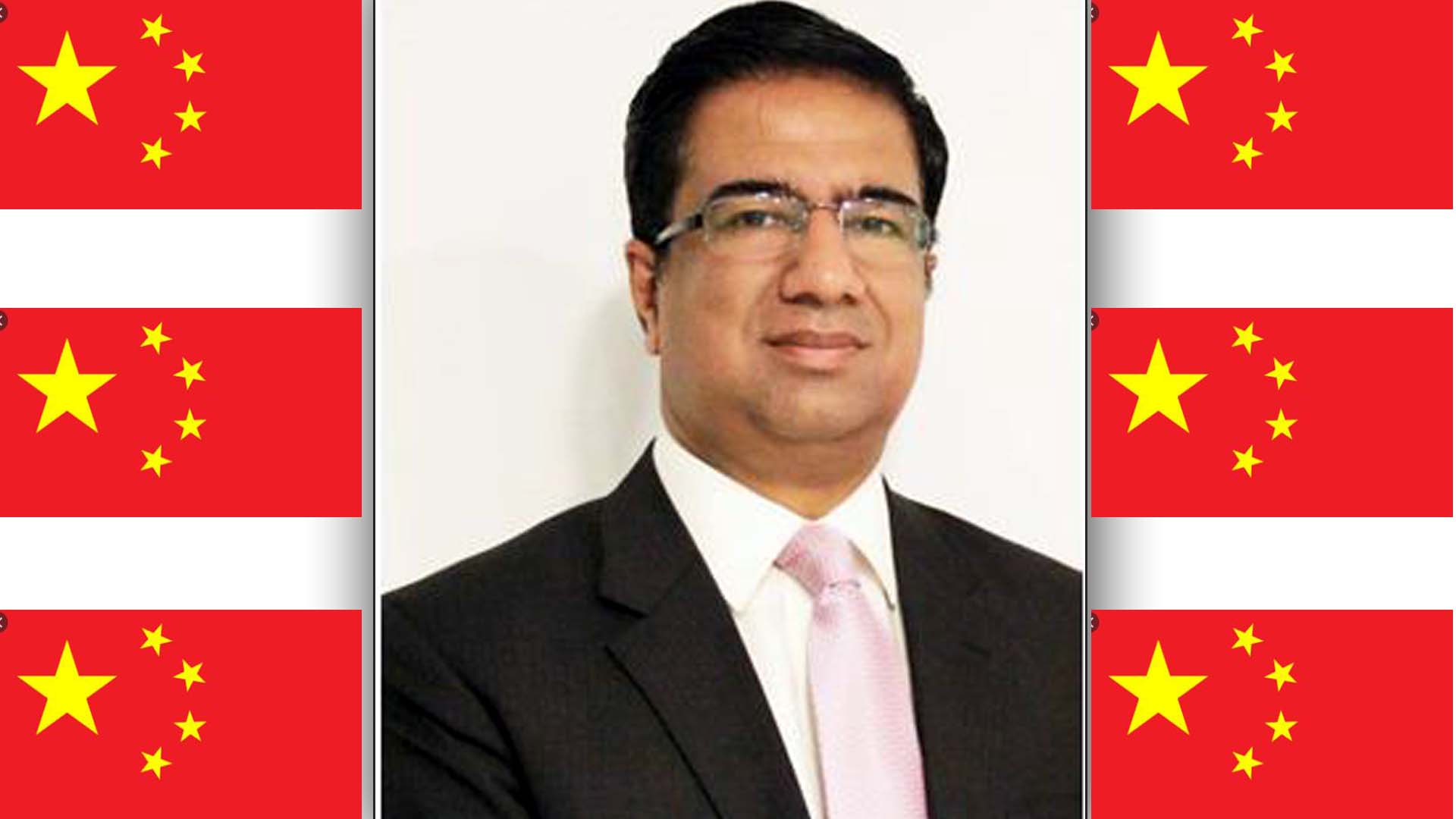
China is one of the largest and leading cotton producers in the world. The province of Xinjiang is the fifth largest producer and distributor of cotton to the globe. The country has developed its cotton production rapidly during the last 60 years. Currently, China produces 30% of the world's cotton. Its textile industry is also the biggest exporter to many major and leading brands worldwide.

In many major Western clothing brands, China has been their biggest growth market for a couple of past decades. It is the world’s biggest apparel market, accounting for about 24% of global sales. Chinese-made fabric may contain cotton from a variety of both Chinese regional and international sources. Its exports both cotton yarn and fabrics to apparel-manufacturing nations across Asia. In this aspect, Xinjiang’s cotton production is relatively high yield and good quality.
Xinjiang an important producing area of upland cotton and
sea-island cotton in the world with perfect cultivation and management
technology. Recently, the province’s cotton is banned, and the issue is being
politicized by Western players, which would be devastating for the whole
globe’s need for cotton. This article highlights the existing great potential
of China’s textile industry and development status of exceptional Xinjiang’s
cotton production. The study also analyses the current situation of the false
issue created by the West over Chinese cotton and elucidates prospects of
flourishing cotton production.
China’s Textile
Industry: An Overview
The economy of China has witnessed massive transition since the economic reforms of the 1960s. The central planning system has given numerous ways to a state-led market mechanism and paved the way for robust transformation in many domains. After the reforms, the structural and institutional arrangements have provided sufficient support to nurture the emerging industrialization, sustained the technological upgrading, enhanced farming techniques, introduced an efficient mechanism for agriculture outputs, and built regional and international production networks.

In this aspect, the
Chinese textile industry has grown rapidly and now it is one of the leading
industries globally. Due to the effective initiatives taken by the visionary
Chinese leadership and advanced technologies, the textile industry experienced an
era of golden growth. Over more than a decade, the country production capacity
is enhanced and now it is more focused on value-added and branding cultivation.
Constructive engagement with the international market. It happened because of China’s accession to World Trade Organization (WTO) which brought production expansion, and sustainable long-term sectoral development. In this aspect, a profound understanding of the strong institutional support behind the substantial growth is vital. Likewise, the emergence of the clothing/textile sector was possible because of an optimal institutional arrangement to facilitate Chinese firms to upgrade horizontally and functionally.

The robust system was started by the authorities’ decision to
open up the transformation process, including industrial upgrading.
Furthermore, broader use of digital technologies has proliferated extensively
into clothing manufacturing. These factors have pushed this sector towards the
technology frontier and a modernized economy.
Xinjiang Cotton:
Sustainable Development
Xinjiang accounts for 87% of China’s domestic cotton production. Apart from Xinjiang, the areas in which major cotton production is held in China are the Yellow River basin and the Yangtze river basin. The area of Xinjiang cotton-planting is the most appropriate cotton-planting region in China. It has the largest cultivation scale, the highest yield, the most advantageous output to input, and the greatest development potential. The technological advancement has paved the way for more efficient cotton production in the province.
The techniques include "dwarf, dense, early" core technology and its supporting technologies. For example, film mulching, selection of appropriate cultivars, drip irrigation technology and fruit-cotton intercropping. To get maximum advantages out of these systems, resources from soil and water and use of local light are essential elements to overcome the deficiencies of ecological climate in the cotton field of Xinjiang. These factors are ensuring the attainment of quality cotton and sustainable yield.
The technological system of cotton planting has significant
relevance and value for cotton production in other states. In China, for
twenty-one consecutive years, the per capita amount of cotton, total yield, per
unit area yield, commodity export rate, and transfer amount in Xinjiang have
been ranked first. Therefore, it has attracted wide range of experts and
investors at domestic and international levels.
The primary cotton-planting area of the region is a typical
irrigation system. Thereby, cotton’s growth and development process can be
artificially regulated by artificial irrigation according to the law of
physiological water requirement of cotton plants. These factors have contributed
high production of cotton and increased growth rate. Moreover, in Xinjiang
major cotton-planting area, the soil is mainly composed of multiple things. For
example, moderate clay and sandy soil, light loam, deep strata, loose soil
texture, and flat land. In this regard, appropriate cotton-planting regions and
particular production are as accounts for about 35% of the entire agricultural
areas in the province. Presently, some type of machinery for soil preparation,
seeding, plant protection, and straw returning have been developed and widely
used in China’s cotton production.
Supporting Techniques
in Enhancing China’s Cotton Production
For China to be one of the countries with the highest unit
yield of cotton globally, Intensive farming technologies have played a crucial
role. The great achievement in Beijing’s cotton production has much potential.
It was possible due to the adoption of certain intrinsic technologies. For
example, cultural practices and intensive farming technologies, including
seedling transplanting, adaptation of improved varieties, plastic mulching,
double cropping, drip irrigation, plastic mulching, plant pruning, and
super-high plant density technique. In this regard, the transition is happening
in this sector to foster agriculture output. The reforms supported China’s
sustainable cotton production development. Furthermore, with relevance to
farming and cultural system, the cotton yield has a bright prospect in the near
future. The demand for Xinjiang Cotton will expand.
False Propaganda
against Xinjiang Cotton: An Analysis
The Western media gives extraordinary coverage to false news and mostly blows small incidents out of proportion. Presently, the western market has banned Chinese cotton supply, claiming human rights violation in the cotton-growing Xinjiang region (the Uighurs minority area). The U.S., Australia, and other big international firms have raised concerns over the sources of cotton production. The leading brands which stop cotton purchases from Xinjiang include H&M, Gap, Nike, Adidas, Zara, and Ikea. The local Muslim community in Xinjiang, is being portrayed as a subject of abysmal poverty, acute injustice, and grave oppression. However, all the allegations are meaningless and merely politicizing campaigns against the rising Chinese economy.
The fabricated stories of western media are focused to gain sympathies of Muslim countries in Belt and Road Initiative regions. China has alleviated poverty and sustainable development in Xinjiang autonomous region. The employment level is stable and a large number of job opportunities have been created by the startling policies of Chinese leadership.
According to United Nations trade data, almost two-third of the clothing sold in Australian stores is manufactured in China. For some cotton products, China’s share is much greater than the average. About 80% of men’s undergarments, 90% of handkerchiefs and almost 98% of some cotton fabric categories come from China.
Furthermore, it is also estimated that about 4% of Australia’s clothes are manufactured locally, and much of that use Chinese fabric and yarns.
In this aspect, dis-engaging and restricting China’s cotton
supply chains over false allegation and mere propaganda would be detrimental
for the cotton availability in the international market.
Conclusion
The upgraded farming techniques, an advanced mechanism for agriculture productivity, and efficient workforce are the key factors in making China the world’s biggest producer and supplier of cotton. It is expected that in future, the growing industry of cotton will develop further. Industry’s revenue will increase and boost the agriculture and economic sector of China.
It is believed that the state’s cotton has a good prospect with the support of new farming technologies. Even with the ongoing fierce market competition, Beijing will utilize its existing potential, enhance cotton capacity and continue to supply it internationally with a high ratio. In this aspect, any meaningless allegations or claims by the Western countries to halt Xinjiang cotton supply or any false propaganda would have huge economic repercussions for the world as many Western states and leading international brands are heavily dependent on China’s cotton.
-----------------------------------------------------------------------
The writer of this article is Khalid Taimur Akram, Executive Director, Center for Global & Strategic Studies (CGSS), Islamabad

ISLAMABAD, APR 7: Russian Foreign Minister Sergey Lavrov arrived here on Tuesday on a two-day official visit to Pakistan to hold wide-ranging talks with his Pakistani counterpart, with issue of Afghanistan high on the agenda.
He was received at the Chaklala airbase by Foreign Minister Shah Mahmood Qureshi. This is the first visit of a Russian foreign minister to Pakistan since 2012.
The Russian foreign minister will hold delegation-level talks with Foreign Minister Qureshi on Wednesday (today).
During the talks the entire gamut of Pakistan-Russia relations will be reviewed and ways discussed to further broaden and deepen bilateral cooperation in diverse fields. The two foreign ministers will also exchange views on regional and international issues.
Foreign Minister Lavrov’s visit is part of the growing interaction and regular high-level exchanges between Pakistan and Russia.
Earlier, Foreign Minister Qureshi met Foreign Minister Lavrov on the sidelines of the Shanghai Cooperation Organisation (SCO) summit in Bishkek in June 2019 and the SCO Council of Foreign Ministers’ meeting in Moscow in September 2020.
Pakistan and Russia enjoy friendly and cooperative relations based on mutual respect, trust and understanding. Bilateral cooperation is growing across a wide range of areas of common interest, including security and defence, counter-terrorism and the Afghan peace process. In the recent past, deepening collaboration in economic, trade and energy sectors has been the focus of the two governments.
The Russian foreign minister will also hold meetings with the country’s top political and military leadership, including Prime Minister Imran Khan and Chief of the Army Staff General Qamar Javed Bajwa.
The discussions will cover the current state and prospects for development of better relations with an emphasis on cooperation in trade, economic and counter-terrorism fields.
Views will be exchanged on topical issues of the international and regional agenda.
“Today Pakistan is an important foreign policy partner of our country. Fruitful interaction is maintained at the international organisations, primarily in the UN and its specialised agencies. The cooperation between Moscow and Islamabad is based on the coincidence or similarity of positions on most of the problems of the world community, including issues of strategic stability and countering terrorism,” said a statement issued by the Russian Foreign Ministry.
“Opportunities for joint work have significantly expanded after Pakistan’s accession to the SCO as a full member in June 2017,” the statement said, adding that an intensive political dialogue was maintained, including at the high and the highest levels.
“President of the Russian Federation Vladimir Putin spoke with the Prime Minister of the Islamic Republic of Pakistan Imran Khan on the sidelines of the SCO CHS meeting in Bishkek in June 2019; Russian Foreign Minister Sergey Lavrov had a conversation with Pakistani Prime Minister “on the sidelines” of the 74th session of the UN General Assembly in New York in September 2019. Meetings of Foreign Ministers of the two countries Sergey Lavrov and Shah Mahmood Qureshi are held regularly (the previous meeting was held in September 2020 in Moscow within the framework of the SCO CFM meeting).
“The priority task is to expand trade and economic ties. In 2020, the volume of trade amounted to a record $790 million, an increase by 46% was inter alia due to large supplies of Russian wheat. Within the framework of the Intergovernmental Commission on Trade, Economic, Scientific and Technical Cooperation, specific projects of business partnership are discussed. The sixth meeting of the Intergovernmental Commission took place in Islamabad in December 2019.Energy is a promising area of business partnership. The flagship project is the construction of the North-South gas pipeline from Karachi to Lahore under the Intergovernmental Agreement signed in 2015. Negotiations are underway with a view to an early start of its practical implementation. Other promising projects include the modernisation of the Karachi Steel Mills built with the assistance of the USSR, the reconstruction of the energy and railway systems of Pakistan, as well as the supply of Russian civil aircraft,” the statement concluded.
-------------------------------------------------
COURTESY DAWN NEWS
--------------
Social Media
Search