Monday, 12 April 2021

It has been over a year since the first case of CoVID-19 was confirmed in Pakistan. The tally has reached 721,018 confirmed cases, 15,443 have died and 4,143 critical cases by 11thApril2021. Across many countries, since January 2020, a massive surge of research into CoVID-19 had enabled the scientific and medical community to better understand how to manage and eliminate the virus through public health interventions. Today, we have learned, CoVID-19 causes acute symptoms and death.
We have learned, immunity lasts at least eight months and we also have five licensed vaccines. We have learned, the long-term effects of CoVID-19 and the morbidity attached to having this virus. We have learned, virus transmission occurs through droplets and aerosols spread through coughing, sneezing, breathing and speaking.
We also have learned, stopping the spread of CoVID-19
requires people to avoid mixing though restrictions on social life. We have
learned, the virus can mutate into various strains that can be more
transmissible – and we also have understand cat-and-mouse game between vaccine
and variants.
To alleviate the destructive effects of CoVID-19 on the economy, Pakistan has sought debt relief of slightly around $2 billion from its G20 creditors. In addition to the G20 countries, China was the largest bilateral creditor with $9 billion, followed by Japan with $5 billion. By early April 2020, when there were just about 2,000 CoVID-19 positive cases in Pakistan, the World Bank approved $200 million package to help Pakistan.
Likewise, the International Monetary Fund (IMF) had approved the payout of $1.386 billion as financial support to Pakistan to meet its urgent balance of payment needs halting from the CoVID-19 outbreak. Further, to support Pakistan’s public health response to the CoVID-19 and allow to meet the basic needs of the vulnerable and poor segment of society, the Asian Development Bank (ADB) approved $500 million emergency assistance loan to Pakistan. Similarly, The Islamic Development Bank (IDB) also provided a $650 million financial package to support Pakistan in its efforts against the CoVID-19. All these grants were provided to Government of Pakistan to assist in effective and timely action in response to the spread of the CoVID-19.
The objective was to strengthen Pakistan’s public health
infrastructure and to alleviate socioeconomic disruptions due to the pandemic.
Despite huge grants and substantial endowments, Pakistan’s response to the
CoVID-19 has been unsatisfactory. Lack of basic healthcare infrastructure,
disease surveillance and management system,
and inconsistent implementation of policies and SOPs resulted in the
rapid and incessant spread of third-wave of CoVID-19 throughout the county.
China’s extraordinary organized and preventive risk management approach, established on coalition between government officials, virologists, epidemiologists and public health experts, has demonstrated to be successful in containing and controlling CoVID-19.The experience in China emphasized the significance of listening to science and public health experts during pandemic event.
Firstly, China’s response demonstrates the value of national research and public health capability. Huge investment in research and development rendered China much better prepared for CoVID-19. China’s experience indicates the value of investing in national health and research scheme to boost laboratory capacity along with workforce. They are essential to a rapid and effective national response to health emergencies and to national health security.
Secondly, a strong foundation of research and development cannot ensure effective control without powerful top-level political dedication to use science to confront the outbreak. Government and leaders must respect science, understand its significance, and act on science-based advice in a way that is best for society.
Thirdly, attaining
speedy and successful implementation of control measures for CoVID-19 requires
extensive community engagement. Public solidarity during the CoVID-19 outbreak
in China had been unprecedented. Control measures that could sacrifice personal
freedom were accepted readily by the nation.
To be brief, cricket is to South Asia and football is to Europe. In fighting CoVID-19, everyone is equal. Everyone has the identical liability and shares the equal threat. The effective implementation of prevention and control measures in China is a model for Pakistan other parts of world to follow. From the beginning, a science-based, risk-informed and phased approach was taken, with a clear appreciation and enthusiasm.
Today, China has restarted its economy, reopened and almost returned to normality. The key of success story is to make everybody responsible, get every single division involved and held executives accountable. These are the most prominent lessons Pakistan could learn from China at national and local levels. After the failure of “Smart-Lockdown” strategy, Pakistan needs to choose a strict strategy, should follow the example of China and continue the lockdown until the number of CoVID-19 infections is brought close to zero; the strategy should then be to maintain infection rates at very low level until vaccination is done.
China’s epidemic management provides an important experience from which countries such as Pakistan can learn. This applies in particular to Pakistan, which would risk to lose many of its achievements in case of a severe third wave of the epidemic. Government of Pakistan should involve not only public health experts, virologists and epidemiologists, but also scientist and respect science advice when making any decision that is required to keep the epidemic under control. The rest of the world can also learn from China’s success in bringing outbreak under control.
-----------------------------------------------------
Mirza A.A. Baig is CAS-TWAS President’s Fellow at University of Science and Technology of China (USTC). Biomedical Health Informatics Professional and Freelance Science Writer.
----------------

By Dr Mehmood-ul-Hassan Khan
IT seems that track-II diplomacy between Pakistan and India
has now somehow succeeded to lessen gestures of ongoing tugs-of-war and
tit-for-tat syndrome.
Diplomatic resources say that track-II diplomacy with India had been active since 2018 and Indian PM Narendra Modi may have visited Pakistan to participate in the SARRC summit during 2021. It has many phases starting from (phase-I) 2018 to August 2019.
In its phase-II Pakistan’s main emphasis was on the situation
in India-held Kashmir (IHK).
According to reliable sources there had been a series of
meetings between relevant high officials of the two sides in various locations
outside Pakistan and India.
These meetings helped ease tensions and spur dialogue on
issues that appeared intractable in public engagement.
Pakistan was concerned about the increasing repression in
the occupied territory and the sufferings of its people. It got momentum during
2020 and 2021 too.
Normalization in Kashmir and its change of status back from
the union territory towards a state with guarantees against feared demographic
change had been one the key points of back channel engagement of Pakistan.
Series of meaningful gestures paved the way towards peace,
sensibility and sustainability between both the countries.
In this regard, India and Pakistan DGMOs reactivated the
2003 ceasefire, India allowed Pakistan use its air space when PM Imran Khan
travelled to Sri Lanka, meaningful resolve of Pakistan’s Army Chief, Gen. Qamar
Javaid Bajwa “ bury the past, and conducive atmosphere in occupied Jammu &
Kashmir” during the Islamabad Dialogue followed by tweet of Indian PM Narendra
Modi on PM Khan’s illness and later PM Modi’s letter wishing well to Pakistani
people on Pakistan’s Day, on 23rd March all indicated existence of a
comprehensive back channel dialogue between the two countries.
PM Imran Khan positively responded to Indian PM on 29th
March and insisted that talks on all issues particularly Jammu and Kashmir are
needed.
But incumbent government unexpectedly, tried to allow
imports of sugar and cotton from India which somehow triggered hot debate in
the country.
And subsequently, the federal government deferred this
decision. But it seems that a caravan of track-II diplomacy is slowly but
surely inching towards composite dialogue and development orientations.
Even the chief spoke man of foreign ministry of Pakistan in
his monthly briefing emphasized to resolve all issues with India through
productive dialogue and meaningful engagement which showed that tracks of track-II
diplomacy still maintained.
Now the ball is in India’s court, the onus of moving forward
lies with India that has to take steps to restore the statehood of occupied
Jammu & Kashmir and has to create an “enabling environment.
Reliable sources in the country insist that track-II
diplomacy never ended and always existed and both sides were engaged in a
robust process from the early part of 2020 with the help of third countries
especially, the United Arab Emirates (UAE).
It is learned that Ajit Doval, NSA led these discussions
with highly placed officials within Pakistan.
UAE had been mentioned earlier in media space, but sources
assert that Saudi Arabia and Britain too had been playing a positive role in
furthering trust between the two warring states of India and Pakistan.
But assertive diplomatic reach-out of Joe Biden US
administration played an important role in it.
Sources of the establishment and policy makers in the
country insisted no back stance or sell-out on the burning issue of Kashmir.
It is learnt that Pakistani side has been purposefully kept
the focus on Kashmir since the resumption of track-II diplomacy in in early
2020.
It asserted a normalization of human life and peace
political activity in occupied Jammu and Kashmir, restoration of the statehood
to Jammu and Kashmir with guarantees that no demographic change will be permitted
in the disputed territories.
Pakistan has principal stance and expects political autonomy
to the Kashmiri people, full restoration of communication links, rights of
travel for Kashmiris to AJK and Pakistan on permit and it wants India to extend
guarantees on waters from Kashmir.
It seems that successful gradual process would have
ultimately led to the visit of PM Narendra Modi to attend SAARC summit in
Pakistan during 2021. Trade resumption between countries would have been
announced at that stage.
Reliable sources insist that track-II diplomacy will
continue with additional Confidence Building Measures (CBMs) between both
countries and Pakistan welcomes the positive steps taken by India so far, for
instance honoring the “2003 Ceasefire” initiative by Pakistan.
In the past, Indian Congress party had maintained that India
and Pakistan should defer a decision on Kashmir and improve their overall
relations through trade and investments.
Seeds of that thinking were also essential part of the
“Musharraf’s Four Point Formula”. Unfortunately that had not been materialized.
If that process had not been abandoned after 2007-2008 then
a far more realistic solution could have emerged in the entire South Asia where
both countries would have moved closer without bringing a change in the overall
political architecture of the disputed state.
The incumbent government should not be shy to engage with
all the stakeholders, political parties, factions and pressure groups to
develop a consensus before jumping into a composite dialogue in the future.
Indian BJP government must realize the importance of these
track-II diplomatic engagements and come up with constructive plans to move
forward for the overall socio-economic prosperity of South Asia and beyond
because deterrence would not be pro-development in case of any misadventure in
the future.
—The writer is Director, Geopolitics/Economics Member Board of Experts, CGSS.
----------------------------------------------

ISLAMABAD, APR 12: Foreign Minister Shah Mahmood Qureshi on Sunday arrived in Berlin, Germany, along with members of his delegation on a two-day official visit.
Upon arrival at the airport, the foreign minister was received by Pakistan’s Ambassador to Germany Dr Muhammad Faisal, senior officials of the German Foreign Office, and senior members of Pakistan embassy, a press release said.
Talking to media after his arrival, the foreign minister said that during his visit he would also hold meetings with business leaders and members of the Pakistani community, apart from German officials.
He said more than 100,000 Pakistanis had been living in Germany and playing a positive role for both countries. The foreign minister said that Pakistan wanted to expand economic ties with Germany and transfer of technology.
He said that he would also meet the president of German parliament during the visit.
According to a Foreign Office spokesperson, on the invitation of Foreign Minister of Germany, Heiko Maas, Mr Qureshi was undertaking an official visit to the country.
This year, Pakistan and Germany are celebrating the 70th anniversary of establishment of diplomatic relations. Both countries plan to undertake a number of activities in this context.
Pakistan and Germany have been collaborating closely on regional matters and at the multilateral fora.
Germany is Pakistan’s largest trading partner in the EU.
The foreign minister’s visit to Germany is part of regular high-level exchanges between the two countries.
German Foreign Minister Heiko Maas visited Pakistan in March 2019.
-----------------------------------------------------
COURTESY DAWN NEWS
------------
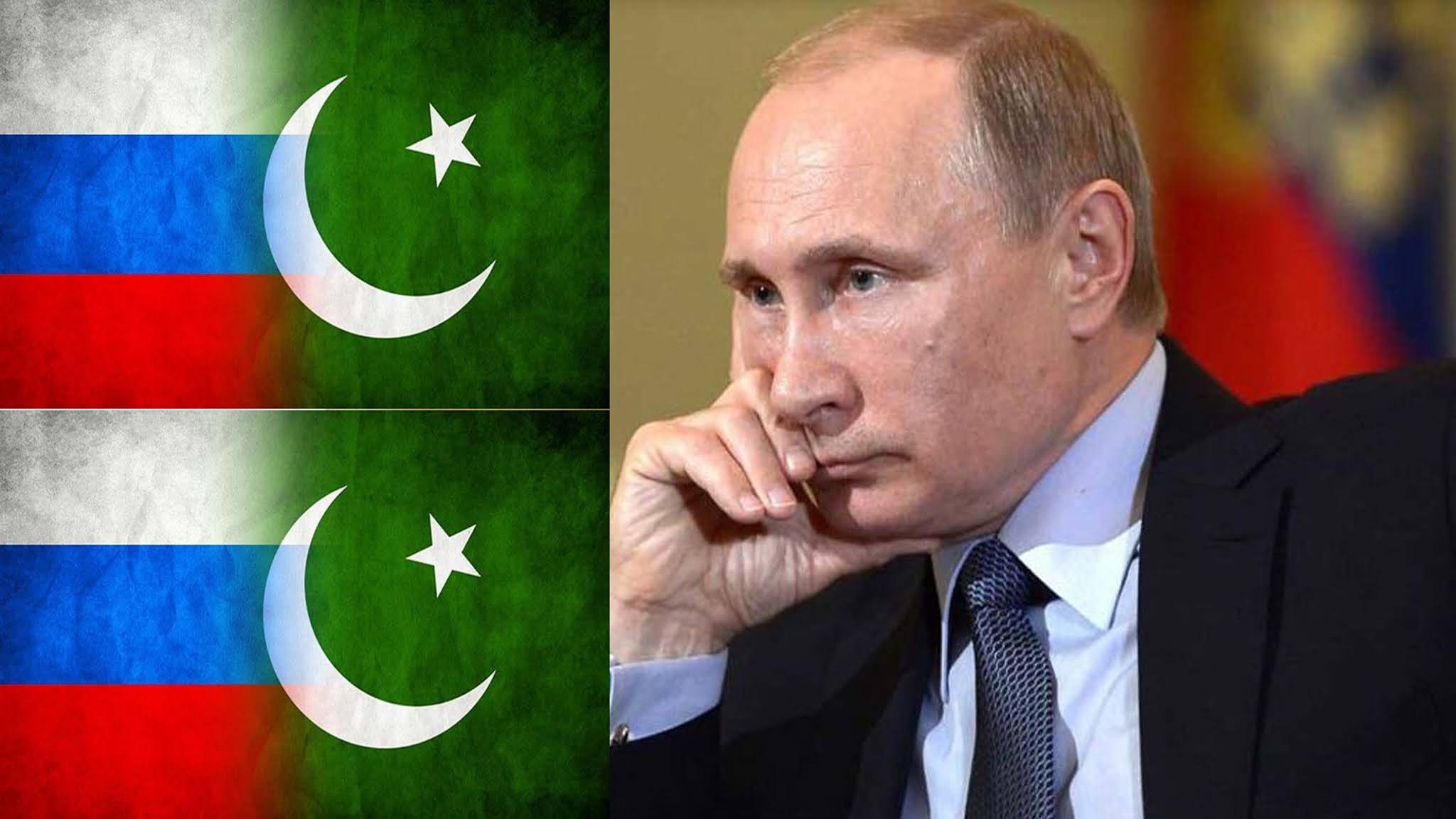
Asia is a goldmine of opportunities and choices for the major powers. Significant location of Pakistan in the region attracts major powers as well. Change in geopolitics with opportunities and choices leads regional states towards decisive shift in their foreign policy. Russia is opening eyes and looking to be a regional hegemon. Although Pakistan and Russia have no history of good relationship but the strategic realities gave birth to the current shift which is much positive for both Islamabad as well as Moscow.
Pakistan-Russia has past of adversary but today, both are welcoming the idea of building and stimulating strategic relationship. Pakistan wants to build better relationship with Russia to reduce dependency on United States. Islamabad wants to prove to Washington that it has as another strategic option if there is any tension happens between Pakistan and United States. Washington never likes Moscow’s influence in Islamabad. There are differences between Pakistan and the United States over drone attacks. According to some analysts American hegemony is near to end in the region and Pakistan does not like to become overly ally of United States and dependent on it.
In fact, the increasing relationship between India and
America motivates Pakistan to look for new friends and alliances. Pakistan also
likes to drive wedge between India and Russia by improving relations with
Moscow. Pakistan also has an eye of Russian military equipment supply and
technology assistance that is better than China. Pakistan wants to gain much
commercial incentive from Russia for example Karachi to Lahore Pipeline and
Russia is also interested in renovation of Pakistan Steel Mill. According to
some reports Russia may join CASA-1000 energy project providing electricity to
Afghanistan and Pakistan.
On the other hand, today Russia is interested in Pakistan by its strategic location being very next to Afghanistan and Central Asian states. Although both the countries do not share borders but have same geopolitical space. Moscow has long considered Islamabad as a troublemaker for Russia and supporter of terrorism in the region. Russian motivation is to convince Pakistan to be moderate and subdue Islamic radicalization and militancy in the region. Pakistan is a Muslim state which has great influence in the Muslim world and Russia also has a large number of Muslim populations.
Russia thinks that Pakistan can play vital role for the stable Afghanistan. Moscow hopes, after the withdrawal of American forces, Russia will find the strategic place in the region and then it will be able to play better role in the Indo-Pacific region. Russia also hopes that its understanding with Pakistan will decrease terrorism in Afghanistan and the region. It is also building relations with Pakistan to counter alignment between India and United States.
Pak-Russia relationship can impede India from getting close United States. Indian tendency toward Israel and United States for advance weapons and technology encourages Russia to look for new markets for her arms sale. Moscow’s proposition to Islamabad, Pakistan can be a part of Russian strategy to play significant role in the region. On the issue of Ukraine, Russia is being isolated and has few friends in the international sphere. The aftermath Ukraine issue Russia is looking for new friends who may help her and challenge the West.
Islamabad and Moscow first time noticed each other in 2009 when Afghanistan, Pakistan, Russia and Tajikistan floated to promote regional security and economics. This quadrilateral idea held three meetings and did not take off due to cancelation of Putin’s expected visit of Pakistan for the fourth meeting in 2012.
President of Pakistan Asif Ali Zardari had visited Russia in 2011 and Army Chief visited Moscow during 2012. There were reciprocal visits continued by ministers and high level officials of both the countries. Russian defense minister Sergei Shoigu visited Pakistan in 2014 since the last 45 years. During this visit the both countries agreed on information exchange on politic-military issues; cooperation for promoting international security, counterterrorism and arms control actives; collaboration in various military fields and other areas of education, medicine, topography, hydrography, cultural and experience sharing in peacemaking efforts were signed. In August 2015, Moscow agreed to provide Mi-35Mhelicopter to Pakistan.
Pakistan wished to buy 20 Mi-35Ms over the next year and got four helicopters in 2017. In addition, both the countries enhanced military relations and joint military exercises were made between the two armies under the slogan of Druzhbha (Russian word meaning friendship). Russian naval forces also participated in Aman-17 international exercise in Arabian Sea, hosted by Pakistan in 2017.
Further both countries agreed about coordination against
terrorism and drug trafficking. Russia had already cooperated in outer-space
exploration and helped in launching Pakistani telecommunication satellite
Al-Badar in 2001. It also had refurbished the only Pakistani steel mill.
An agreement of $2 billion for the North-South gas pipeline was signed in October 2015 which would connect Lahore to Karachi terminal. This agreement was signed on the first visit of Pakistan by Russian energy minister. 1100 kilometer pipeline is anticipated to be completed in 2018. The Russian company will complete this project and will use for 25 years.
In the energy sector, both states are collaborating as well
and have signed a Memorandum of Understanding in Moscow between Russia’s
Gazprom International and Pakistan’s Oil and gas Development Company Limited on
July3, 2017. The project will fulfill
the energy requirement of Pakistan. This understanding was for mutual
cooperation and joint ventures and use of state of art technology that would
aid exploration and development in Pakistan. This is the beginning of
commercial ties between these two countries.
The increasing cooperation between Pakistan and Russia should be viewed in the context of Afghan scenario which had created challenges for Moscow. Pakistan is considered an important country for the stabilization in Afghanistan. Without constructive involvement of Pakistan, the problems of Afghanistan and stability are a dream. During the Last six decades, very few Pakistani leaders and officials visited Russia. Whenever whoever visited yielded positive result; Tashkent declaration in 1966 and Pakistan Steel mills in 1970s.Pakistan has revisited her foreign policy during the 21st century and gave impotence to neglected states. When president of Pakistan visited Russia in 2002, a joint work group on strategic stability, counterterrorism and inter-governmental Commission were established. Regular meetings of these groups have been held since then. Russia also seems accommodating Pakistan.
Russia condemned the Salala Post attack by NATO on
November26; 2011and issued the friendly public statement. And it also supported
Pakistan on closure supply to NATO in Afghanistan through Pakistan. Russia has
supported Pakistan to be a member of Shanghai Cooperation Organization(SCO) and
to be part of Russian security mechanism. Shanghai Cooperation Organization is
an important initiative to counter American influence and to bring peace and
stability in the region. The membership of SCO will enhance the strategic and
regional importance of Pakistan.
There is a strong potential of Pak-Russia relations in steel production, communication, and space technology and energy sector. Pakistan should embrace these choices because it has much learnt from past errors and mistakes. There is common perception in Pakistan that its policy of ignoring nearer countries and aligning the distant ones cost her politically, economically and strategically.
These alliances could not become successful to achieve all
ideals of Pakistan such as Kashmir issue and security against India. Washington
has enhanced relationship with India and is projecting it as a regional power.
It did not fulfill the promise which it had made in the beginning of the
relations. It also did not make Pakistan a progressive and modern society but
turned in to radical and fragmented society. In fact, the ideal of choosing the
democratic west against the authoritative east resulted in long and consistent
spell of dictatorship in Pakistan. Comparatively India chose the other way
round always had a stable and functional democracy in the country.
Although Pakistan and Russia are being close but Pakistan will never jeopardize its relations with Washington. Washington is providing military aid and financial assistant to Pakistan but getting tension by Pak-Russia romance. Russia understands Indian concerns and believes that Moscow and Islamabad rapprochement will normalize the hostile situation between India and Pakistan.
The historical back ground of India-Russia relationship is very strong and Russia will never like to lose India. However, it is expected that there will be a period of much more intensive and extensive interaction between these two countries. Pak-Russia rapprochement should not surprise the regional powers due to current geopolitical churn in global politics.
Pak-Russia relationship may become true strategic partnership in future. If Russia improves strategic relations with Pakistan it might be able to influence Pakistan to play constructive role in Afghanistan and not to act against India. This would be a regional interest as regional powers like to see stability in Afghanistan. If Russia goes ahead to defense cooperation with Pakistan it would be detriment to Indo Russia relationship and Pakistan is a smaller market than India for Russia.
Russia may lose some major contract which it has made with India recently. Both India and Russia have the history of relationship and India has never openly criticized Russian policies over Ukraine. And both the countries are members of several multilateral organizations like BRICS, RIC and SCO. Although India has expressed its concerns about Pak-Russia growing cooperation on several times but Russia believes that Pak-Russia rapprochement will normalize Indo-Pak hostile attitude. It seems that Pakistan and Russia are going to forge true strategic partnership.
= = = = = = = = = = = = = = = = = = =
M. Akram Zaheer
PhD Scholar (Political
Science) The Islamia University, Bahawalpur Lecturer at Heritage International
College Arifwala
-------------------
Sunday, 11 April 2021

ISLAMABAD, APR 11: B4U Global Investment scheme by Saif Ur
Rehman Khan Niazi has grown 4.5 times in less than a year with its investor
base rising from 100,000 in June to 450,000.
The Malaysia-returned Pakistani uses a controversial
multi-level marketing business model to offer people unrealistic and guaranteed
profits. The promise ranges from 7% to 20% a month (or 2.4 times a year),
depending on one’s network size.
So in December, the Securities and Exchange Commission of
Pakistan warned people against investing in any fraudulent schemes that promise
hefty profits and unrealistic incentives. B4U was on its list.
“This entity is raising unauthorised deposits from the
general public in the name of different investment plans,” the SECP said. It
added B4U is working with different companies registered with the SECP, and
that the watchdog has already initiated legal proceedings against these
companies and their directors.
There are reports that B4U is also being investigated by the
FIA.
SAMAA Money has received hundreds of questions over the past few months from people who want to know if B4U is a legitimate business or not. Editor Farooq Baloch breaks down its business model to answer them.
-------------------------------------------------------------------WATCH THE VIDEO TO GET ALL OF YOUR ANSWERS REGARDING B4U GLOBAL.
COURTESY SAMAA.TV
------------

ASHGABAT, APR 11: A kidney transplant operation was performed for the first time in Turkmenistan. Minister of Health and Medical Industry Nurmuhammet Amannepesov reported to President Gurbanguly Berdimuhamedov on the successful operation of domestic specialists, Trend reports citing Kabar.
The patient received a kidney transplant from a close
relative. Currently, both the patient and the donor are doing well. Both are
under medical supervision, the minister said.
The head of state, congratulating the doctors from the bottom of his heart, noted with satisfaction that this operation is a great success for our doctors and the healthcare sector, the “Vatan” news program of Turkmen television reported.
---------------------------------------------------------
COURTESY en.trend.az
-------------

GUJRAT, APR 11: In the much-awaited re-election in the Daska (NA-75) constituency of the National Assembly after the February by-poll had been marred by violence, rigging and disappearance of over 20 presiding officers, the opposition Pakistan Muslim League-Nawaz on Saturday emerged victorious by defeating the ruling party’s candidate with a margin of 16,642 votes.
According to unofficial result of all 360 polling stations compiled by the returning officer, PML-N’s Syeda Nosheen Iftikhar won the contest by securing 110,075 votes against Pakistan Tehreek-i-Insaf’s Ali Asjad Malhi who bagged 93,433, while Tehreek-i-Labbaik Pakistan’s Khalil Sandhu received 8,268 votes.
As the Election Commission of Pakistan (ECP) ensured strict security arrangements for the re-election, Daska remained largely peaceful this time except a few incidents of exchange of harsh words between supporters of the PTI and PML-N. The ECP had earlier withheld the results of the Feb 19 by-poll in Daska due to rigging, disappearance of over 20 presiding officers and violence, and ordered a re-election in the entire constituency. The move was challenged before the Supreme Court, which upheld the ECP decision.
Soon after the party’s victory, PML-N vice president Maryam Nawaz in her tweets congratulated the candidate and said one after another defeat in by-elections in all the provinces indicated that people had no trust in the government. Rejected by the masses, the government had no reason to continue, she tweeted.
The NA-75 seat fell vacant after the death of PML-N MNA Syed Iftikharul Hassan aka Zahry Shah in August 2020. In the 2018 general election, Mr Hassan had secured 101,617 votes against PTI’s Malhi who bagged 61,727 votes.
According to the ECP, there were a total of 494,003 registered voters, including 273,006 male and 220,997 female voters, in the constituency.
On Saturday, Daska Deputy Superintendent of Police Malik Adnan told Dawn that at least three PTI workers were arrested for displaying weapons at a polling station of Uggo Chak. The police seized two Kalashnikovs, two pistols and a 223 bore gun, besides several rounds of bullets from them, he added.
Similarly, the officer said, six PML-N supporters were detained at the same polling station for ‘creating unrest’, adding that cases had been registered against them.
The Punjab government had imposed Section 144 in Sialkot district banning display of weapons.
There was a heavy deployment of law enforcement agencies around sensitive polling stations to avert violence, while Pakistan Rangers and Punjab police personnel continued patrolling in Daska town and its adjoining areas all day.
Locals appreciated that teams of the LEAs were quick in response even to their calls about exchange of slogans between the supporters of rival candidates at some polling stations.
Activists and supporters of both parties at various polling stations, however, were worried about relatively low turnout of voters and attributed this to the repeated elections in the constituency within a short span of time as well as the change of polling date three times since Feb 19. Some believed the low turnout was due to the third wave of Covid, as people preferred to stay indoors.
The by-election was widely covered by the media as a number of journalists from Lahore, Islamabad and Gujranwala region arrived here to report after a video showing presiding officers taking away ballot boxes during the last by-election had gone viral on social media.
Special Assistant to Punjab Chief Minister on Information Dr Firdous Ashiq Awan told a press conference after the polling that Prime Minister Imran Khan had given instructions to Chief Minister Usman Buzdar to ensure a ‘level-playing field’ in the by-poll.
Electronic media had shown that the polling was conducted in a smooth and peaceful manner, Ms Awan said, adding that the administration had complied with the ECP instructions in letter and spirit.
------------------------------------------------------
COURTESY DAWN NEWS
----------
Saturday, 10 April 2021

JOHANNESBURG, APR 10 – Pakistan defeated South Africa by four wickets in a thrilling finish to the first Twenty20 international at the Wanderers Stadium in Johannesburg on Saturday.
Needing 11 of the last over, Pakistan reached home with just one ball remaining.
Hasan Ali and Mohammad Rizwan scampered for a third run after the bowler couldn’t collect the ball cleanly from the outfielder at deep midwicket to secure Pakistan’s win.
Rizwan was once again the star for Pakistan, batting through the innings and scoring a swift 74 from 50 balls, including nine fours and two sixes.
Earlier, South Africa won the toss and decided to bat, setting the visitors a target of 189 runs.
Heinrich Klaasen, who is captaining South Africa in place of the injured Temba Bavuma, led from the front with a half century from 28 balls.
Opener Aiden Markram was the highest scorer for the Proteas, scoring 51 runs from 32 balls before he was caught behind off spinner Mohammad Nawaz.
Nawaz and Hasan Ali picked up two wickets a piece, with Shaheen Afridi and Haris Rauf also bagging a wicket each.
South Africa ended the innings with a huge six from Sisanda Migala as the visitors picked up 14 runs from the final over, settling at 188/6.
After the toss, Klaasen said he expected the pitch to be at its best in the first innings.
“It looks quite dry. Hopefully it will crumble a bit later.”
South Africa, missing five players who have left to play in the Indian Premier League and without Bavuma, Rassie van der Dussen and Dwain Pretorius because of injury, named three new caps in all-rounder Wihan Lubbe and fast bowlers Sisanda Magala and Lizaad Williams.
Pakistan included two players, Haider Ali and veteran Mohammad Hafeez, who were not part of their winning one-day international team in a series which ended on Wednesday.
Teams:
South Africa: Heinrich Klaasen (captain, wkt), Aiden Markram, Janneman Malan, Pite van Biljon, Wihan Lubbe, George Linde, Andile Phehlukwayo, Sisanda Magala, Beuran Hendricks, Lizaad Williams, Tabraiz Shamsi
Pakistan: Babar Azam (captain), Mohammad Rizwan (wkt), Fakhar Zaman, Mohammad Hafeez, Haider Ali, Mohammad Nawaz, Faheem Ashraf, Hasan Ali, Shaheen Shah Afridi, Usman Qadir, Haris Rauf
Umpires: Adrian Holdstock, Allahudien Paleker (both RSA)
Television umpire: Bongani Jele (RSA)
Match referee: Andy Pycroft (ZIM)
-----------------------------------------------------
COURTESY DAWN NEWS
-----------

OSLO, APR 10: On Friday, Prime Minister Erna Solberg (H) apologized once again for breaking the infection control rules. She said she would pay the NOK 20,000 fine.
“Of course, this is embarrassing for me. I am very sorry and
should not have done this,” Prime Minister Erna Solberg told NTB.
“I have previously said that if the restaurant visit results in fines, we would, of course, pay them. I apologize for what happened and will pay the fine,” she said.
Her husband Sindre Finnes will not be fined, but Solberg will thus have to pay NOK 20,000 kroner after gathering her family for her birthday party in Geilo during the winter holidays.
Maintaining public trust in the rules
Solberg herself did not participate in the dinner in Hallingstuene. Still, the police believe she was involved in the decision that led the family to eat out, that she knew how many people would participate, and that she chose which restaurant they should book a table at.
The police justified the decision by saying that it is appropriate to impose a fine in order to maintain the public’s trust in the infection control rules.
“Even though the law is the same for everyone, not everyone is the same,” police chief Ole B. Sæverud said when the police informed the public about the case on Friday.
------------------------------------------------------
COURTESY norwaytoday
-------------

- The head of government was fined 20,000 Norwegian kroner, or about $2,300

OSLO, APR 10: Norwegian Prime Minister Erna Solberg received
a hefty fine on Friday for breaking the country’s virus curbs by organizing a
family birthday dinner that she ended up not attending, police said.
Police concluded that the dinner organized in part by
Solberg had exceeded the number of guests allowed at private functions.
For the infraction, the head of government was fined 20,000
Norwegian kroner (about $2,300).
“Even if the law is equal for everyone, everyone is not
equal,” Commissioner Ole Saeverud told a press conference.
“Solberg is the country’s foremost elected official and has,
on a number of occasions, been the leading figure in the government’s decisions
on measures to counter the pandemics,” Saeverud added.
“It is therefore considered justified to give a sanction to
maintain public confidence in the health rules,” he argued.
Public broadcaster NRK revealed in mid-March that Solberg
celebrated her 60th birthday with her family at a ski resort under conditions
that seemed to violate health guidelines.
On 25 February, 13 members of her family had dined at a
restaurant in the town of Geilo, although rules limited the number of
participants in a private event in a public space to 10.
Solberg herself had not attended the dinner as she needed to
go to the hospital to deal with eye issues, but police still held her
responsible for organizing the event.
After the event came to light, Solberg made a public apology
and said she was prepared to pay potential fines.
On Friday, the prime minister reiterated her apology and
said she wouldn’t appeal the decision.
“We should not have broken the rules and I want to apologize
again,” she told broadcaster TV2.
The affair, which has made the rounds on social networks,
has tarnished the image of the leader – who has generally been praised for the
government’s handling of the health crisis – ahead of the parliamentary
elections on 13 September.
Commenting for news website ABC Nyheter, journalist David
Stenerud called it “a good day for Norwegian rule of law.”
“It’s remarkable that our own Prime Minister was investigated for breaking the rules she imposed on us. And even more incredible that she is now convicted,” Astrid Meland, editorial writer for newspaper Verdens Gang, wrote.
-------------------------------------------------------------------
COURTESY arabnews
-------------

ISLAMABAD, APR 10: India and Pakistan may stumble into a large-scale war neither side wants, warns a US intelligence report while exploring the possibilities of miscalculations leading to a war in South Asia.
The assessment is included in a Global Trends report produced every four years by the US government's National Intelligence Council, released in Washington. The report, released on Wednesday, focuses on both immediate and distant futures and is designed to help policymakers anticipate the forces likely to shape the world in the next five to 20 years.
“India and Pakistan may stumble into a large-scale war neither side wants, especially following a terrorist attack that the Indian government judges to be significant,” the report warns.
The ability of some militant outfits to conduct attacks, New Delhi’s resolve to retaliate against Islamabad after such an attack, and Islamabad’s determination to defend itself “are likely to persist and may increase” in the next five years, the report adds.
“Miscalculation by both governments could prompt a breakdown in the deterrence that has restricted conflict to levels each side judges it can manage.”
The report warns policymakers in Washington that “a full-scale war could inflict damage that would have economic and political consequences for years.”
The US policy in Afghanistan and its impact on the neighbouring countries is top on a list of key uncertainties in South Asia that are underlined in the report.
“US actions in Afghanistan during the next year will have significant consequences across the region, particularly in Pakistan and India,” the report states.
This would be “especially true” if a security vacuum emerges in Afghanistan that results in a civil war between the Taliban and its Afghan opponents, expanded freedom of manoeuvre for regional terrorist networks, or criminals and refugees flowing out of the country, it adds.
The report predicts that such an outcome would exacerbate political tensions and conflict in western Pakistan and sharpen the India-Pakistan rivalry by strengthening longstanding judgments about covert warfare in Islamabad and New Delhi.
“An abrupt US exit probably would also amplify concerns that the United States will lose interest in South Asia generally,” the document says.
The US intelligence community estimates that India and China may also slip into a conflict that neither government intends, “especially if military forces escalate a conflict quickly to challenge each other on a critical part of the contested border”.
In June 2020, a short military exchange resulted in the deaths of at least 20 Indian soldiers, exacerbated the strategic rivalry between Beijing and New Delhi and sharply affected international perceptions of both countries.
The report puts the prospects for increased regional trade or energy cooperation in South Asia during the next five years as low, “due in part to the high probability of ongoing hostility between India and Pakistan". Trade within South Asia is already the lowest of any region in the world.
The US intelligence community warns that water insecurity in the region is also an increasing risk. The assessment includes forecasts by the United Nations Development Programme (UNDP) that Pakistan could face absolute water scarcity by 2025, given a combination of poor water conservation practices, rising temperatures, and decreased rainfall.
The report notes that previous extreme weather events, such as the 1970 cyclone in the Bay of Bengal, contributed to state failure in then-East Pakistan and the creation of Bangladesh the next year. It warns that future events could also prompt a regional crisis with enormous humanitarian, political, and security implications to which external powers probably would try to respond.
The report points out that security threats have “undergirded popular support” for nationalist leaders, and these threats are likely to continue or worsen in some cases. For example, “military tensions between India and Pakistan are at their most contentious in many years, strengthening leaders in both capitals.”
The US intelligence community notes that information technology is fuelling authoritarian tendencies by making it easier for South Asian governments to influence their populations. It points out that in 2019, India “led the world in Internet shutdowns by a wide margin” — with several months-long crackdowns to suppress protests, including in occupied Kashmir. Pakistan has deployed Huawei’s Safe Cities technology, raising public fears of increased surveillance.
The report notes that the balancing approach, particularly in relation to China, also affects regional dynamics. Bangladesh, Maldives, Nepal, Pakistan and Sri Lanka probably judge their countries “can more easily deflect New Delhi’s demands or block its regional leadership aspirations by maintaining ties with Beijing”.
For its part, New Delhi probably will look for ways to mitigate Chinese influence given China’s expanding foothold in the Indian Ocean, the report adds. For example, India almost certainly will continue to encourage Japan to offer economic investment and some military cooperation to other South Asian countries to push them to align more closely with New Delhi and Tokyo.
The report predicts that despite their growing interest in China, almost every government in the region will seek to maintain ties with the US as part of their balancing efforts. The United States is the biggest export market for Pakistan, Sri Lanka and Bangladesh, and most South Asian leaders continue to cultivate and publicly tout their relationships with Washington.
US intelligence analysts predict that during the next five years, slowing economic growth and growing polarisation will pose an increasing risk to traditions of democratic and independent governance in several countries in South Asia.
Many countries will strengthen their efforts to hedge and balance their relationships with multiple external powers, including China, Russia, Japan, and the US.
Through 2025, South Asia will have to manage the challenges that internal security problems, the risk of inter-state war, and the effects of climate change and pollution pose to at least some countries’ longer-term democratic and economic development.
The report projects that economic growth in South Asia will remain slow during the next five years and will be insufficient to employ the region’s expanding workforce — especially as the world emerges from the pandemic.
Before the Covid-19 outbreak, unemployment in India had reached a 40-year high until GDP growth slowed markedly in the latter half of 2019, and India’s strict lockdown from March to May 2020 temporarily drove unemployment up to 23 per cent.
The report argues that the region’s economy is hampered by outdated legal systems, severe pollution, water shortages, and highly bureaucratic regulatory environments — all increasing investor uncertainty. “No government in the region is prepared to undertake economic reforms on the scale required to generate robust growth,” the report adds.
It notes that almost all the economies in the region remain focused on agriculture, with the bulk of their workforces dependent on farming. Most countries’ agricultural sectors are underproductive in relation to the large share of government funds and natural resources they consume.
According to the report, this disparity is driven by a variety of factors, including growing water scarcity, environmental damage and climate change effects, and government failure to reform agricultural subsidies that benefit rural constituents at the expense of growing urban populations.
Democracy
US intelligence analysts argue that despite some signs of sustained democratisation, domestic politics in much of the region are likely to continue on the polarising course of the past few years, and this trend may sharpen in some countries.
“Strongperson leaders, even those elected in largely free and fair contests, probably will push majoritarian agendas that widen factional divides — potentially weakening political stability in societies already split along sectarian and ethnic lines,” they warn.
“This political polarisation is rooted in strongly felt nationalist narratives that have become prominent in recent years and met little effective resistance from opposition parties or the courts.”
The report warns that polarising political rule of some leaders in the region will probably increase the inequities or abuses faced by minorities and political opponents of the ruling parties.
“In India and Sri Lanka, Muslims are likely to continue to experience growing political and economic discrimination from Hindu and Sinhalese Buddhist nationalist ruling parties.”
The report notes that Afghanistan too is seeing an intensification of ethnic tensions between Pashtuns and other ethnic groups, a trend that is accelerating as Afghans prepare for the withdrawal of Western troops.
The combination of eroding institutions, mounting security threats, and new digital technologies is likely to enable some South Asian leaders to continue advancing their authoritarian policies, but probably in the face of an uncertain political cost associated with an economic slowdown, the report warns.
It notes that some of these leaders have applied majoritarian political formulae, whereas others have undermined independent judiciaries, election commissions, and politically neutral militaries and bureaucracies, weakening potential future resistance.
----------------------------------------------------------------
COURTESY DAWN NEWS
-------------
Social Media
Search