Wednesday, 14 April 2021

BEING a journalist in Pakistan is a dangerous proposition. A noose is put around your neck when you begin and it is tightened gradually as journalists you know are ‘disappeared’ or harassed or murdered outright. Many of those who manage to stay afloat are targets. The tiniest act of rebellion or upsetting someone powerful can constitute a real threat for the journalists of the country.
Ajay Laalwani, who worked for a newspaper, was in a
barbershop in Sukkur on the evening of March 18. Suddenly two motorcycles and a
car with four passengers drove up. They began to spray Laalwani with bullets
and then sped away. Laalwani was taken to hospital but he did not survive the
brutal attack. Ashiq Jatoi, the editor of the newspaper, said he believes that
Laalwani’s writing and reporting could have motivated the killing. Once again,
whether this was actually true will remain mired in mystery. Past tensions
between the reporter and law enforcement were mentioned and the fear that
investigations might not be carried out the way they should was expressed.
In the days before the incident, Laalwani had received
threats and was being harassed. Those sharing the news on social media
attributed the killing to well-known “unknown culprits”. In an effort to show
that the case was being taken seriously and investigated, the police announced
that a special team had been created to investigate the killing. This in itself
is ironic because prior to Laalwani’s killing, the police had been harassing
journalists, threatening them with consequences. On March 15, the police had
arrested a number of journalists and political activists and registered cases
against them under the Anti-Terrorism Act while they were protesting the
killing of a Sindh University student named Irfan Jatoi in an alleged ‘police
encounter’.
Of course, it seems fair to say that this case, along with so many others in which journalists have been killed, will not be solved. There are so many cases that require answers. One of them is the killing of Qais Javed who worked for the newspaper Ehadnama. He had also started his own web channel. He was shot dead in D.I. Khan in December 2020. But like so many others, he is just a number. One fine day, “unknown gunmen” appeared, sprayed him with bullets and absconded without being caught. Despite the passage of three months since the killing, there is no sign of the case being solved.
- Journalists’ murders are rarely solved in this country. Those who are out to get them do not fear getting caught.
The latest death is of a young man named Waseem Alam who was shot dead in Karak when he was returning home on his motorcycle on Saturday. Alam was taken to the hospital where he was pronounced dead on arrival. An FIR has been registered. In Alam’s case, family enmity has been cited as a motive.
Police strongly suspect the involvement of Alam’s father in the deed. His family reportedly said that Alam had not conveyed to them that he had received threats. But unless such cases are pursued and investigated and the murderer convicted in a court of law, one will never know the truth. And journalists like him will continue to become yet another statistic.
One can go on and on enumerating the killing and
intimidation of Pakistani journalists. One can go on and on about how the cases
are never solved. All of it is pointless for the simple reason that everyone
knows that those who do not toe the line or are outspoken are targeted and made
an example of.
This then is the primitive state of public discourse in
Pakistan. Instead of tolerating differing points of view, instead of creating
forums where divergent views can be expressed and discussed and a culture of
tolerance fostered, the voices of those who disagree are muffled in various
ways by various actors, state or non-state. This is not very different from
what primitive man faced when he did not agree with his tribe. He would be made
an example of to warn the rest of the clan.
Those tribes that did this accrued a survival disadvantage. While unity, whether it is tribal or national is important, survival requires the existence of divergent ideas. Killing or intimidating journalists in this sense does not simply wreak havoc on the present, it condemns the possibility of the future.
Evolution after all is based on adaptability and the
existence of diversity of thought and it is impossible without the truth
tellers that present the reality of the situation. Without them, only one
version of the truth thrives and difference of opinion is exterminated.
The people in this environment never develop the skills to
tolerate words or ideas that are different. Moreover, they risk being duped, as
there is no guarantee that the version of truth that they have been believing
and reading is not actually what was happening in the country.
Pakistan’s legacy of authoritarianism means that no one pays much attention to the growing roster of threats to journalists. With everyone eking out a marginal and precarious existence, few have sympathy to spare for the brave men and women who die or are picked up or face extreme threats because they were not willing to give up on a principle.
To those who target journalists, principles such as the
belief in the freedom of speech is an indulgence. An attitude such as this is
the consequence of decades of devaluation of speech, denigration of the bravest
in the nation and a low regard for the truth. In the meantime, the bodies keep
piling up, the ‘unknown” gunmen appearing again and again to kill or kidnap
those who have the courage to tell the truth and to believe in a principle.
-------------------------
The writer is an attorney teaching constitutional law and
political philosophy.
rafia.zakaria@gmail.com
COURTESY DAWN NEWS
----------

KYIV, Ukraine, APR 14: The Ukrainian President Volodymyr Zelensky has congratulated Muslims on the beginning of Ramazan, the holy Islamic month in which faithful across the globe fast from dawn until dusk.
“Ukrainians differ in their religious beliefs, but are united in their desire to become better. Ukraine is a home and homeland for the Muslim community, including Crimean Tatars. At the beginning of Ramadan, I wish faith strengthening and prosperity in our common land,” President Zelensky wrote this on his Twitter account.
Ramazan is the ninth month of the Islamic Calendar observed by Muslims worldwide as a month of fasting (sawm), prayer, reflection, and community.
The annual observance of Ramazan is regarded as one of the Five Pillars of Islam and lasts for 29 to 30 days.
Muslims in Middle Eastern Countries including Saudi Arabia observed the first of Ramazan on April 13 while faithful in Pakistan and India are likely to begin marking Ramazan on April 14.
Tuesday, 13 April 2021

NEWS DESK
Notwithstanding, the recent rise in COVID cases, Pakistan has been showing signs of a fragile economic recovery with a gradual resumption of economic dynamism, according to a new World Bank report.
Pakistan’s economic growth is expected to reach 1.3 percent
in FY2021 and strengthen to an average of 2.7 percent for FY2022-23, according
to the Pakistan Development Update released. The baseline economic growth
forecast, however, is highly uncertain, especially given the third and
more-contagious wave of the pandemic currently circulating in the country.
Private consumption is estimated to have picked up over July
to December 2020, in part due to the record increase in remittances inflows, social
assistance support from the Ehsaas program, the government’s construction
package, and a return to pre-COVID mobility levels from September 2020.
Investment is also estimated to be recovering, as machinery imports and cement
sales both recorded double-digit growth rates during this period.
“It is crucial to sustain the positive reform momentum to
continue to boost the competitiveness of Pakistan’s economy and lay a strong
foundation for a more robust, inclusive and sustainable recovery,” said Najy Benhassine,
World Bank Country Director for Pakistan. “Increasing competitiveness and
stimulating private investment and exports will require continued macroeconomic
stability, maintenance of a market-determined exchange rate, and improving the
business environment to enable all firms, particularly SMEs, to access markets
and compete openly in a leveled playing field. The potential for a strong
recovery and a growth acceleration is there. Reforms to make it happen need to
be further sustained.”
Given the scope and magnitude of the COVID-19 crisis,
understanding how the pandemic affected Pakistan’s private sector will be key
to informing the design of new policy measures or refining existing ones to
prevent widespread long-term firm closures and job losses.
This edition of the Pakistan Development Update also
presents the findings of two waves of World Bank Business Pulse Surveys and
suggests several key policy measures to further support the recovery of the
private sector and the Pakistani economy.
“Despite some recovery in the private sector, many firms
remain vulnerable and require support to prevent closures and further job
losses. Policy measures that prevent permanent firm closures and further job
losses will contribute significantly to sustaining the recovery,” said Derek H.
C. Chen, World Bank Senior Economist for Pakistan.
The policy measures that can be considered include enhancing
private sector access to formal finance, in particular for Micro, Small &
Medium Enterprises, streamlining regulatory and administrative requirements to
ease compliance costs, and providing support to firms in digitizing and establishing
an online presence.
The Pakistan Development Update is a companion piece to the South Asia Economic Focus, a twice-a-year World Bank report that examines economic developments and prospects in the South Asia region and analyzes policy challenges faced by countries. The Spring 2021 edition titled South Asia Vaccinates, launched on March 31, 2021, shows that economic activity in South Asia is bouncing back, but growth is uneven, recovery remains fragile, and the economic outlook is precarious. The report also focuses on the different dimensions of vaccine deployment and provides a cost-benefit analysis of vaccination in the region.
-------------------------------------------
Monday, 12 April 2021

International travel was predictably impacted as a result of covid 19 and the tourism industry suffered severe losses.
According to the UNWTO (United Nations World Tourism organization) barometer, the period from January-October 2020 witnessed a whopping 72% drop in tourist arrivals (international tourist arrivals dropped by 900 Million when compared to the January-October 2019 period). The loss in export revenues, year on year, from the tourist sector were a staggering 945 Billion USD. Tourist arrivals across regions witnessed a drop. According to the UNWTO barometer, the drop in tourism would cause a loss of 2 Trillion USD to the global economy.
Countries looking to resume international flights
During the midst of the pandemic, agreements were signed to facilitate essential travel between various countries (priority was given to workers, students or individuals who had to travel for emergency purposes).
Countries which have been successful in dealing with the pandemic have been looking to gradually resume international flights. Since October 2020, Singapore whose economy is significantly dependent upon tourism had signed agreements with certain countries to ensure that travel for important purposes was less restrictive — either the quarantine period was reduced, or in some cases was not required at all.
New Zealand will be allowing quarantine free travel from Australia for the first time from April 19. New Zealand PM, Jacinda Ardern:
‘The Trans-Tasman travel bubble represents a start of a new chapter in our COVID response and recovery, one that people have worked so hard at’
Australia has been permitting travellers from New Zealand to enter most parts of the country without quarantine, though this has not been reciprocated.
A travel bubble has also opened between Taiwan (which has reported a little over 1,000 cases and 10 deaths) and the Island of Palau (which has reported 0 deaths) where travellers need not quarantine themselves (there are a number of other restrictions though).
Vaccine Passports, Digital Pass and differing perspectives
As countries get ready to open up travel, there has been a debate with regard to using ‘vaccine passports’ (these are documents which show that travellers have been vaccinated against Covid-19 or recently tested negative for the virus).
One country which is using this experiment domestically is Israel. It has issued a document known as ‘Green Pass’ to those who have been vaccinated or if they have developed immunity. This Green Pass can be used for entry into gyms, hotels, restaurants and theatres. The UK and US too are mooting the idea of introducing such an arrangement. This idea has faced fervent opposition in both countries. In UK, opposition parties Labour, Liberal Democrats and the Scottish National Party (SNP) have opposed the idea of such a covid certification document. The reasons cited for opposition are concerns with regard to ‘equity, ethics and privacy’. The UK government has stated that a covid status certificate would not be introduced before June, and trials of various schemes to ensure safe opening up of the UK economy would carry on.
In the US, Republicans are opposing the idea of a vaccine passport saying that such an idea would be an attack on personal freedoms. Donald Trump’s son Donald Trump Jr urged Republicans to ‘vocally and aggressively’ stand up against vaccine passports.
If one were to look at international travel, International Airport Transport Association (IATA) has introduced a travel pass, a digital certificate, which will confirm a flyer’s COVID-19 test result and vaccination status. Singapore will be accepting travellers using this mobile digital pass from May 2021.While the pass has been tested by Singapore Airlines, 20 airlines (including Emirates and Malaysia Airlines) are in the process of testing the pass.
While one of the pitfalls of a covid status certificate or Vaccine passport is the impingement upon privacy, it has also been argued that developing countries will be at a disadvantage given the relatively slow rate of vaccination in the developing world. While remarking in the context of Africa,Dr. John Nkengasong the head of the Africa Centers for Disease Control and Prevention, said:
‘We are already in a situation where we don’t have vaccines, and it will be extremely unfortunate that countries impose a travel requirement of immunization certificates whereas the rest of the world has not had the chance to have access to vaccines.’
Conclusion
In conclusion, it is important for innovative ways to resume international travel. Safety needs to be balanced with equity, for this it is imperative that all actors engage in a constructive manner. A number of observers have suggested that vaccine passports/covid status certificates should be made optional, and that there is nothing wrong in using technology per se but it should not be thrust on anyone. The fight against the pandemic and revival of international travel are a golden opportunity for countries to reverse the increasing sense of insularity and inequity which has risen in recent years.
-----------------------------------
Singh Maini is a New Delhi based Policy Analyst associated with The Jindal School of International Affairs, OP Jindal Global University, Sonipat, India

ISLAMABAD, APR 12: Foreign Minister Shah Mahmood Qureshi has said that the government is inviting the world's attention towards investment opportunities in Pakistan through economic diplomacy, Radio Pakistan reported.
He expressed the views late on Sunday at a dinner hosted in his honour at the Pakistan House in Berlin. The foreign minister is currently on a two-day official visit to Germany.
"Pakistan has transformed its geographical political priorities into geographical economic priorities," he said.
Qureshi said Pakistan is an emerging market of 220 million people where plenty of investment opportunities exist.
He said the government is providing all possible facilities, including e-visas, to foreign investors and welcomed German entrepreneurs and companies to invest in Pakistan.
Earlier, the foreign minister met with Speaker of Christian Democratic Union of Germany Nils Schmid. In a tweet, Qureshi said the two discussed the European Union, the China-Pakistan Economic Corridor and investment opportunities in special economic zones.
They also discussed developments in South Asia and the key role being played by Pakistan in Afghanistan.
Qureshi also met Siemens CEO Joe Kaeser and discussed areas of potential investment in Pakistan as well as transfer of technology, specifically in the power sector. "Welcomed Joe to visit Pakistan to take these opportunities further," he said.
The foreign minister also met Dr Gunter Mulack, the director of the German Orient Institute and former ambassador to Pakistan.
"Discussed the enhancement and promotion of the relationship between Pakistan and Germany and what we could do together for greater academic and economic diplomacy," he said.
-----------------------------------------------
COURTESY DAWN NEWS
------------

LAHORE, APR 12: The Pakistan Cricket Board (PCB) has announced the schedule for the remaining matches of the HBL Pakistan Super League 6 (PSL 6), with the tournament set to resume from June 1.
PSL 6 had earlier been delayed in March after seven people participating in the tournament had tested positive for Covid-19. At the time, the PCB had said the decision was taken out of consideration for the health and wellbeing of all participants in the tournament.
On Saturday, the PCB's Board of Governors (BoG) held a meeting via a virtual conference call — their second of the year — according to a press release issued on Sunday.
"HBL PSL 6 matches will resume on June 1 with the final scheduled for June 20," said the press release.
The schedule of the 20 remaining matches — all of which will be played at the National Stadium in Karachi — was finalised after consultation with all the franchises.
Evening matches will start at 8pm. In case of double-headers, the first match will begin at 5pm while the second match will start at 10pm.
The schedule for the 20 matches is as follows:
- June 1: Lahore Qalandars v Islamabad United
- June 2: Multan Sultans v Karachi Kings
- June 3: Islamabad United v Quetta Gladiators
- June 4: Peshawar Zalmi v Lahore Qalandars
- June 5: Islamabad United v Karachi Kings; Multan Sultans v Quetta Gladiators
- June 6: Peshawar Zalmi v Karachi Kings
- June 7: Quetta Gladiators v Lahore Qalandars
- June 8: Multan Sultans v Peshawar Zalmi
- June 9: Islamabad United v Lahore Qalandars
- June 10: Quetta Gladiators v Karachi Kings
- June 11: Multan Sultans v Islamabad United
- June 12: Quetta Gladiators v Peshawar Zalmi; Karachi Kings v Lahore Qalandars
- June 13: Islamabad United v Peshawar Zalmi
- June 14: Multan Sultans v Lahore Qalandars
- June 16: Qualifier (1 v 2)
- June 17: Eliminator 1 (3 v 4)
- June 18: Eliminator 2 (loser Qualifier v winner Eliminator 1)
- June 20: Final
Covid-19 measures
During the meeting, the board received a presentation and an update on the report of the two-person fact-finding panel that was set up by the PCB chairman to review the bio-security protocols, bylaws and arrangements for the HBL PSL 6 and make recommendations on how to better ensure implementation of a bio-secure environment for future events, according to the press release.
The board discussed and debated the panel’s findings in detail and expressed its "disappointment at the failures that were highlighted in the report and advised remedial actions needed to be taken".
"The BoG endorsed all recommendations of the fact-finding panel, including robust and stringent implementation of the protocols, as well as maintaining a zero-tolerance approach towards all those who breach the Covid-19 SOPs (standard operating procedures), which are put in place for safeguarding the health and safety of all participants."
The PCB was also in the "final stages of appointing a globally-recognised safety management company that specialises in providing Covid-safe technology solutions, bio-secure monitoring & management, as well as response and reaction to positive tests", said the press release. The BoG was informed that this was part of the strategy to ensure that PSL 6 was resumed and completed in a "safe and secure environment".
The board was also informed that a mandatory seven-day quarantine period for all participants would commence from May 22 in one hotel and for the following three days of training sessions.
--------------------------------------------------
COURTESY DAWN NEWS
--------------

It has been over a year since the first case of CoVID-19 was confirmed in Pakistan. The tally has reached 721,018 confirmed cases, 15,443 have died and 4,143 critical cases by 11thApril2021. Across many countries, since January 2020, a massive surge of research into CoVID-19 had enabled the scientific and medical community to better understand how to manage and eliminate the virus through public health interventions. Today, we have learned, CoVID-19 causes acute symptoms and death.
We have learned, immunity lasts at least eight months and we also have five licensed vaccines. We have learned, the long-term effects of CoVID-19 and the morbidity attached to having this virus. We have learned, virus transmission occurs through droplets and aerosols spread through coughing, sneezing, breathing and speaking.
We also have learned, stopping the spread of CoVID-19
requires people to avoid mixing though restrictions on social life. We have
learned, the virus can mutate into various strains that can be more
transmissible – and we also have understand cat-and-mouse game between vaccine
and variants.
To alleviate the destructive effects of CoVID-19 on the economy, Pakistan has sought debt relief of slightly around $2 billion from its G20 creditors. In addition to the G20 countries, China was the largest bilateral creditor with $9 billion, followed by Japan with $5 billion. By early April 2020, when there were just about 2,000 CoVID-19 positive cases in Pakistan, the World Bank approved $200 million package to help Pakistan.
Likewise, the International Monetary Fund (IMF) had approved the payout of $1.386 billion as financial support to Pakistan to meet its urgent balance of payment needs halting from the CoVID-19 outbreak. Further, to support Pakistan’s public health response to the CoVID-19 and allow to meet the basic needs of the vulnerable and poor segment of society, the Asian Development Bank (ADB) approved $500 million emergency assistance loan to Pakistan. Similarly, The Islamic Development Bank (IDB) also provided a $650 million financial package to support Pakistan in its efforts against the CoVID-19. All these grants were provided to Government of Pakistan to assist in effective and timely action in response to the spread of the CoVID-19.
The objective was to strengthen Pakistan’s public health
infrastructure and to alleviate socioeconomic disruptions due to the pandemic.
Despite huge grants and substantial endowments, Pakistan’s response to the
CoVID-19 has been unsatisfactory. Lack of basic healthcare infrastructure,
disease surveillance and management system,
and inconsistent implementation of policies and SOPs resulted in the
rapid and incessant spread of third-wave of CoVID-19 throughout the county.
China’s extraordinary organized and preventive risk management approach, established on coalition between government officials, virologists, epidemiologists and public health experts, has demonstrated to be successful in containing and controlling CoVID-19.The experience in China emphasized the significance of listening to science and public health experts during pandemic event.
Firstly, China’s response demonstrates the value of national research and public health capability. Huge investment in research and development rendered China much better prepared for CoVID-19. China’s experience indicates the value of investing in national health and research scheme to boost laboratory capacity along with workforce. They are essential to a rapid and effective national response to health emergencies and to national health security.
Secondly, a strong foundation of research and development cannot ensure effective control without powerful top-level political dedication to use science to confront the outbreak. Government and leaders must respect science, understand its significance, and act on science-based advice in a way that is best for society.
Thirdly, attaining
speedy and successful implementation of control measures for CoVID-19 requires
extensive community engagement. Public solidarity during the CoVID-19 outbreak
in China had been unprecedented. Control measures that could sacrifice personal
freedom were accepted readily by the nation.
To be brief, cricket is to South Asia and football is to Europe. In fighting CoVID-19, everyone is equal. Everyone has the identical liability and shares the equal threat. The effective implementation of prevention and control measures in China is a model for Pakistan other parts of world to follow. From the beginning, a science-based, risk-informed and phased approach was taken, with a clear appreciation and enthusiasm.
Today, China has restarted its economy, reopened and almost returned to normality. The key of success story is to make everybody responsible, get every single division involved and held executives accountable. These are the most prominent lessons Pakistan could learn from China at national and local levels. After the failure of “Smart-Lockdown” strategy, Pakistan needs to choose a strict strategy, should follow the example of China and continue the lockdown until the number of CoVID-19 infections is brought close to zero; the strategy should then be to maintain infection rates at very low level until vaccination is done.
China’s epidemic management provides an important experience from which countries such as Pakistan can learn. This applies in particular to Pakistan, which would risk to lose many of its achievements in case of a severe third wave of the epidemic. Government of Pakistan should involve not only public health experts, virologists and epidemiologists, but also scientist and respect science advice when making any decision that is required to keep the epidemic under control. The rest of the world can also learn from China’s success in bringing outbreak under control.
-----------------------------------------------------
Mirza A.A. Baig is CAS-TWAS President’s Fellow at University of Science and Technology of China (USTC). Biomedical Health Informatics Professional and Freelance Science Writer.
----------------

By Dr Mehmood-ul-Hassan Khan
IT seems that track-II diplomacy between Pakistan and India
has now somehow succeeded to lessen gestures of ongoing tugs-of-war and
tit-for-tat syndrome.
Diplomatic resources say that track-II diplomacy with India had been active since 2018 and Indian PM Narendra Modi may have visited Pakistan to participate in the SARRC summit during 2021. It has many phases starting from (phase-I) 2018 to August 2019.
In its phase-II Pakistan’s main emphasis was on the situation
in India-held Kashmir (IHK).
According to reliable sources there had been a series of
meetings between relevant high officials of the two sides in various locations
outside Pakistan and India.
These meetings helped ease tensions and spur dialogue on
issues that appeared intractable in public engagement.
Pakistan was concerned about the increasing repression in
the occupied territory and the sufferings of its people. It got momentum during
2020 and 2021 too.
Normalization in Kashmir and its change of status back from
the union territory towards a state with guarantees against feared demographic
change had been one the key points of back channel engagement of Pakistan.
Series of meaningful gestures paved the way towards peace,
sensibility and sustainability between both the countries.
In this regard, India and Pakistan DGMOs reactivated the
2003 ceasefire, India allowed Pakistan use its air space when PM Imran Khan
travelled to Sri Lanka, meaningful resolve of Pakistan’s Army Chief, Gen. Qamar
Javaid Bajwa “ bury the past, and conducive atmosphere in occupied Jammu &
Kashmir” during the Islamabad Dialogue followed by tweet of Indian PM Narendra
Modi on PM Khan’s illness and later PM Modi’s letter wishing well to Pakistani
people on Pakistan’s Day, on 23rd March all indicated existence of a
comprehensive back channel dialogue between the two countries.
PM Imran Khan positively responded to Indian PM on 29th
March and insisted that talks on all issues particularly Jammu and Kashmir are
needed.
But incumbent government unexpectedly, tried to allow
imports of sugar and cotton from India which somehow triggered hot debate in
the country.
And subsequently, the federal government deferred this
decision. But it seems that a caravan of track-II diplomacy is slowly but
surely inching towards composite dialogue and development orientations.
Even the chief spoke man of foreign ministry of Pakistan in
his monthly briefing emphasized to resolve all issues with India through
productive dialogue and meaningful engagement which showed that tracks of track-II
diplomacy still maintained.
Now the ball is in India’s court, the onus of moving forward
lies with India that has to take steps to restore the statehood of occupied
Jammu & Kashmir and has to create an “enabling environment.
Reliable sources in the country insist that track-II
diplomacy never ended and always existed and both sides were engaged in a
robust process from the early part of 2020 with the help of third countries
especially, the United Arab Emirates (UAE).
It is learned that Ajit Doval, NSA led these discussions
with highly placed officials within Pakistan.
UAE had been mentioned earlier in media space, but sources
assert that Saudi Arabia and Britain too had been playing a positive role in
furthering trust between the two warring states of India and Pakistan.
But assertive diplomatic reach-out of Joe Biden US
administration played an important role in it.
Sources of the establishment and policy makers in the
country insisted no back stance or sell-out on the burning issue of Kashmir.
It is learnt that Pakistani side has been purposefully kept
the focus on Kashmir since the resumption of track-II diplomacy in in early
2020.
It asserted a normalization of human life and peace
political activity in occupied Jammu and Kashmir, restoration of the statehood
to Jammu and Kashmir with guarantees that no demographic change will be permitted
in the disputed territories.
Pakistan has principal stance and expects political autonomy
to the Kashmiri people, full restoration of communication links, rights of
travel for Kashmiris to AJK and Pakistan on permit and it wants India to extend
guarantees on waters from Kashmir.
It seems that successful gradual process would have
ultimately led to the visit of PM Narendra Modi to attend SAARC summit in
Pakistan during 2021. Trade resumption between countries would have been
announced at that stage.
Reliable sources insist that track-II diplomacy will
continue with additional Confidence Building Measures (CBMs) between both
countries and Pakistan welcomes the positive steps taken by India so far, for
instance honoring the “2003 Ceasefire” initiative by Pakistan.
In the past, Indian Congress party had maintained that India
and Pakistan should defer a decision on Kashmir and improve their overall
relations through trade and investments.
Seeds of that thinking were also essential part of the
“Musharraf’s Four Point Formula”. Unfortunately that had not been materialized.
If that process had not been abandoned after 2007-2008 then
a far more realistic solution could have emerged in the entire South Asia where
both countries would have moved closer without bringing a change in the overall
political architecture of the disputed state.
The incumbent government should not be shy to engage with
all the stakeholders, political parties, factions and pressure groups to
develop a consensus before jumping into a composite dialogue in the future.
Indian BJP government must realize the importance of these
track-II diplomatic engagements and come up with constructive plans to move
forward for the overall socio-economic prosperity of South Asia and beyond
because deterrence would not be pro-development in case of any misadventure in
the future.
—The writer is Director, Geopolitics/Economics Member Board of Experts, CGSS.
----------------------------------------------

ISLAMABAD, APR 12: Foreign Minister Shah Mahmood Qureshi on Sunday arrived in Berlin, Germany, along with members of his delegation on a two-day official visit.
Upon arrival at the airport, the foreign minister was received by Pakistan’s Ambassador to Germany Dr Muhammad Faisal, senior officials of the German Foreign Office, and senior members of Pakistan embassy, a press release said.
Talking to media after his arrival, the foreign minister said that during his visit he would also hold meetings with business leaders and members of the Pakistani community, apart from German officials.
He said more than 100,000 Pakistanis had been living in Germany and playing a positive role for both countries. The foreign minister said that Pakistan wanted to expand economic ties with Germany and transfer of technology.
He said that he would also meet the president of German parliament during the visit.
According to a Foreign Office spokesperson, on the invitation of Foreign Minister of Germany, Heiko Maas, Mr Qureshi was undertaking an official visit to the country.
This year, Pakistan and Germany are celebrating the 70th anniversary of establishment of diplomatic relations. Both countries plan to undertake a number of activities in this context.
Pakistan and Germany have been collaborating closely on regional matters and at the multilateral fora.
Germany is Pakistan’s largest trading partner in the EU.
The foreign minister’s visit to Germany is part of regular high-level exchanges between the two countries.
German Foreign Minister Heiko Maas visited Pakistan in March 2019.
-----------------------------------------------------
COURTESY DAWN NEWS
------------
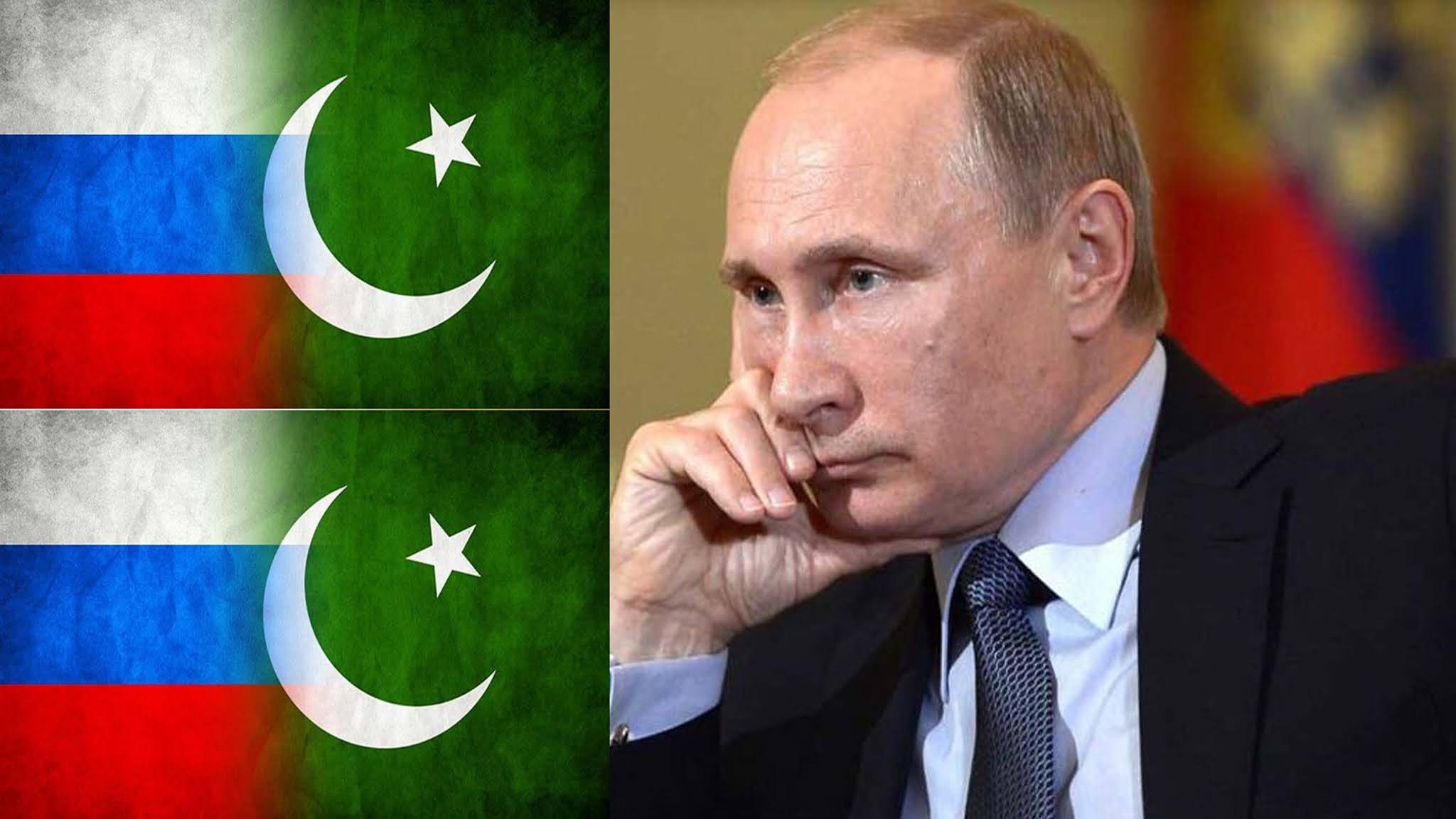
Asia is a goldmine of opportunities and choices for the major powers. Significant location of Pakistan in the region attracts major powers as well. Change in geopolitics with opportunities and choices leads regional states towards decisive shift in their foreign policy. Russia is opening eyes and looking to be a regional hegemon. Although Pakistan and Russia have no history of good relationship but the strategic realities gave birth to the current shift which is much positive for both Islamabad as well as Moscow.
Pakistan-Russia has past of adversary but today, both are welcoming the idea of building and stimulating strategic relationship. Pakistan wants to build better relationship with Russia to reduce dependency on United States. Islamabad wants to prove to Washington that it has as another strategic option if there is any tension happens between Pakistan and United States. Washington never likes Moscow’s influence in Islamabad. There are differences between Pakistan and the United States over drone attacks. According to some analysts American hegemony is near to end in the region and Pakistan does not like to become overly ally of United States and dependent on it.
In fact, the increasing relationship between India and
America motivates Pakistan to look for new friends and alliances. Pakistan also
likes to drive wedge between India and Russia by improving relations with
Moscow. Pakistan also has an eye of Russian military equipment supply and
technology assistance that is better than China. Pakistan wants to gain much
commercial incentive from Russia for example Karachi to Lahore Pipeline and
Russia is also interested in renovation of Pakistan Steel Mill. According to
some reports Russia may join CASA-1000 energy project providing electricity to
Afghanistan and Pakistan.
On the other hand, today Russia is interested in Pakistan by its strategic location being very next to Afghanistan and Central Asian states. Although both the countries do not share borders but have same geopolitical space. Moscow has long considered Islamabad as a troublemaker for Russia and supporter of terrorism in the region. Russian motivation is to convince Pakistan to be moderate and subdue Islamic radicalization and militancy in the region. Pakistan is a Muslim state which has great influence in the Muslim world and Russia also has a large number of Muslim populations.
Russia thinks that Pakistan can play vital role for the stable Afghanistan. Moscow hopes, after the withdrawal of American forces, Russia will find the strategic place in the region and then it will be able to play better role in the Indo-Pacific region. Russia also hopes that its understanding with Pakistan will decrease terrorism in Afghanistan and the region. It is also building relations with Pakistan to counter alignment between India and United States.
Pak-Russia relationship can impede India from getting close United States. Indian tendency toward Israel and United States for advance weapons and technology encourages Russia to look for new markets for her arms sale. Moscow’s proposition to Islamabad, Pakistan can be a part of Russian strategy to play significant role in the region. On the issue of Ukraine, Russia is being isolated and has few friends in the international sphere. The aftermath Ukraine issue Russia is looking for new friends who may help her and challenge the West.
Islamabad and Moscow first time noticed each other in 2009 when Afghanistan, Pakistan, Russia and Tajikistan floated to promote regional security and economics. This quadrilateral idea held three meetings and did not take off due to cancelation of Putin’s expected visit of Pakistan for the fourth meeting in 2012.
President of Pakistan Asif Ali Zardari had visited Russia in 2011 and Army Chief visited Moscow during 2012. There were reciprocal visits continued by ministers and high level officials of both the countries. Russian defense minister Sergei Shoigu visited Pakistan in 2014 since the last 45 years. During this visit the both countries agreed on information exchange on politic-military issues; cooperation for promoting international security, counterterrorism and arms control actives; collaboration in various military fields and other areas of education, medicine, topography, hydrography, cultural and experience sharing in peacemaking efforts were signed. In August 2015, Moscow agreed to provide Mi-35Mhelicopter to Pakistan.
Pakistan wished to buy 20 Mi-35Ms over the next year and got four helicopters in 2017. In addition, both the countries enhanced military relations and joint military exercises were made between the two armies under the slogan of Druzhbha (Russian word meaning friendship). Russian naval forces also participated in Aman-17 international exercise in Arabian Sea, hosted by Pakistan in 2017.
Further both countries agreed about coordination against
terrorism and drug trafficking. Russia had already cooperated in outer-space
exploration and helped in launching Pakistani telecommunication satellite
Al-Badar in 2001. It also had refurbished the only Pakistani steel mill.
An agreement of $2 billion for the North-South gas pipeline was signed in October 2015 which would connect Lahore to Karachi terminal. This agreement was signed on the first visit of Pakistan by Russian energy minister. 1100 kilometer pipeline is anticipated to be completed in 2018. The Russian company will complete this project and will use for 25 years.
In the energy sector, both states are collaborating as well
and have signed a Memorandum of Understanding in Moscow between Russia’s
Gazprom International and Pakistan’s Oil and gas Development Company Limited on
July3, 2017. The project will fulfill
the energy requirement of Pakistan. This understanding was for mutual
cooperation and joint ventures and use of state of art technology that would
aid exploration and development in Pakistan. This is the beginning of
commercial ties between these two countries.
The increasing cooperation between Pakistan and Russia should be viewed in the context of Afghan scenario which had created challenges for Moscow. Pakistan is considered an important country for the stabilization in Afghanistan. Without constructive involvement of Pakistan, the problems of Afghanistan and stability are a dream. During the Last six decades, very few Pakistani leaders and officials visited Russia. Whenever whoever visited yielded positive result; Tashkent declaration in 1966 and Pakistan Steel mills in 1970s.Pakistan has revisited her foreign policy during the 21st century and gave impotence to neglected states. When president of Pakistan visited Russia in 2002, a joint work group on strategic stability, counterterrorism and inter-governmental Commission were established. Regular meetings of these groups have been held since then. Russia also seems accommodating Pakistan.
Russia condemned the Salala Post attack by NATO on
November26; 2011and issued the friendly public statement. And it also supported
Pakistan on closure supply to NATO in Afghanistan through Pakistan. Russia has
supported Pakistan to be a member of Shanghai Cooperation Organization(SCO) and
to be part of Russian security mechanism. Shanghai Cooperation Organization is
an important initiative to counter American influence and to bring peace and
stability in the region. The membership of SCO will enhance the strategic and
regional importance of Pakistan.
There is a strong potential of Pak-Russia relations in steel production, communication, and space technology and energy sector. Pakistan should embrace these choices because it has much learnt from past errors and mistakes. There is common perception in Pakistan that its policy of ignoring nearer countries and aligning the distant ones cost her politically, economically and strategically.
These alliances could not become successful to achieve all
ideals of Pakistan such as Kashmir issue and security against India. Washington
has enhanced relationship with India and is projecting it as a regional power.
It did not fulfill the promise which it had made in the beginning of the
relations. It also did not make Pakistan a progressive and modern society but
turned in to radical and fragmented society. In fact, the ideal of choosing the
democratic west against the authoritative east resulted in long and consistent
spell of dictatorship in Pakistan. Comparatively India chose the other way
round always had a stable and functional democracy in the country.
Although Pakistan and Russia are being close but Pakistan will never jeopardize its relations with Washington. Washington is providing military aid and financial assistant to Pakistan but getting tension by Pak-Russia romance. Russia understands Indian concerns and believes that Moscow and Islamabad rapprochement will normalize the hostile situation between India and Pakistan.
The historical back ground of India-Russia relationship is very strong and Russia will never like to lose India. However, it is expected that there will be a period of much more intensive and extensive interaction between these two countries. Pak-Russia rapprochement should not surprise the regional powers due to current geopolitical churn in global politics.
Pak-Russia relationship may become true strategic partnership in future. If Russia improves strategic relations with Pakistan it might be able to influence Pakistan to play constructive role in Afghanistan and not to act against India. This would be a regional interest as regional powers like to see stability in Afghanistan. If Russia goes ahead to defense cooperation with Pakistan it would be detriment to Indo Russia relationship and Pakistan is a smaller market than India for Russia.
Russia may lose some major contract which it has made with India recently. Both India and Russia have the history of relationship and India has never openly criticized Russian policies over Ukraine. And both the countries are members of several multilateral organizations like BRICS, RIC and SCO. Although India has expressed its concerns about Pak-Russia growing cooperation on several times but Russia believes that Pak-Russia rapprochement will normalize Indo-Pak hostile attitude. It seems that Pakistan and Russia are going to forge true strategic partnership.
= = = = = = = = = = = = = = = = = = =
M. Akram Zaheer
PhD Scholar (Political
Science) The Islamia University, Bahawalpur Lecturer at Heritage International
College Arifwala
-------------------
Sunday, 11 April 2021

ISLAMABAD, APR 11: B4U Global Investment scheme by Saif Ur
Rehman Khan Niazi has grown 4.5 times in less than a year with its investor
base rising from 100,000 in June to 450,000.
The Malaysia-returned Pakistani uses a controversial
multi-level marketing business model to offer people unrealistic and guaranteed
profits. The promise ranges from 7% to 20% a month (or 2.4 times a year),
depending on one’s network size.
So in December, the Securities and Exchange Commission of
Pakistan warned people against investing in any fraudulent schemes that promise
hefty profits and unrealistic incentives. B4U was on its list.
“This entity is raising unauthorised deposits from the
general public in the name of different investment plans,” the SECP said. It
added B4U is working with different companies registered with the SECP, and
that the watchdog has already initiated legal proceedings against these
companies and their directors.
There are reports that B4U is also being investigated by the
FIA.
SAMAA Money has received hundreds of questions over the past few months from people who want to know if B4U is a legitimate business or not. Editor Farooq Baloch breaks down its business model to answer them.
-------------------------------------------------------------------WATCH THE VIDEO TO GET ALL OF YOUR ANSWERS REGARDING B4U GLOBAL.
COURTESY SAMAA.TV
------------
Social Media
Search