Thursday, 12 August 2021

KABUL/DOHA, AUG 12: Afghan government negotiators in Qatar have offered the Taliban a power-sharing deal in return for an end to fighting in the country, a government negotiating source told AFP on Thursday.
"Yes, the government has submitted a proposal to Qatar as mediator. The proposal allows the Taliban to share power in return for a halt in violence in the country," the source said.
---------------------------------------------------
COURTESY Anews
----------

ISLAMABAD, AUG 12: The National Command and Operation Centre (NCOC) on Wednesday decided that complete Covid-19 vaccination certificates would become mandatory for air travel after September 10.
The nerve centre of Pakistan’s
virus response also took a major decision to speed up vaccination process
across the country.
The forum announced that the
partial vaccination certificate would become invalid after September 10
“whereas all the provinces had been informed regarding this decision”.
The interval between the first
and second doses of all types of vaccines is reduced from 42 days to 28 days,
the forum added.
The decision was made in
consultation with the Ministry of Health and medical experts, it said.
The NCOC had underlined that the
early completion of vaccination process is useful in reducing the disease
prevalence and spread in the country.
In a bid to contain the spread of
coronavirus infections, the NCOC had also announced on Monday that only
vaccinated individuals would be allowed to travel by train from October 1.
The decision was taken during a
meeting chaired by NCOC chief Asad Umar. During the meeting, the high-level
forum expressed concern over the alarming increase in Covid-19 infections
across Pakistan, particularly Rawalpindi and Peshawar.
In light of these violations, the
NCOC issued instructions to the authorities concerned to ensure compliance with
the anti-virus SOPs in an effective manner. The forum also deliberated upon measures
taken ahead of Muharram.
The NCOC expressed satisfaction with the pace of vaccinations across Pakistan. However, it stressed that the second dose of the vaccine needed to be administered in a timely manner.
----------------------------------------------------------
COURTESY tribune.com.pk
---------------------

Munaza Kazmi
Even today after more than Seven
decades, it is hard to look back without horror at the savagery of once the magnificent,
the richest and the most beautiful land, the Golden Sparrow’s vivisection, when
rioting, rape and murder scarred this peaceful land, millions were uprooted
from their homes, also billions of rupees worth of property were damaged and
destroyed and the worse friendships destroyed, families ruined, geography hacked, history misread, tradition
denied, and hearts torn apart. The greatest loss
of love and humanity.

Divide et impera – divide and rule – has been written into the history books as an icon of military and political strategy. In simple terms, it refers to the attempt to fracture a large, unified opposition, rendering the fragments too weak to overpower their collective enemy.
It’s led
men from Julius Caesar to Napoleon to success in conquering nations and
controlling populations.
Caesar used the technique in his conquest of Gaul, exacerbating the divisions among the Gallic tribes by letting slip the fact that some rulers were accepting aid for cooperating with him.
Distrust prevented alliances that
might have been strong enough in manpower and training to defeat the Roman army
– and Gaul fell.
British imperialists liked to model themselves on Rome. Hence, liked drawing lines on maps of other countries; they
had done it in the Middle East after World
War 1 and they did it again in Sub-Continent. The
greatest division, and one that has changed the region forever.
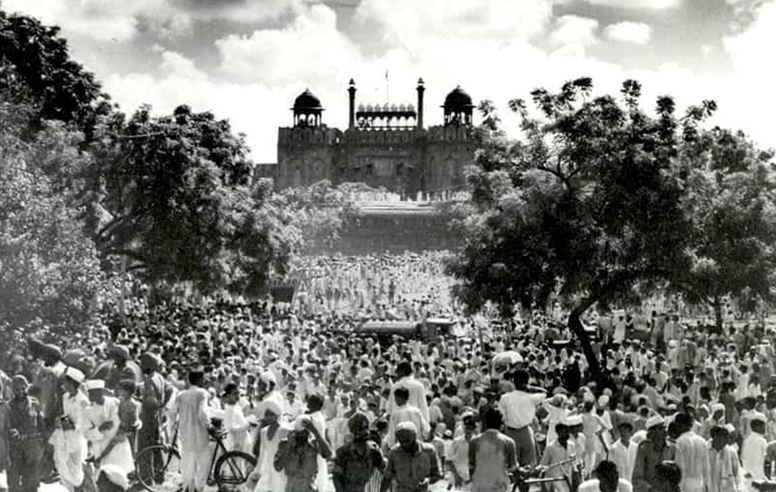
The creation and continuation of antagonism between Hindu-Muslim was the most significant accomplishment of British imperial policy: the colonial project of “divide et impera” (divide and rule) fomented religious antagonisms to facilitate continued imperial rule and reached its tragic conclusion in 1947.
However, I should say it never ended in 1947 as within months we started fighting on issue of Jammu and Kashmir, where the ratio of military personnel to civilians is the highest in the world. Many still die during gun battles, civilians caught in the crossfire.
The consequences of which affect this region till today since
it was pre-planned strategy of those sea dogs, to make this Golden Land to turn
into dust by continuous war and terror.

The British came under the disguise of traders; East India Company a
single business operation, based in one London office complex, managed to
dismantle the Mighty Mughal Empire as masters of the vast subcontinent. First,
they took our King, our riches, our precious Kohinoor and then our peace.
Till today we fight and maybe fighting continue for the end of our
lives, why? because they not only made lines dividing geography butlines on our
hearts. With time we are becoming more hostile, intolerant and unsympathetic.
Why we cannot sit and do table talk, why compassion cannot house in our hearts?
Because colonial mindsets persevere in more ways than we recognize, but
when we experience division – as Hindus and Muslims, or Indians and Pakistanis,
or any other ethnic group with those we perceive as our ‘natural’ enemies – we
should stop and ask ourselves who that division benefits.

However, the recent past witnessed some bounties of love, when Pakistani Prime Minister Imran Khan took the historic decision of opening the Khartarpur corridor and allowed visa-free entry to the Sikh pilgrim, besides another major step taken was the inauguration of Hassanabdal railway station for providing further facilitation to our Sikh fellows, where Imran showcased the world that Pakistan look forward for peace and good relations hence won hearts of several people.
He madethe historian to write his name in golden letters as the “Leader of Peace”.
I
believe if such steps could be replicated on the other side we could make this region
once again as strong, as rich and powerful as the times of Akbar the Great and
return the Golden Sparrow its glittering magnificence.
--------------
Munaza Kazmi holds MPhil in Management Sciences (Bahria University Islamabad, 2020). She’s a travel writer, an author, & co-author of scientific contributions in national & international publications. Her main areas of research include tourism & quality management.
-----------------------------------------------
Wednesday, 11 August 2021

FAISALABAD, AUG 11: Global Technology company, vivo, announced that it has started producing an expansive catalog of products locally at its first production base set up in the Industrial Estate of Faisalabad, Pakistan.
As one of the leading brands in the region, this marks vivo’s sixth such intelligent production base as it strengthens its footprint across the globe in line with the “More Local, More Global” strategy.

In order to strengthen its footprint in Pakistan, vivo has invested USD 10 million to set up a domestic manufacturing plant which is in alignment with the “Made in Pakistan” initiative to contribute to the development of the local economy and empowerment of the local workforce.

Pakistan currently has a local demand for 3.3 million mobile phones monthly. The new facility, spread over 4 acres, has a production capacity of 500,000 smartphone units per month.
Since 2014, vivo has been adhering to “More Local, More Global” strategy and readily establishing its global R&D and manufacturing network.
Aside from the newly inaugurated production base in Pakistan, vivo also has already established five such locations in Dongguan, Chongqing, India (Greater Noida), Bangladesh (Dhaka), and Indonesia (Tangerang), combining for a collective manufacturing capacity of hundreds of millions of cutting-edge devices every year.


This steady growth in production capability has become essential in safeguarding the global supply of vivo products and satisfying international user demands. “Pakistan is becoming an increasingly favorable destination for local manufacturing hubs,” said Eric Kong, CEO, vivo Pakistan.
“The decision to set up this local manufacturing plant in Pakistan is not just our approach to enrich users’ lives with high-quality, homegrown technologies but also to empower the local workforce with more opportunities.”
“vivo believes in the Benfen philosophy which encourages us to build technology for the good of society,” he added.
With 8 assembly lines, the facility is already operational in Faisalabad and has produced the first batch of ‘Made-in-Pakistan’ mobile phones as of February 1, 2021.
-----------------------------------------------
COURTESY propakistani
---------------

ISLAMABAD, AUG 11: National Security Adviser Moeed Yusuf said on Wednesday that social media accounts operated from Afghanistan and India were being used to malign Pakistan as Afghan authorities failed to stop sweeping territorial gains made by the Taliban.
Addressing a press conference alongside Information Minister Fawad Chaudhry, Yusuf regretted the “global silence” in response to India propagating disinformation against Pakistan.
But he said the government would keep presenting analytics-based data to show the “information warfare” being faced by Pakistan.
“Afghanistan has a volatile situation now, but let me tell you Afghan and Indian accounts are being used to malign Pakistan,” he added, noting that ‘Sanction Pakistan’ was widely trended on Twitter to create a narrative against the country.
He clarified that he had just returned from the United States and there was no talk of sanctioning Pakistan.
“Attempts are underway to blame Pakistan for Afghanistan’s failures. As the Taliban offensive is increasing, there are campaigns to shift its blame on Pakistan.”
Yusuf said senior Afghan officials, including his Afghan counterpart, were involved in such campaigns, adding that the government would expose everything through data and not fake news. “We won’t expose fake news through fake news,” he commented.
The remarks came as the Digital Media Wing of the Ministry of Information and Broadcasting launched a “Deep Analytics Report” on “Anti-State Trends”.
The 135-page report covering “PTM, Political Parties, Indian and Fake News Nexus” dissects what it terms anti-Pakistan trends from 2019 to 2021.

According to NSA Yusuf, the five top themes used by the elements involved in the propaganda are:
- Discredit the Pakistani government and especially Pakistan Army
- Fan sub-nationalism
- Target the China-Pakistan Economic Corridor (CPEC)
- Keep Pakistan on the Financial Action Task Force (FATF) grey list
- Blame Pakistan for all the chaos in Afghanistan
‘Stop blaming the victim’
Yusuf regretted that a number of people inside Pakistan too unknowingly believed such trends to be genuine and started promoting them. “These hashtags are initiated through 40 per cent of bot activity,” he said.
The NSA also called out the Afghan army, saying the force that was raised 20 years ago had surrendered before the Taliban and excused itself from putting up a fight.
“It’s not our fault. You must look at the Afghanistan map and see the territories captured by the Taliban. They are mostly areas which are far off from Pakistan,” he stressed.
Yusuf said a “targeted, deliberate and conscious” disinformation campaign was being constantly run by accounts in India and Afghanistan, some of which were linked to the state apparatus, in order to defame Pakistan in the international arena.
“I must remind you that Pakistan is a victim of the war in Afghanistan. We suffered more than 80,000 casualties with $150 billion loss in economy, therefore, stop blaming the victim,” he added.
The NSA emphasised that the actual failures were in the 20 years of what happened in Afghanistan. “This [propaganda] will not work because the kind of data we are showing you through forensics is irrefutable,” he said.
He added that many in positions of power at the global level were busy trying to shift the blame and create fake news about Pakistan, “but we will respond to it through data analysis”.
He also urged Pakistanis not to believe everything on social media, asking them to check and verify if they saw a trend going in a particular direction.
He assured the nation that the country was safe and would remain safe, saying the government would not shy away from calling out whoever was involved in defaming Pakistan.
‘India generating fake Twitter trends’ against Pakistan
Earlier, Information Minister Chaudhry said government teams had analysed Twitter trends from June 2019 to August 2021 and “it transpired that India led the top trends against Pakistan and the biggest player which helped India was PTM (Pashtun Tahaffuz Movement) and its activists.” He added that representatives of the Afghan government were also part of such activity.
Giving a breakdown of a few trends allegedly based on disinformation, Chaudhry said the PTM had initiated 150 trends against Pakistan in the last two years consisting of 3.7 million tweets — and it takes more than 1,000 hours to do tweets at this scale, he added.
He said the PTM had also actively supported Baloch activism and on Aug 14, 2020, the hashtag ‘#BalochistanSolidarityDay’ was trended with massive support from India, with around 150,000 tweets posted with the hashtag by Indian activists in a day.
-----------------------------------------------
COURTESY DAWN NEWS
-----------

DUBAI, AUG 11: Emirates released a new advertisement featuring a woman standing on top of the Burj Khalifa in Dubai. Later, it also shared a BTS video showing how the ad was filmed. The videos have gone viral on social media.
Emirates, which is the largest airline and the flag carrier of the United Arab Emirates, has occupied the top spot on the trends list after it released a new advertisement featuring a woman standing on top of the Burj Khalifa in Dubai.
The 30-second advert has gone viral on social media as users were left in awe after watching the clip. Nicole Smith-Ludvik, who is a professional skydiving instructor, features as an Emirates cabin crew member in the advert.
As the ad opens, Nicole in the Emirates uniform is seen holding up message boards that read, “Moving the UAE to the UK Amber list has made us feel on top of the world. Fly Emirates. Fly better.”
As the camera pans out, you will see that Nicole is actually standing on the tip of Burj Khalifa with a spectacular view of Dubai’s skyline in the backdrop. At 828 metres above the ground, the Burj Khalifa is the world’s tallest building.
Nicole also shared the ad on Instagram, saying, “This is, without a doubt, one of the most amazing and exciting stunts I’ve ever done. A big shout out to Emirates Airlines for your creative marketing idea! It was a pleasure being a part of the team!”
Nicole Smith-Ludvik is a “world traveller, skydiver, yoga instructor, hiker and adventurer” as described on her Instagram bio.
Meanwhile, social media users were absolutely stupefied after watching the Emirates ad and shared their thoughts and opinions in the comments section.
-----------------------------------------------
COURTESY indiatoday
------------

ISLAMABAD, AUG 11: Pakistan Youth Change Advocates (PYCA) recently held an expert consultation ahead of the publication of its white paper, “Public Investment in Education: An Appraisal of SDG-4 in Pakistan.”The upcoming white paper and the consultation were part of the organization’s #InvestinEducationStrengthenPakistan campaign. Educationists, public finance experts and members of the civil society participated in this consultative session.
Earlier this year PYCA had published a white-paper,“Public Investment in Education: Covid-19 and other emergencies in the past.” which highlighted the dismal state of education financing in the country. The paper had pointed-out lacunas in the country’s current budgeting process and emphasized the need to address these gaps to create more fiscal space to enhance public investment in education and other social services.
The organization will now publish a second white paper in the same series focusing on Pakistan’s performance vis-à-vis Sustainable Development Goal (SDG) 4, i.e., quality education. The research paper that is slated to publish in September 2021 analyzes the key areas of intervention if Pakistan so desires to achieve the various targets laid down under SDG 4 by the year 2030.
Author of the paper and public finance expert, Mr. Asim Bashir Khan while presenting the key findings and recommendations of the research to audience said, “Both the federal and provincial governments understand the fact that the current state of public investment in education is not up to the required mark.
This is evident from the majority of the sector plans as well as the Vision 2025 document which pledges to allocate 4% of the GDP to education. However, in actuality Pakistan has been unable to allocate more than 2.5% of its GDP in the last 20 years. The COVID crises have led to a further decline in public investment in education with merely 1.5% of GDP being allocated for education in the fiscal year 2020 – 21.”
Shedding light on the urgency of the situation, Former Chairman FBR Dr. Muhammad Irshad commented, “Unfortunately, the situation of education in Pakistan paints a sad story. On one hand the government has been unable to prioritize investment in education and on the other hand, a huge disparity remains rampant between the educational opportunities provided to boys and girls at the community level.”
Commenting on the legislative side of the dilemma, Marium Amjad of AWAZ CDS shared, “In general practice we immediately jump from legislation to implementation.However, there are many steps in between these two milestones that dictate whether or not a law will be implemented.”
Citing the example of Punjab she said,“The Free and Compulsory Education was passed in the province in 2014. However, to date it cannot be implemented because it has neither been notified by the provincial government nor has its rules of business been formalized.”
-------------------------------------------

ISLAMABAD, AUG 11: Huawei Pakistan together with Higher Education Commission launched its Seeds for the Future program 2021, it is an 8-day long culture and ICT technologies learning program where the nominated 40 brilliant engineering students from Pakistan will attend the online training together with students from Bahrain. Due to the restrictions put in place by Covid-19, just like last year, the program will continue to stay online.
The program first launched in Pakistan in 2015 and this is the 7th time Seeds for Future is happening in Pakistan. Out of a pool of more than 1000 applicants, 40 have been nominated by the Higher Education Commission. They are all undergraduate engineering students.
The initial period of the learning is about Chinese culture and Chinese language. Later on, they will get technical training from Huawei and industry ICT experts who will share their expertise on a wide range of courses covering 5G, cloud computing, AI, strategic leadership and etc. They will also participate in the“Tech4Good” Group Project in this year.
The Seeds for the Future program has been a successful addition to Huawei’s social-enterprise partnership goal in Pakistan since the first batch of Pakistani students traveled to China in 2015. The aim of the program, which has been active in more than 130 countries & regions since its inception in Thailand, has been to nurture upcoming STEM talent from around the world. As a global ICT market leader, Huawei has taken it upon itself to promote local ICT industries as part of development in their operational regions.
The ICT industry is one of the fastest growing in Pakistan, and the world. The demand for qualified and market-ready professionals in the field is growing rapidly — it is becoming a need, in our burgeoning online-based globalized reality. Programs such as Seeds for the Future address this long-term possibility of deficiency with appropriate foresight.
----------------------------------------------
Tuesday, 10 August 2021

DUBAI, AUG 10: The International Cricket Council (ICC) says it is preparing a bid for the game’s inclusion to the 2028 Olympic Games in Los Angeles.
Cricket was last featured in the Olympics in 1900 in Paris when only two teams competed at the event – the Great Britain and hosts France.
“A Working Group has also been formed to lead the bid,” according to ICC statement.
The ICC Olympic Working Group will be chaired by England and Wales Cricket Board Chair Ian Watmore. He will be joined by ICC Independent Director Indra Nooyi, Chair of Zimbabwe Cricket Tavengwa Mukuhlani, ICC associate member director and Vice President of the Asian Cricket Council Mahinda Vallipuram and Chair of USA Cricket, Parag Marathe.
Pakistan doesn’t have any representation in the ICC Working Group.
Cricket will feature in the Birmingham 2022 Commonwealth Games next year, which, according to ICC, shapes as a perfect showcase for what the sport can bring to the Olympics.
“Our sport is united behind this bid, and we see the Olympics as a part of cricket’s long-term future. We have more than a billion fans globally and almost 90 per cent of them want to see cricket at the Olympics,” ICC Chair Greg Barclay said in a statement.
Barclay said the addition of cricket to the Olympic Games would be beneficial to both the sport and the Games themselves.
As many as 30 million cricket fans live in the USA, making LA 2028 the ideal Games for cricket to make its return to Olympic competition, the statement says.
Barclay added: “Clearly cricket has a strong and passionate fanbase, particularly in South Asia where 92pc of our fans come from whilst there are also 30m cricket fans in the USA. The opportunity for those fans to see their heroes competing for an Olympic medal is tantalising.”
The ICC representative said “We believe cricket would be a great addition to the Olympic Games, but we know it won’t be easy to secure our inclusion as there are so many other great sports out there wanting to do the same.”
Chair of USA Cricket Parag Marathe said the time was now for cricket to make its long-awaited return to the Olympics.
“USA Cricket is thrilled to be able to support cricket’s bid for inclusion in the Olympics, the timing of which aligns perfectly with our continuing plans to develop the sport in the USA,” he said.
“With so many passionate cricket fans and players already in the USA, and a huge global audience and following for the sport around the world, we believe that cricket’s inclusion will add great value to the Los Angeles 2028 Olympic Games and help us to achieve our own vision for establishing cricket as a mainstream sport in this country,” he added.
--------------------------------------------------
COURTESY DAWN NEWS
----------

LONDON/ISLAMABAD, AUG 10: The British High Commission in Pakistan on Monday said that the decision to keep the country on the red list, under the coronavirus travel restrictions, was based on data and science.
The British government placed Pakistan and India on the red list on April 2 and 19, respectively. However, in an updated list, the government announced that India, Bahrain, Qatar and the UAE would be moved to the amber list from August 8.
A day earlier it was reported that UK senior health official JO Churchill said that Pakistan was being retained on Britain’s “red list” due to the “worsening Covid-19 situation and low testing rates”.
The decision was met with backlash from the Pakistani public and politicians alike who termed it unjust. Human Rights Minister Shireen Mazari criticised the British government, calling the measure ‘ridiculous’.
“UK gov[ernmen]t, dominated by Indophiles and despite globally documented India’s continuing disastrous handling of Covid pandemic, moved India to Amber List but keeps Pak on Red [list]; then under pressure from Opp[osition] MPs gives feeble excuse Pak didn’t share data,” Minister Mazari said in a tweet.
She further stated that the British government had never asked for Pakistan’s Covid-19 data which was already publicly available as the National Command and Operation Center (NCOC) has a centralised database, which is updated daily and added that it was also being shared with the UK High Commission.
“Earlier UK govt had given another excuse – that more Pak passengers than Indians tested positive! Shifting goalposts!” the minister added.
“We are proud of our people-to-people links with our 1.6m diaspora at the heart of our relationship. We recognise that many people are disappointed that Pakistan remains on the UK’s Covid red list,” the British High Commission in Pakistan wrote on its official Twitter handle late on Monday.

It said that the decision to keep Pakistan on the red list is based on data and science. “Every week we share the latest NCOC data with colleagues in London. We are ek saath (together) with Pakistan in the fight against Covid & look forward to normal travel resuming again when safely possible,” it wrote in another tweet.

In a letter dated August 6, Churchill while explaining the reason for keeping Pakistan on the red list of countries said the UK’s Joint Biosecurity Centre continues to assess risk based on factors including incidence, trends in deaths/hospitalisations, exported cases as well as testing and test positivity rates.
Her response comes after Pakistan including several members of the British House of Commons slammed the UK government for keeping Pakistan on its red list of countries at the latest coronavirus travel update while removing India from it.
“In Pakistan, the combination of a deteriorating epidemiological situation, combined with low testing rates and limited genomic surveillance, presents a high risk that an outbreak of a new variant, or existing VoC [variant of concern], will not be identified before it is imported to the UK,” she said in a letter.
The red list of the countries means only the UK nationals and those with residency rights will be allowed to travel to the country if they stayed in Pakistan in the 10 days before they arrive. The amber travel list means that returnees can quarantine at home, rather than in a hotel.
Britain’s MP Yasmin Qureshi had termed the move to keep Pakistan on the red list while downgrading India “a clear and blatant discrimination towards Pakistan”.
--------------------------------------------
COURTESY TRIBUNE
---------
Monday, 9 August 2021

NEW YORK, AUG 9: The United Nations panel on climate change told the world on Monday that global warming was dangerously close to being out of control and that humans were “unequivocally” to blame.
Already, greenhouse gas levels in the atmosphere are high enough to guarantee climate disruption for decades if not centuries, the report from the scientists of the Intergovernmental Panel on Climate Change (IPCC) warned.
In other words, the deadly heatwaves, gargantuan hurricanes and other weather extremes that are already happening will only become more severe.
Monday alone saw 500,000 acres of forest burning in California, while in Venice tourists waded through ankle-deep water in St Mark’s Square.
UN Secretary-General Antonio Guterres described the report as a “code red for humanity”.
“The alarm bells are deafening,” he said in a statement. “This report must sound a death knell for coal and fossil fuels, before they destroy our planet.”
In an interview with Reuters, activist Greta Thunberg called on the public and media to put “massive” pressure on governments to act.
In three months’ time, the UN COP26 climate conference in Glasgow, Scotland, will try to wring much more ambitious climate action out of the nations of the world, and the money to go with it.
Drawing on more than 14,000 scientific studies, the IPCC report gives the most comprehensive and detailed picture yet of how climate change is altering the natural world — and what could still be ahead.
Unless immediate, rapid and large-scale action is taken to reduce emissions, the report says, the average global temperature is likely to reach or cross the 1.5-degree Celsius warming threshold within 20 years.
The pledges to cut emissions made so far are nowhere near enough to start reducing the level of greenhouse gases — mostly carbon dioxide (CO2) from burning fossil fuels — accumulated in the atmosphere.
‘Wake-up call’
Governments and campaigners reacted with alarm.
British Prime Minister Boris Johnson said he hoped the report would be “a wake-up call for the world to take action now, before we meet in Glasgow”.
The report says emissions “unequivocally caused by human activities” have already pushed the average global temperature up 1.1°C from its pre-industrial average — and would have raised it 0.5°C further without the tempering effect of pollution in the atmosphere.
That means that, even as societies move away from fossil fuels, temperatures will be pushed up again by the loss of the airborne pollutants that come with them and currently reflect away some of the sun’s heat.
A rise of 1.5°C is generally seen as the most that humanity could cope with without suffering widespread economic and social upheaval.
The 1.1°C warming already recorded has been enough to unleash disastrous weather. This year, heatwaves killed hundreds in the Pacific Northwest and smashed records around the world. Wildfires fuelled by heat and drought are sweeping away entire towns in the US West, releasing record carbon dioxide emissions from Siberian forests, and driving Greeks to flee their homes by ferry.
Further warming could mean that in some places, people could die just from going outside.
“The more we push the climate system … the greater the odds we cross thresholds that we can only poorly project,” said IPCC co-author Bob Kopp, a climate scientist at Rutgers University.
Irreversible
Some changes are already “locked in”.
Greenland’s sheet of land-ice is “virtually certain” to continue melting, and raising the sea level, which will continue to rise for centuries to come as the oceans warm and expand.
“We are now committed to some aspects of climate change, some of which are irreversible for hundreds to thousands of years,” said IPCC co-author Tamsin Edwards, a climate scientist at Kings College London.
“But the more we limit warming, the more we can avoid or slow down those changes.”
But even to slow climate change, the report says, the world is running out of time.
If emissions are slashed in the next decade, average temperatures could still be up 1.5°C by 2040 and possibly 1.6°C by 2060 before stabilising.
And if, instead the world continues on its current trajectory, the rise could be 2.0°C by 2060 and 2.7°C by the century’s end.
The Earth has not been that warm since the Pliocene Epoch roughly three million years ago — when humanity’s first ancestors were appearing, and the oceans were 25 metres higher than they are today.
It could get even worse, if warming triggers feedback loops that release even more climate-warming carbon emissions — such as the melting of Arctic permafrost or the dieback of global forests.
-------------------------------------------------
COURTESY DAWN NEWS
----------
Social Media
Search