Saturday, 8 January 2022

- Government deploys Pakistan Army, civil-armed forces to evacuate tourists from Murree.
- Thousands of tourists left stranded as routes to Malka-e-Kohsar closed due to snowfall.
- Around 125,000 vehicles enter city causing a severe traffic jam.
Murree, JAN 8: The federal government on Saturday deployed personnel of the Pakistan Army and other civil-armed forces for rescue operations in Murree following the tragic deaths of at least 21 tourists who died in their vehicles after being stranded due to heavy snowfall in the area.
All the routes in Murree were blocked for traffic after thousands of vehicles entered the city at a time when “unprecedented snowfall” took place, according to local administration.
In a video message, Interior Minister Sheikh Rasheed said the crisis unfolded as Murree witnessed “a huge number of tourists after 15-20 years”.Rasheed said the government was forced to close the road from Islamabad to Murree. “Islamabad and Rawalpindi’s commissioners, deputy commissioners, and police are carrying out rescue operations,” he said.
The interior minister said five platoons of the Pakistan Army have been called in for rescue efforts, while Rangers and Frontier Corps will be deployed on an emergency basis.
“At least 1,000 vehicles have been stuck since last night […] some have been evacuated; 16-19 deaths took place in cars. The locals provided food and blankets to the stranded people.”
The interior minister said the authorities would evacuate 1,000 vehicles by today evening, while the roads would remain closed to Murree till tomorrow 9pm.
“We have also decided to ban tourists who are planning on coming to Murree on foot; this is not the time to come to Murree,” Rasheed said.
‘Tourists did not die of cold’
Talking to Geo.tv, SHO Murree Police Station Raja Rasheed said: “There has been over 4 to 4.5 feet of snowfall in Murree. There has never been this much snowfall in this area.”
He said that most of the people who died in Murree did not die due to the cold, they died as they left their heaters on in the car and went to sleep.
“The fumes from the heater killed them.”
‘Government responsible for cousin’s death’
Tayyab Gondal, the cousin of Naveed Iqbal, a police official who died in Murree, blamed the “incompetent” government for his relative’s death, as he broke into tears.
Talking to Geo News, he said scores of vehicles have been stuck in Murree for the last 24 hours, while as many as 4,000 vehicles were stranded on the Nathia Gali Road.
“The road from GT Road to Murree was clear; the flow of traffic stopped as soon as we entered Murree. The local administration did not stop us at the toll plaza,” Gondal said.
Gondal said: “Had it not been for the government’s negligence, my family members would still be alive. The [death of the people] is due to the government’s incompetence.”
“We have tourist spots but no one to look after them,” he said.
He added that several families are still waiting for someone to rescue them. “I sent my live location to [the local administration], but no one reached out to help me.”
ASI Iqbal, his wife, four daughters, and two sons are among the deceased, according to rescue officials.
Punjab declares Murree calamity-hit area
The Punjab government has declared Murree as a calamity-hit area after heavy snowfall wreaked havoc in the city. Taking notice of the chaos and emergency situation, Punjab Chief Minister Usman Buzdar has directed to open the government’s offices and rest houses for the stranded tourists.
He directed to provide every possible relief to the tourists and accelerate the ongoing rescue operation to evacuate the people from the hill station.
The chief minister ordered to move additional resources from Rawalpindi and other cities to Murree to speed up the relief operation.
CM Buzdar also directed to send his official helicopter to Murree for the rescue mission.
‘Shocked’ prime minister
Prime Minister Imran Khan, responding to the incident, said: “Shocked and upset at tragic deaths of tourists on road to Murree.”
The prime minister said he has ordered an inquiry into the matter and was putting in place a “strong regulation” to ensure the prevention of such tragedies in the future.
Snowstorm
According to the local administration, rain and blizzards are forecast tonight in and around Murree, with thunderstorms at a speed of 50-90 kmph and heavy snowfall.
The administration has warned the citizens not to leave their homes in severe weather or turn to Murree as severe weather conditions are likely to continue till late at night.
Tourists throng to Murree
For the last two days, continuous snowfall has been taking place in Murree, and with that, hundreds of thousands of tourists are heading towards the town.
Geo News, citing officials, reported that an estimated 125,000 vehicles have entered the city so far, due to which severe traffic jam was witnessed on the roads.
Rawalpindi deputy commissioner has confirmed that that the road leading to the tourist site has been closed at Bhara Kahu tool plaza to deal with the situation.
Thousands of tourists, including women and children, have been trapped on the roads in the area since last night. Officials of the traffic police, however, were making their efforts to restore the flow of traffic on the roads.
The tourists have demanded of the government to help evacuate them from the area.
Taking to Twitter, Rawalpindi deputy commissioner said, “Around 23000 vehicles have been evacuated safely from Murree. Around 1000 are still stranded.”
He maintained that the district admin is working round the clock to evacuate the remaining vehicles safely.
Govt appeals to postpone plan for a few days
Earlier, Sheikh Rasheed had appealed to the tourists, especially families, to refrain from travelling to Murree and Galyat.
He had maintained that the tourists will not be allowed to go beyond 17 Mile Interchange. However, citizens with an extreme emergency will be granted permission to travel to Murree and Galyat.
Similarly, Information Minister Fawad Chaudhry said that a large number of vehicles were heading towards Murree and other hilly areas, making it impossible for the local administration to facilitate them.
----------------------------
Courtesy Dawn News
-----------------
Friday, 7 January 2022


ISLAMABAD, JAN 7: Japanese Dolls Exhibition on Jan 11 in Islamabad. Embassy of Japan in Islamabad has announced the date of the Japanese Dolls exhibition which will be organized at the Pakistan National Council of the Arts on January 11 at 3:30 PM.
Japanese dolls are an essential element of the nation's culture, there is even festival dedicated to them every spring.
Ever since ancient times dolls have been a part of the culture of Japan. They represent an item of veneration, a child's play thing, or an object of delight.

-------------------------

The shift in Pakistan’s national security paradigm
Ironically, despite the gruesome traditional and non-traditional security challenges, the ruling elite has failed to provide a comprehensive national security policy during the last seven decades of the country’s existence. Therefore, the review processes and debates to systematically revamp and improve the national security policy were always missing.
Dr. Zafar Nawaz Jaspal
The shift in Pakistan’s national security paradigm
The shift in Pakistan’s national security paradigm
- Dr. Zafar Nawaz Jaspal is an Islamabad-based analyst and professor at the School of Politics and International Relations, Quaid-i-Azam University.
E-mail: jaspal_99@hotmail.com Twitter: @zafar_jaspal

Munaza Kazmi
Lahore is one of Pakistan’s most brilliant gems, since it is among the most historically rich, and culturally important cities on the whole of the subcontinent, yet without the curse of mass tourism, the city represents one of the most exciting and vibrant travel destinations in the region.
However, Lahore remains relatively obscure outside the country; an unexpected pleasure for travelers.
With Pakistan enjoying improved security, Pakistan finally seems to be emerging from the shadows, and here tourists are starting to rediscover the city's treasures.
Lahore itself has a grand history. By the 17th century, it was celebrated as one of the world's most populous and cultured cities.
Its overlords, The Great Mughals, a Turkic dynasty from Central Asia that established its rule on the Indian subcontinent in 1526, were an embodiment of power and magnificence.
That golden age blessed Lahore with more Mughal architectural masterpieces than either Delhi or Agra.
Today, the city is Pakistan's main mainstay of history, culture and cuisine. Moreover, Lahore is the capital of the central-eastern province of Punjab, which lies near the banks of the River Ravi, 15 miles from Wagah, where guards from both countries India and Pakistan take part in a daily foot-stomping ritual, that is also a notable tourist attraction.
December last year, I packed my bag for exploring Lahore. From Islamabad it takes 4 hours on motorway to reach Lahore, meanwhile, you will enjoy watching the surrounding green pastures, maybe peacock flying nearby KalllarKhar, the zig zag roads of Salt Range, the orange laden trees, a rare sight of red, green and yellow dupattas flying in the air of local women carrying water, the green fields of Punjab and the waters from the rivers, it is absolutely a 4 hours of discovery.
Lahore, A Mughal Treasure
While reaching Lahore there are numerous options from 5 star to roadside motels for staying, but it’s better to have book the hotel in advance, however, I checked into Nishat Hotel a relatively new building, built on the modern style.
The plus point of this hotel is that its adjacent to the shopping area; Emporium Mall, from where you can buy all, from a pen to branded apparels.


Later, Emperor Jahangir, Akbar's son, and grandson Emperor Shah Jahan, lavishly developed fort’s architectural idiom, adding palaces, towers and gardens to the fort's 20 hectares.
Their contributions have made the fort a trove of some of the Mughal world's most outstanding designs.
Among them is The Sheesh Mahal, built by Shah Jahan in order to translate the dream of Beghum Mumtaz Mehal; walking on the clouds among the stars.
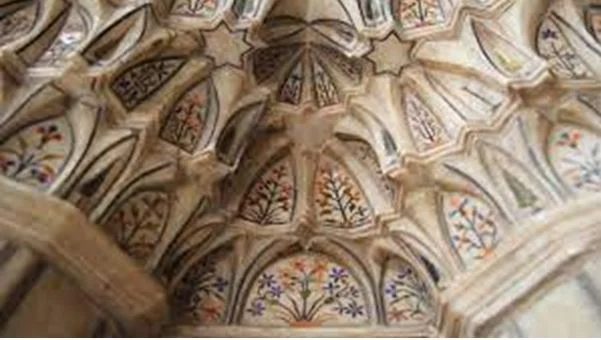
Seeing the angels and djinns on the tiles of the former's Lal Burj, and the latter's marble Moti Masjid and Sheesh Mahal, with its brilliant gilt work, pietra dura and carved marble lattice screens will marvel your eyes, after centuries of depletion, still these art work standouts and speaks of the once greatest of all kingdom.
Lahore, A Mughal Treasure
After dawdling among them, you would find the fort's museum which includes an excellent collection of Sikh artifacts and paintings, and with that is a small building BaroodKhana built by later under British Raj where you can sit and watch some documentaries related to the renovation of the fort.
Next, march down the steps of the mammoth Elephant Path and wander along below the camels, flowers and dragons depicted in the tile mosaics of Emperor Jehangir's extraordinary Painted Wall.

I haven’t seen such a scientific construction anywhere. My readers would be surprised to know that the place remains cold during the scorching summer heat and humidity and warm during the freezing winters.
Moreover, there is a 400 years old tunnel which served as a secret path for the royals.

Lahore, A Mughal Treasure
Adjacent is Pakistan's most iconic building, the massive pink-red Badshahi Mosque, a vast arcaded courtyard, built to accommodate 100,000 worshippers and surrounded by merlon-capped walls embellished with stone carvings and marble inlay, the prayer hall lies across the courtyard floor under spherical domes.
The mosque was built in 1674 by
Emperor Aurangzeb, in order to commemorate great victories in the south of his
empire.
For centuries it was the world's largest mosque. Today, it's a monument to Mughal talent.Its prayer hall is bright with elegantly restrained fresco work, stucco tracery and columns, to the observer which appear as vases containing decorative flowers in relief.
This radiance continues throughout the hall's domed chambers, which, divided by pointed arches, have extraordinary acoustics, a large factor in the mosque's atmosphere of clarity.

Neighboring the Fort and Badshahi Mosque is a sight of religious harmony, Gurdwara Dera Sahib which marks the spot where the 5th guru of Sikhism, Guru Arjan Dev, died. It also served as the Samadhi of Maharaja Ranjit Singh.
The beautiful yellow and white building is a perfect blend of Hindu, Sikh and Muslim architectural style. Golden fluted domes, the front doorway has images of Hindu gods, wood panels and ceilings are covered with stained glass work and rich floral design on the walls.
Moreover, you would find the precious stones and work of gold here and there.

Lahore, A Mughal Treasure
Next to the Fort and Badshahi Mosque, is the Walled or Old City, it got its name Walled, as in the Mughal days, the Old City was surrounded by 9-meter-high brick wall and had a rampart running around it which served as a protection for the city.
A circular road around the rampart gave access to the city through thirteen gates. However,6 of 13 have been survived.
Moving towards Dehli Gate is a magnificent, Mughal hammam, or Turkish bath, recently renovated by AKDN.
Beside adventure, you can buy a variety of colorful stuff from Kashmiri Bazar that comes straight from the hamman.

Lahore, A Mughal Treasure
Walking out of the Kashmiri Bazaar you'll come to the Old City's most famous treasure, the wonderfully radiant 17th-century Wazir Khan Mosque.
Its magical exterior and interior tile and fresco work project elegance, the mosque itself is a masterpiece that reflects the genius of the hand.
A little westward you would find the Sunehri Masjid, built in the year 1753 in the reign of Emperor Shah Alam. Like Amritsar’s Golden Temple, this mosque is Lahore’s Golden Mosque.
Meanwhile, you would find a couple of Mughal style Havelis, however, some were constructed among the Sikh and British Raj, the famous of them BaroodKhana Haveli, and Haveli Nahu Nihal.

I believe by this time and by the appetizing smells of food from nearby stalls you would be craving for food and delicious food. What if it comes with a treat for your eyes as well. Hence, head back towards the Badshahi Mosque to Cuckoo's restaurant.
Its owner, the artist Iqbal Hussain, was born in this district, Heera Mandi, a famous, now dying red-light area.The restaurant's rooftop terrace provides the best view of the Badshahi Mosque, its minarets looming above.
Following the delicious Lahori food, the mesmerizing evening will offer you the flying memories of the golden past, and there I was holding in my dreams the Great Mughals.
Seeing those beautiful hand carved lattices and colorful painting like buildings, I went into the old Lahore and I thought, once these alleys were glittering with loudest of colors, sweet smells, pleasing sounds of jingling of bangles & loveliest melodies.
----------------------------------
Munaza Kazmi holds MPhil in Management Sciences (Bahria University Islamabad, 2020). She’s a travel writer, an author, & co-author of scientific contributions in national & international publications. Her main areas of research include tourism & quality management.
-------------------

ISLAMABAD: Decision on extension for COAS can wait, says PM Imran. Prime Minister Imran Khan on Thursday said he had so far not thought about extension in the tenure of Chief of the Army Staff Gen Qamar Javed Bajwa.
“The current year has just started and November is far away. Then why there is worry about extension in the tenure of the army chief,” the prime minister said at a one-on-one meeting with Dunya TV Islamabad Bureau Chief Khawar Ghumman.
According to Mr Ghumman, the prime minister said he enjoyed unprecedented relationship with the military leadership.
Decision on extension for COAS can wait, says PM Imran
When asked — in the context of rumours of a possible deal between the PML-N and military to send his government packing — whether he felt threatened from any quarters, the PM said he personally was not under any kind of pressure.
He added that he enjoyed the support of government allies and expressed the confidence that his government would complete its mandated five years.
Talking about his party’s quest for accountability, the PM said major opposition figures had not yet been tried on corruption charges and still roamed free because of weak prosecution.
He said the National Accountability Bureau would take cases before the court but they were not being prosecuted.
He admitted that not proceeding against opposition leaders despite there being evidence of corruption against them could be termed his government’s greatest shortcoming, but appeared hopeful that Pakistan Muslim League-Nawaz leader Shehbaz Sharif would not escape punishment in the fresh case brought against him by the Federal Investigation Agency.
Decision on extension for COAS can wait, says PM Imran
He termed PTI’s defeat in the recent local government elections in Khyber Pakhtunkhwa “a big loss”, and when asked how the PTI planned to ensure electoral success in local government elections in Punjab, the prime minister reposed confidence in Chief Minister Punjab Usman Buzdar and hoped that his party would have a better showing when polls were held in Punjab.
The PM held three other meetings on Thursday.
During an interaction with Punjab Governor Chaudhry Muhammad Sarwar, PM Khan affirmed his government’s commitment to prioritising the completion of people-oriented projects such as health, education, low-cost housing, social projects and clean water.
In a separate meeting, PM Khan called for the swift completion of the government’s flagship urban development projects, including the Ravi Urban Development Authority and the Central Business District, Walton in Lahore and the Nullah Lai Expressway in Rawalpindi.
During the meeting, the PM was told that the business district proposed to generate revenue through the auction of seven mix-use commercial plots in downtown Lahore; the construction of Burj Al-Jinnah, Pakistan’s tallest skyscraper; the construction of two premium residential towers and a 500-bed hospital at Bab-i-Pakistan; the construction of CBD Square and Walton Road Flyover, and the construction of an aviation museum at Walton Airport.
Decision on extension for COAS can wait, says PM Imran
Moreover, it was told that developmental work was in top gear on Ravi River Waterfront Development, establishment of Industrial Estate; and the development of Saphire Bay and Ravi ChaharBagh Society.
On Thursday, the PM also met Azad Jammu and Kashmir Prime Minister Sardar Abdul Qayyum Khan Niazi and discussed with him projects related to tourism promotion and conducting local government elections in AJK during the current year.
He congratulated the Ministry of Communication and National Highway Authority for saving public money through transparency and digitisation and achieving a 138 percent reduction in the cost of constructing a four-lane highway as compared to the previous PML-N government.
In a Twitter post, the PM also mentioned a 125pc increase in revenue as well as the fact that encroachments had been removed from land worth Rs5.18 billion.
All this [was achieved] despite global price hikes and inflation, he remarked.
----------------------------------
Courtesy Dawn News
-------------------
Wednesday, 5 January 2022

Tuesday, 4 January 2022

LAHORE, JAN 4: Pakistan Cricket Board Chairman Ramiz Raja has held high-level meetings in Karachi ahead of the Pakistan Super League season seven.
The former captain met Chief Minister Sindh Murad Ali Shah at the CM house and letter met with individuals from the government of Sindh, district administration officials, and police officials at the National Stadium Karachi.
The purpose of the meetings was to finalise the preparations for the upcoming seventh edition of the league, which is set to commence on January 27.
The security plan was also discussed as PCB aims to provide steller security service to the players and franchises to prevent any mishaps.
-------------------------------------
Courtesy Dawn News
-------------
Monday, 3 January 2022

ISLAMABAD, JAN 3: Foreign Minister Shah Mehmood Qureshi on Monday acknowledged that there were “some complications” pertaining to the fencing of Pak-Afghan border but added that the matter was being discussed with the Afghan Taliban government as he blamed “certain miscreants” for blowing such incidents out of proportion.
Qureshi made these remarks during a press conference in Islamabad when he was asked about a video circulating on social media purportedly showing Taliban fighters uprooting a portion of the fence along the Pak-Afghan border, claiming that the fencing had been erected inside Afghan territory.
In a separate video being shared on Twitter, Afghan Defence Ministry spokesman Enayatullah Khwarzmi was seen saying that Pakistan had no right to fence the border and create a divide, adding that such a move was “inappropriate and against the law”.
This is not the first time such videos have made the rounds on social media. Last month a video went viral on Twitter that showed Taliban soldiers seizing spools of barbed wire, with a senior official asking Pakistani soldiers stationed at security posts in the distance not to try to fence the border again.
Pakistan has fenced most of the 2,600km border despite protestations from Kabul, which has contested the British-era boundary demarcation that splits families and tribes on either side.
The fencing was the main reason behind the souring of relations between previous US-backed Afghan government (led by Ashraf Ghani) and Islamabad. The current standoff indicates the issue remains a contentious matter for the Taliban, despite their close ties to Islamabad.
The lawless mountainous border was historically fluid before Pakistan began erecting a metal fence four years ago, of which it has completed 90 per cent.
When asked about the latest videos showing Taliban forces trying to remove fences, the foreign minister said: “We learned that such incidents occurred in the past few days and we have taken up the issue with the Afghan government at the diplomatic level,” Qureshi said.
The minister, however, downplayed the incident, telling Dawn.com: “Certain miscreants are raising this issue unnecessarily, but we are looking into it and we are in contact with the Afghan government. Hopefully, we would be able to resolve the issue diplomatically.”
Fencing amounts to dividing a nation: Taliban spokesman
While Qureshi said the issue was being blown up by certain miscreants, Taliban spokesman and Afghanistan’s acting information minister Zabihullah Mujahid’s statement seems to suggest otherwise.
Mujahid said there was no need for border fencing by Pakistan as the issue of the Durand Line had not yet been resolved.
“The issue of the Durand Line is still an unresolved one, while the construction of fencing itself creates rifts between a nation spread across both sides of the border. It amounts to dividing a nation,” Mujahid said in a recent interview with a local YouTube channel in Kabul.
“As this issue is still unresolved, there was no need for fencing at all,” he told the Paktiawal Official channel.
Mujahid said the people living on both sides of the border had connections with each other and fencing was like creating a disconnect between them.
“The Durand Line has divided one nation along both sides. We do not want it at all. We want a rational and logical solution to the problem,” the Taliban spokesman maintained.
Like the previous Afghan governments, the Taliban rulers also consider the border as an artificial line, while Pakistan considers the border with Afghanistan as a settled issue and a closed chapter.
The Durand Line agreement was signed between Afghan King Abdul Rahman Khan and British India’s Foreign Secretary Sir Mortimer Durand in 1893. The Durand Line constitutes part of the current border between Pakistan and Afghanistan and not the entire mutual border.
Meanwhile, Afghan Defence Ministry spokesman Enayatullah Khwarzmi told Dawn.com that the same nation lived on both sides of the border and it was “logically not appropriate to create a gulf among a nation.”
A Pakistani security official told that the Taliban claim of Pakistani forces trespassing into the Afghan side of the border to erect the fence was false.
The official was speaking on condition of anonymity following a video making rounds online about the removal of a fence in Nimroz that borders Balochistan.
--------------------------------------------
Courtesy Dawn News
--------------
Social Media
Search