Monday, 14 February 2022

ROME, FEB 14: Finance ministers from the Group of Seven (G7) nations said on Monday they are prepared to impose “massive” economic sanctions on Russia should it attack Ukraine.
They called the Russian build-up of forces on Ukraine’s borders “a cause for grave concern” and that should a military invasion proceed as the West fears there will be a rapid impact on Russia.
“We reiterate that in particular any further military aggression by Russia against Ukraine will be met with a swift, coordinated and forceful response,” a joint statement said.
“We are prepared to collectively impose economic and financial sanctions which will have massive and immediate consequences on the Russian economy,” it continued.
Top US officials said in recent days that intelligence suggests Russia could be planning to invade Ukraine “at any time.” Washington now puts the number of Russian troops amassed near its neighbour at 130,000.
Despite this build-up, Russia has repeatedly denied having any intent to invade Ukraine and accuses the West of “scaremongering.”
Germany, Italy, Japan, the United States, Britain and Canada form the G7. The rotating presidency is currently held by Germany.
-------------------------------------
Courtesy Anews
-------------

Kyiv, FEB 14: Ukraine’s ambassador to the UK has said the country could consider dropping its ambition to join NATO to avoid war with Russia. Vadym Prystaiko told BBC Radio 5 that the country would, due to threats and blackmail, consider “serious concessions” including removing the goal of joining the Nato alliance from the Ukrainian constitution.
It comes as armed forces minister James Heappey warned against extending Nato’s “collective security” to a non-member and Boris Johnson is due to join last-ditch diplomatic efforts in Europe.
Mr Heappey said the deterrence of Russia needed to go beyond economic sanctions, but that Nato’s “defensive” operations were “very different” from offering its collective security to a non-member “especially with the very real possibility that the alliance fractures as a result”.
Writing in The Times, Mr Heappey said: “Nato has always been a defensive alliance that sovereign nations have chosen to join for their collective security. NATO does not attack others.
“Since the fall of the Berlin Wall, NATO has deployed beyond its borders to Afghanistan in response to an attack on the United States; played a role in counterinsurgency and counter-piracy missions in sub-Saharan Africa, Iraq and the Indian Ocean; and played an important part in stabilising the Balkans after the break-up of the former Yugoslavia.
“I would argue, however, that these are all very different from offering the collective security of the alliance to a non-member especially with the very real possibility that the alliance fractures as a result. It would also be exactly the pretext Putin needs to claim that he’s responding to western aggression on his borders.”
As Ukraine is not a Nato member and allies in the defence alliance have said they would not join fighting in Ukraine but have bolstered forces in neighbouring nations and are threatening widespread sanctions.
Downing Street conceded Moscow could be planning to invade “at any moment” but the Prime Minister will hold talks with world leaders before a trip to Europe during this week’s “window of opportunity” for de-escalation.
The UK and other Nato allies have urged their citizens to flee Ukraine and some airlines have cancelled flights to Kyiv amid growing concerns that the estimated 130,000 Russian troops amassed on the border could be poised to attack.
--------------------------------------
Courtesy Anews
-----------
Sunday, 13 February 2022

Kyiv, FEB 13: Ukraine sees no point closing its airspace amid the tensions with Moscow, a senior Ukrainian official said on Sunday, after the United States warned that Russia could invade the eastern European nation at any time.
Dutch carrier KLM said it would stop flying to Ukraine and Germany’s Lufthansa said it was considering suspending flights.
Ukraine’s SkyUp said on Sunday it had to divert one flight after the owner of the leased aircraft barred it from entering Ukrainian airspace.
“The most important point is that Ukraine itself sees no point in closing the sky. This is nonsense. And, in my opinion, it somewhat resembles a kind of partial blockade,” said Mykhailo Podolyak, an adviser to Ukrainian president’s chief of staff.
“If particular air carriers decide to reconfigure the flight schedule, this certainly has nothing to do with the decisions or policies of our state,” he told Reuters.
The United States, its Western allies and other nations have been scaling back or evacuating embassy staff and have advised their citizens not to travel to Ukraine amid the standoff.
Washington says the Russian military, which has more than 100,000 troops massed near Ukraine, could invade at any moment.
Moscow denies having any such plan and has described such warnings as “hysteria”.
At Kyiv’s Borispil Airport, the largest in Ukraine, there was little sign on Saturday of an exodus. Oksana Yurchenko was travelling back to Australia with her child.
“We were visiting our family here in Ukraine. We were planning to stay a bit longer but this situation is a bit scary,” the chef and a beauty salon owner said.
Australia has advised its citizens to leave Ukraine and said on Sunday it was evacuating its embassy.
Ricky, a Scotsman who lives in Ukraine, said he saw no sign of public anxiety on the streets. “I do not see anyone in fear in Ukraine, everyone is just getting on with their life,” he said at the airport as he waited for a flight to go on holiday.
Ukraine’s SkyUp said in a statement that one of its planes, carrying 175 passengers from Portugal, had to land in Moldova on Saturday instead of continuing to Ukraine after the Ireland-based owner of the leased aircraft prevented the aircraft from entering Ukrainian airspace.
It did not give further details.
KLM, part of Air France, said it would stop flying to Ukraine immediately, reported on Saturday, while Lufthansa said it was considering suspending air traffic to Ukraine but had yet to decide.
Two third of the 298 passengers killed when Malaysia Airlines MH17 was shot down over eastern Ukraine in 2014, as it flew from Amsterdam to Kuala Lumpur, were Dutch citizens.
----------------------------------
Courtesy Dawn News
----------------

ISLAMABAD, FEB 13: Pakistan Research Center for a Community with Shared Future, Communication University of China, Beijing is organizing an Online Debate Competition on “China’s Contribution to Global Peace & Development”.
The aim of this debate is to encourage the youth of Pakistan to share their analysis on emerging trends in international relations, i.e., community with shared future, dialogue of civilizations and the significance of BRI/CPEC.
The Themes of discussion are as below:
· The Evolution of China’s Position in World Trade
· The Belt and Road Initiative: A Strategy to Promote Sustainable Growth.
· Chinese Economic Development under the Leadership of Xi Jinping
· Community with Shared Future: A Grand Vision for Prosperous Future
· China Pakistan Economic Corridor: Economic Opportunities for Pakistan
· China the Earnest Builder of World Peace: Contributions to International Peace and Stability
Eligibility Criteria/ Incentives:
· Students of BS/MSC/MPhil are encouraged to participate in the Debate Competition.
· First three position holders will be awarded with a Certificate of Appreciation from Communication University of China, Beijing
· All participants of the Debate Competition will be awarded with a Certificate of Participation.
Details Required:
Name, Contact No, University/workplace, Current Degree, CNIC No & Email ID
Interested candidates can register via email at: infocgss@yahoo.com. Last date of registration is 17th February 2022.
Debate will be held on 21st February 2022 at 1100 hrs via Zoom Application.

-------------------------------------
Saturday, 12 February 2022

OSLO, FEB 12: Norway has decided to lift essentially all remaining Covid-19 restrictions. After already substantially easing the rules almost two weeks ago, almost all of the remaining restrictions are now to be lifted, including compulsory mask-wearing and the one-metre social-distancing rule.
“Distance between us is no longer necessary,” Prime Minister Jonas Gahr Støre declared in Oslo on Saturday. In a symbolic gesture, he tucked his mask away inside his jacket pocket.
The pandemic no longer poses a major health threat to most people, Støre said. The Omicron variant of the coronavirus causes milder courses of the disease and the vaccinations protect well, he added.
Two recommendations remain, however: Only adults with symptoms should get tested and anyone who tests positive as an adult should stay home for four days, Støre told reporters.
All entry requirements for travellers to the country are being lifted.
At the beginning of February, Støre had already announced that a number of restrictions would fall away, including limits on serving alcoholic beverages or on sports and other recreational activities.
However, Norwegians still had to keep their distance from each other and continue to wear masks in shops, on public transport and in other crowded situations.
-------------------------------------------
Courtesy Anews
--------------
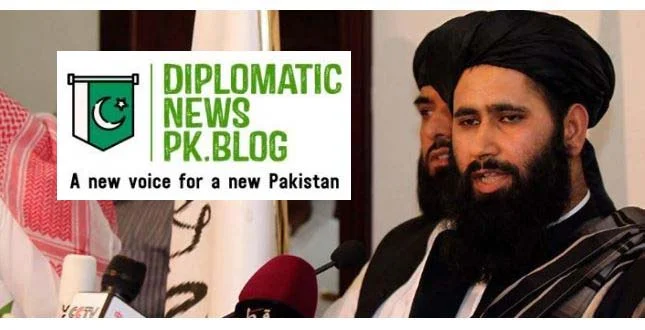
WASHINGTON, FEB 12: US President Joe Biden‘s decision to split $7 billion of frozen Afghan funds between victims of the 9/11 terrorist attacks and humanitarian aid has sparked outrage among Afghans.
On Friday, Biden signed an executive order paving the way for Afghan funds held in the US to be split between humanitarian aid to the country and for the compensation of American victims of the September 11 attacks.
Afghan factions including former politicians, academics and the Taliban expressed outrage at Biden’s decision.
“The theft and seizure of the Afghan nation’s frozen money by the United States represent the lowest level of the human and moral decay of a country and a nation,” senior Taliban spokesperson Mohammad Naeem Wardak said on Twitter.
ALSO READ: Joe Biden releases frozen Afghan assets
On social media, many Afghans said Biden was stealing money from deserving Afghans that had nothing whatsoever to do with terrorism in the US.
No Afghan was among the terrorists involved in the attack on New York’s World Trade Center in 2001. Osama Bin Ladin, the leader of al-Qaeda, was later killed in Pakistan.
Experts claim the allocation of frozen assets as laid out in Biden’s decree would mark an irreparable blow to Afghanistan‘s economy.
“It’s essentially giving back Afghans their own money as humanitarian assistance while throttling the economy,” Afghan policy analyst and researcher Mohsin Amin tweeted.
-----------------------------------------------
Courtesy ANews
----------------

BEIJING, FEB 12: China's National
Immigration Administration said it will not be renewing passports for
non-essential travel while the international COVID-19 epidemic situation is
still severe and cross border travel poses "great security risks".
The administration said in a
statement on social media it will "normally issue passports" for
individuals who need to travel abroad for study, employment, or business.
But rumours it will issue
passport renewals for individuals looking to travel abroad for leisure are
false, the authority said.
China has tightened controls over
its citizens' cross-border travel to lower the risk of the virus being brought
in from overseas and spreading domestically.
It has suspended the issuance of new common passports for individuals who intend to go abroad for non-urgent matters.
--------------------------------------
Courtesy Anews
----------------

WASHINGTON, FEB 12: After months of waiting, US President Joe Biden on Friday signed an executive order giving half of the $7 billion in frozen Afghan assets to Afghanistan, while keeping the other half for victims of the Sept 11 terror attacks.
The US administration blocked the assets belonging to Afghanistan’s central bank, known as Da Afghan Bank or DAB in August last year.
The move aimed to prevent the country’s new Taliban rulers, who seized Kabul on Aug 15, from accessing the funds.
President Biden said the order to release funds was “part of our ongoing work to address the humanitarian and economic crisis in Afghanistan” and the money would be “used to benefit the Afghan people”.
Half of the $7bn will be spent on helping Afghans, other half to be awarded to Sept 11 victims
The executive order blocks DAB property held in the United States by American financial institutions and requires those institutions to transfer this property into a consolidated account at the Federal Reserve Bank of New York.
The US administration will facilitate access to $3.5 billion of those assets for the benefit of the Afghan people and for Afghanistan’s future pending a judicial decision.
Many US victims of terrorism, including relatives of those who died in the Sept 11, 2001, terrorist attacks, have brought claims against the Taliban and are pursuing DAB assets in a federal court. The court will make the final decision on those writs.
“Even if funds are transferred for the benefit of the Afghan people, more than $3.5 billion in DAB assets would remain in the United States and are subject to ongoing litigation by US victims of terrorism,” the executive order said.
“Plaintiffs will have a full opportunity to have their claims heard in court.”
In a statement issued by the White House, President Biden said the executive order “provides a path for the funds to reach the people of Afghanistan, while keeping them out of the hands of the Taliban and malicious actors”.
The United States has sanctions in place against the Taliban and the Haqqani network, including for activities that threaten the safety of Americans such as holding US citizens hostage.
The US executive order also addresses the current economic situation in Afghanistan, acknowledging that there are no easy solutions for Afghanistan’s economic challenges, which have been exacerbated by the Taliban’s forced takeover of the country.
It notes that even prior to the events of last August, Afghanistan’s economy was on the brink. Afghanistan faced poverty rates above 50 per cent. International donor grants financed about 75 per cent of public expenditures and 50 per cent of the government’s budget.
------------------------------------------------
Courtesy Dawn News
-------------------
Friday, 11 February 2022

Hong Kong has extended a ban on
incoming flights from eight countries, including Pakistan, India, the United
States and Britain, and imposed one on Nepal until March 4, with the government
citing concerns over a growing Covid-19 outbreak.
The other countries are
Australia, Canada, France and the Philippines.
Flights to Hong Kong are down 90 per cent and hardly any are allowed to transit as the financial hub isolates itself from the world in the hope it can contain a coronavirus outbreak, even though new infections are overwhelmingly local transmissions.
---------------------------------------------

ISLAMABAD, FEB 11: A Roundtable
In-House Discussion on “Review of the National Security Policy of Pakistan 2022
– 2026” was jointly organized by Center for Global & Strategic Studies
(CGSS), Islamabad & Area Study Center (Russia, China & Central Asia),
University of Peshawar, Peshawar at Peshawar.
The event commenced with the keynote address by Lieutenant General AamerRiaz, HI(M), (Retd), President, CGSS. He stated that the National Security Policy is a holistic, complete and dynamic document. He suggested that it should be accepted by all stakeholders and Political parties of Pakistan for better implementation. He also shared that the sole of this national security policy is the social contract between individuals, state and institutions. He was of the view that there is always a philosophy governing the state and economic stability is the backbone of every philosophy and policy.
He suggested that a reviewing and monitoring mechanism should be
designed to monitor the progress made in implementing the National Security
Policy and to check if concerned stakeholders are working towards achieving the
mentioned goals and indicators.
Prof. Dr. Shabir Ahmed Khan,
Director, Area Study Center (Russia, China & Central Asia), University of
Peshawar& Vice President (KP Region), CGSS highlighted that the National
Security Policy discussed Global economic footprint which seems ambitious.He
was of the view that the focus shall be expanded towards a regional economic
footprint. . A country has to integrate regionally first if it has to
efficiently integrate globally. Pakistan should be a regional economic melting
pot instead of indulging in a global power competition of a zero sum game when
we talk of trade, investment and connectivity. He emphasized that collective
efforts and contribution of national approach will lead towards secure and
prosperous Pakistan. Achieving comprehensive national security is a shared
national responsibility. Neither a single institution can take this
responsibility nor is it in the capacity of a single institution to address all
these issues singlehandedly.
Mr. Hasan Akhbar, Senior Policy
Analyst, National Security Division, Government of Pakistan discussed the
process of formulating the National Security Policy. He stated that it was a
comprehensive and consultative process that involved taking input from experts,
analysts, academicians, media representatives and University scholars as well.
He also highlighted that priority actions have been identified and a framework
has been given with consultation of concerned ministries to solve the issues
concerning national security. Performance indicators have also been set to deal
with the identified issues.
Mr. Ashfaq Ahmed Gondal, Vice
President (Federal Region), CGSS highlighted that the first National Security
Policy was given by Quaid-e-Azam Muhammad Ali Jinnah in only three words,
"Unity, Faith and Discipline ". Without these three elements a state
cannot be secured. He further stated that the social contract between
individual, state and institutions is very important. The state is responsible
to provide basic necessities to its citizens, it is also responsible to provide
career opportunities and resources to citizen so they may earn for themselves.
When state fails to provide these, individuals lose faith in their state that
negatively impacts the national security.
Prof. Azmat Hayat Khan, Former
Director/Former Vice Chancellor, University of Peshawar shared that national
security has many dimensions and definitions.
It can mainly be divided into external and internal factors. He was of
the view that Pakistan must focus on its internal issues & vulnerabilities
for national security.
Dr. Muhammad Shafi, Assistant
Professor, Area Study Center, University of Peshawar stated began his review by
defining national security and its purpose. He stated that it is a vision that
has a trickledown effect on all other policies including financial, foreign,
defence, etc.He stated that it can be witnessed from the National Security
Policy that the focus has now been shifted from traditional security threats to
Non-traditional security threats.Moreover, the policy also keeps economic
security and development at the very core of national security which is again
very important.
Mr. Khalid Taimur Akram,
Executive Director, CGSS suggested that academicians and scholars should be
included in Policy making of the country.
He was of the view that students should be asked to write reviews and
thesis related to the national security policy.
The Round Table was attended by 50 participants including faculty members, students and scholars from Peshawar.
----------------------------------------------

Social Media
Search